
Bucktool Finger Sander Buying Guide: When A Narrow Belt Sander Makes Sense

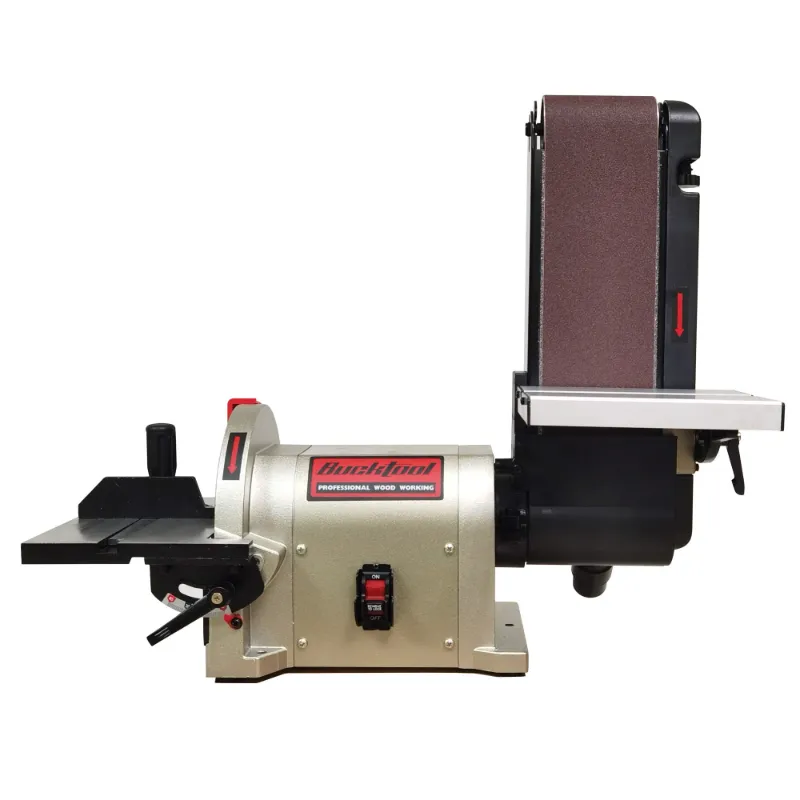
A belt sander sander makes sense when you need narrow-belt control for inside curves, small edges, and detail shaping that a full-width belt sander cannot reach cleanly. In Bucktool’s lineup, the key choice is whether a finger sander solves your detail work, or whether you are better served by a standard belt sander, belt and disc machine, or grinder-style bench setup.
A finger sander is not a replacement for every sanding tool. It is a precision add-on for woodworkers, metalworkers, restorers, knife makers, and DIY repair jobs where access and control matter more than raw speed.
When a belt sander sander is the right tool
Choose a narrow-belt sander when the job punishes bulky tools. The long, slim sanding arm gets into places a wide platen cannot, and that makes it useful for shaping, blending, and cleaning up awkward profiles.
It is especially useful for:
- Inside curves on brackets, chair parts, handles, and templates
- Deburring metal tabs, cutouts, and small fabricated parts
- Sanding tight notches where a handheld belt sander is too wide
- Refining scroll saw, bandsaw, or jigsaw cuts
- Smoothing weld-adjacent areas when access is limited
- Removing finish or rust in channels and corners
A narrow belt also gives better sightlines. You can see the scratch pattern and material removal more easily, which helps prevent over-sanding. That matters on thin stock, small metal parts, and restoration work where one careless pass can round an edge you meant to keep crisp.
For background on the general category, the basic mechanics of a belt sander are simple: an abrasive belt runs continuously around rollers. The difference with a finger-style unit is scale and access, not the core sanding principle.
Finger sander vs belt sander, handheld belt sander, and belt and disc
The biggest buying mistake is expecting one sander to cover every job. A finger sander, a handheld unit, and a bench machine overlap, but they feel very different in use.
| Tool type | Best for | Watch-outs |
|---|---|---|
| Finger sander | Tight spaces, small edges, curves, detail shaping | Slower on large flat surfaces |
| Handheld belt sander | Doors, boards, panels, fast flattening | Easy to gouge, too large for detail work |
| Belt and disc | Bench sanding, squaring ends, repeatable shaping | Workpiece must be brought to the machine |
| Belt grinder combo | Heavier shaping, metal cleanup, shop versatility | More aggressive than needed for delicate jobs |
If you mostly flatten tabletops, doors, or wide boards, a handheld belt sander is the better fit. If your work is mostly small parts at the bench, a belt and disc machine can be more stable and repeatable. If you shape metal, sharpen, or grind as much as you sand, the Bucktool Bench Belt Grinder Combo is worth comparing before you buy.
A finger sander earns its place when the workpiece shape is the problem. It does not win because it removes the most material. It wins because it reaches the spot.
Materials and jobs where a finger sander pays off
A finger sander is useful across wood, metal, plastics, and finish repair, but the right abrasive and touch matter more than brute force.
Woodworking
For wood, a narrow belt is excellent for easing tight curves, cleaning up saw marks, and refining small parts before hand sanding. It can save time on:
- Toy parts and small craft pieces
- Chair spindles and curved components
- Template-routed edges with minor burn marks
- Drawer notches, slots, and pulls
- Instrument, handle, and jig work
Use lighter pressure than you would with a broad belt sander. Let the abrasive cut. Heavy pressure can create grooves, burnish the surface, or round over a line you wanted to preserve.
Metalworking
On metal, a narrow belt can deburr edges, clean cutouts, and blend small transitions. It is handy after drilling, cutting, or grinding because it reaches the corners left by larger tools.
Pair it with good dust and spark awareness. Wood dust and metal sparks do not mix well, so clean the area, manage collection carefully, and avoid using the same dust path for hot grinding debris unless your setup is designed for it.
Restoration and repair
For refinishing, a narrow belt helps remove paint, corrosion, or old finish from recessed shapes. This is where control is the point. You can work only the damaged area instead of stripping surrounding detail.
If the job is delicate, start with a less aggressive grit and test in a hidden spot. A finger sander is precise, but it is still powered sanding.
What to check before buying a belt sander sander
Before you choose the Bucktool option, look past the product photo and think about how it fits your shop.
Check these points:
- Belt size and availability: Make sure replacement belts are easy to source in the grits you actually use.
- Arm shape and clearance: The sanding arm should reach the inside corners and profiles you work on most.
- Tracking adjustment: Narrow belts need good tracking so they stay centered during use.
- Dust control: Fine dust builds quickly on small sanding jobs, especially when working indoors.
- Work support: Decide whether you need freehand access, a table, or a bench-mounted machine.
- Speed and control: More aggressive tools are not always better for detail shaping.
For current Bucktool pricing and the available sitewide offer, use our Bucktool page to check the latest price before ordering. We avoid quoting live prices because tool pricing and promotions can change.
Also think about what else is already in your shop. If you own a benchtop drill press, for example, you may already be drilling clean holes and only need a narrow sanding tool for deburring and shaping afterward. If your dust setup is weak, a cyclone dust collector may improve the whole sanding workflow more than adding another machine.
Sanding belts, grits, and setup tips
The belt matters as much as the tool. A good finger sander with the wrong abrasive will feel slow, hot, or hard to control.
Use a practical grit progression:
- Start coarse only when you truly need shaping or removal.
- Move to a medium grit for scratch refinement.
- Finish with a finer grit only if the surface needs it before coating, polishing, or assembly.
For wood, do not skip too far between grits. Deep scratches from an aggressive belt can show under stain or clear finish. For metal, choose abrasives suited to the alloy and the task, especially if you are deburring harder material.
Keep the belt moving across the work instead of holding it in one spot. A stationary contact point creates dips, heat, and uneven scratch patterns. On edges, approach gently and use short passes until you know how quickly the belt cuts.
The same common-sense testing approach used in independent tool reviews, such as this Popular Mechanics guide to belt sanders, applies here too: judge the tool by control, finish quality, handling, and dust management, not just how fast it removes material.
Dust, maintenance, and shop safety
A narrow belt creates less contact area than a wide sander, but it can still make a surprising amount of fine dust. That dust affects visibility, finish quality, and your lungs.
Good habits include:
- Connect dust collection when the tool supports it.
- Wear eye protection and a suitable mask or respirator for dusty work.
- Keep loose sleeves, cords, and rags away from the moving belt.
- Let the motor reach speed before touching the work.
- Replace worn belts instead of forcing them to cut.
- Clean dust from vents and moving parts regularly.
Tracking is the maintenance item to watch most closely. If a narrow belt walks to one side, stop and adjust it. Running it off-center can damage the belt edge and make sanding less predictable.
If you alternate between wood and metal, clean your work area between materials. Fine wood dust near hot metal particles is a hazard. Separate belts by material when possible so contamination does not affect your finish.
Who should buy the Bucktool finger sander, and who should not
Buy the Bucktool finger sander if your work regularly includes tight-access sanding, curved details, small metal cleanup, or parts that are awkward to bring to a bench machine. It is also a smart second sander for anyone who already owns a broad belt sander sander but keeps reaching for files, wrapped sandpaper, or makeshift sanding sticks.
You may not need one if:
- Most of your work is large, flat boards
- You need fast stock removal across wide surfaces
- You rarely sand inside corners or profiles
- A bench-mounted belt and disc setup already handles your small parts
- You mainly need sharpening or heavy grinding rather than detail sanding
For a compact shop, the best Bucktool buy may be a sequence rather than a single tool: a finger sander for access, a bench belt/disc machine for repeatable shaping, and dust collection to keep both usable. If you are ready to compare the live offer, grab the code before checkout.
Bottom line: a finger sander is a specialist, but it is not a gimmick. When the task is narrow, curved, recessed, or too delicate for a full-size machine, the right belt sander sander can save time and give cleaner results than hand sanding alone.
Frequently asked questions
What is a Bucktool finger sander best used for?
It is best for tight-access sanding, inside curves, small edges, deburring, and detail shaping. It is not the fastest choice for flattening large boards or panels.
Is a belt sander sander the same as a regular belt sander?
Not exactly. Both use a moving abrasive belt, but a finger-style version uses a narrow belt and slim arm for access, while a regular belt sander is better for broad surfaces.
Should I buy a finger sander or a belt and disc machine first?
Choose a finger sander first if your problem is reaching tight spots. Choose a belt and disc machine first if you mostly sand small parts at a bench and want a stable table or work support.
Can I use a finger sander on metal?
Yes, it can be useful for deburring and small cleanup on metal when fitted with the right abrasive. Manage sparks, dust, and material contamination carefully, especially if you also sand wood.
Where can I find the current Bucktool discount code?
Use The Planet Deals Bucktool coupon page to check the current store offer before ordering. We link there instead of quoting live prices because promotions can change.