
Can a Robot Really Beat You at Chess? I Tested the SenseRobot Chess Bot

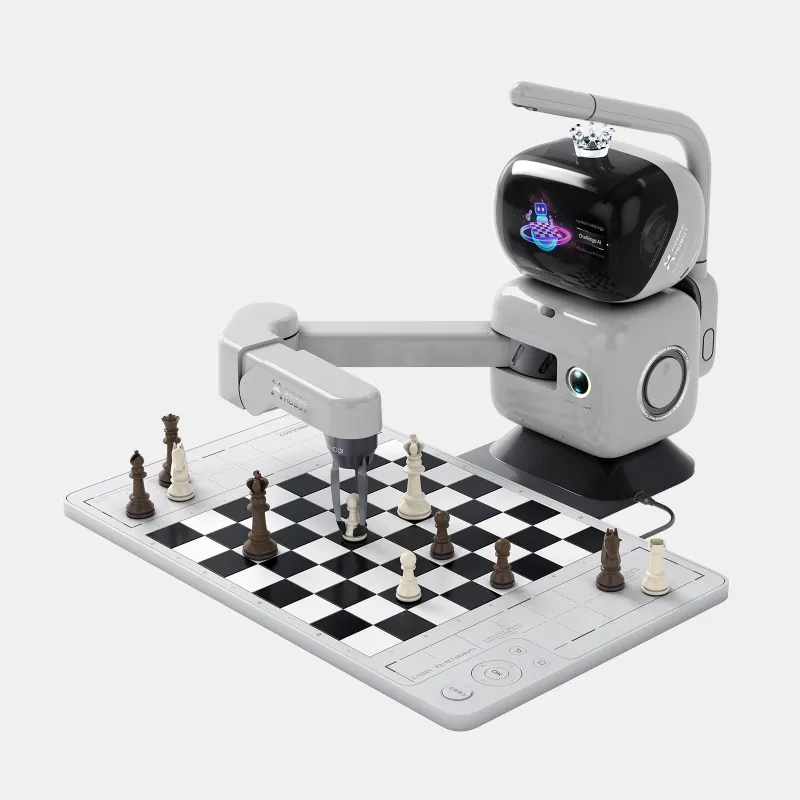
Short answer: yes — and it's a lot more fun than getting crushed by a faceless app on your phone. I spent several weeks playing against the chess robot from SenseRobot, and in this review I'll break down how it performs, who it's for, and whether it's actually worth the money.
If you've been searching for the best chess robot, you've probably come across plenty of hype. Here's my honest, hands-on take — including what I loved, what annoyed me, and how it compares to just playing chess online.
What Is the SenseRobot Chess Robot?
The SenseRobot is a physical chess-playing machine: a robotic arm sits beside a standard board, senses your moves, and physically picks up and moves the pieces in response. Think of it as a real-life chess bot — no screen required, no dragging virtual pieces around.
It's built around a chess robot AI engine with multiple difficulty levels, so it can go from "gentle opponent for my kid" to "ruthless engine that humbles me nightly." The unit also announces moves out loud, which makes it feel surprisingly like playing against a human opponent who's thinking out loud.
If you prefer something with a screen and streaming features, SenseRobot also makes a gaming robot variant — same core playing brain, different presentation.
Setup: Easier Than I Expected
Unboxing a robot chess set, I braced for a nightmare of calibration. It wasn't bad at all:
- Place the board, align the robotic arm, and run the guided self-test
- The vision system scans the board to confirm piece positions
- Calibration took me about 15 minutes start to finish
One tip: keep the board on a stable, flat surface. The arm is precise, but a wobbly table makes any chess robot nervous — and noisy.
How It Actually Plays
Difficulty levels
The chess robot AI offers a wide range of strength settings. On beginner levels, it deliberately makes human-like mistakes rather than playing perfect engine moves — which is exactly what you want when learning. At the top levels, it plays genuinely strong chess; I lost most of my games at max strength, as expected.
The physical experience
This is the real magic. Watching the arm glide over, pick up a knight, hop it over your pawns, and tap the clock (figuratively) is far more engaging than any chess robot online experience. My kids, who get bored of app-based chess in ten minutes, played for over an hour on the first day.
The arm occasionally fumbles a piece — usually when a piece is slightly off-center on its square. It recovers well, but it's worth knowing.
Game modes and features
- Multiple difficulty tiers with adjustable playing style
- Voice announcements of moves
- Built-in puzzles and training modes
- The ability to play out famous chess robot game scenarios and famous historical matches
SenseRobot vs. Playing Chess Online
Let's be honest: online chess is free and instant. So why buy a robot?
- Physical presence: Playing a real board with a real opponent — even a mechanical one — builds focus in a way screens don't.
- Kids and family: No phone or tablet needed. The robot is the entertainment.
- Training without tilt: A chess bot never rage-quits, stalls, or accuses you of cheating.
- Novelty that lasts: I expected the wow factor to fade in a week. Three weeks in, my family still plays regularly.
For a deeper comparison of machine opponents, the team at Chessiverse: Chess Bots That Play Like Humans has great analysis on bots that mimic human playing styles rather than pure engine strength — which is exactly the design philosophy SenseRobot follows.
If you enjoy reading about chess hardware, the community discussion at Chess playing bot - Chess Forums is a good place to see how other players compare different robot chess set options.
Who Should Buy It?
Great fit:
- Parents who want to get kids off screens and into chess
- Adult improvers who want structured practice without subscriptions
- Chess clubs looking for a drawing-card machine
- Anyone who loves gadgets and chess equally
Skip it if:
- You only play a couple of games a month
- You're purely chasing maximum engine strength for study — a desktop engine does that for free
- You have very limited table space
Price and Discount
The chess robot costco listing brought this category into the mainstream, and prices have come down from the early "rich collector only" era. It's still a premium product — this is a robot, after all.
Good news: there's currently 15% OFF sitewide with the SenseRobot offer. Check the current price and code on the SenseRobot discount page before you buy — that discount makes a real difference on a purchase this size.
If you want a more budget-friendly or multi-purpose option, the onesgos robot companion robot is worth a look — it's less chess-focused but more versatile around the house. And if you're comparing arm-based players specifically, the chess bot listing is the same SenseRobot machine with current availability.
The Tech Behind It (Briefly)
Robotic chess is a genuinely hard engineering problem: board vision, piece recognition, path planning, and safe grasping of delicate pieces. It's cool to see that open-source projects are pushing this space forward too — this writeup on an open-source robotic system that can play chess with humans gives a nice technical overview of what these machines actually have to solve.
One fun question people always ask: what's the chess robot name? The model I tested is simply called SenseRobot — the company keeps branding clean rather than giving it a cute nickname like "Kasparov Jr."
Verdict
The SenseRobot chess robot delivers on its core promise: it makes chess physical, social, and genuinely fun again. It's not cheap, and the arm isn't flawless, but for families and serious hobbyists it's the closest thing to having a patient, always-available chess partner at home.
Rating: 4.5/5 — docked half a star for occasional piece fumbles and the premium price, offset by the current 15% off.
If a robot that beats you at chess — politely, move after move — sounds like your kind of fun, this is the one to get.
Frequently asked questions
Can the SenseRobot chess robot actually beat strong players?
Yes. At its highest difficulty levels it plays strong engine-grade chess that most club players will struggle to beat. At lower levels it deliberately plays human-like, weaker moves so beginners and kids can enjoy competitive games.
How much does a chess robot cost?
It's a premium product, typically priced in the several-hundred-dollar range depending on the model and retailer. There's currently 15% OFF sitewide via the SenseRobot discount code page, which significantly reduces the cost.
Is the chess robot good for kids?
It's designed for ages 6 and up. The voice announcements, adjustable difficulty, and physical board make it especially engaging for kids compared to app-based chess.
Does the robotic arm ever drop or knock over pieces?
Yes, occasionally — usually when a piece is slightly off-center on its square. In my testing it recovered well in almost every case, and keeping pieces centered on their squares prevents most issues.
Are there other SenseRobot products besides the chess robot?
Yes — SenseRobot also offers a gaming robot version with a screen and additional interactive features, and there are companion robot options if you want something more general-purpose rather than chess-only.