

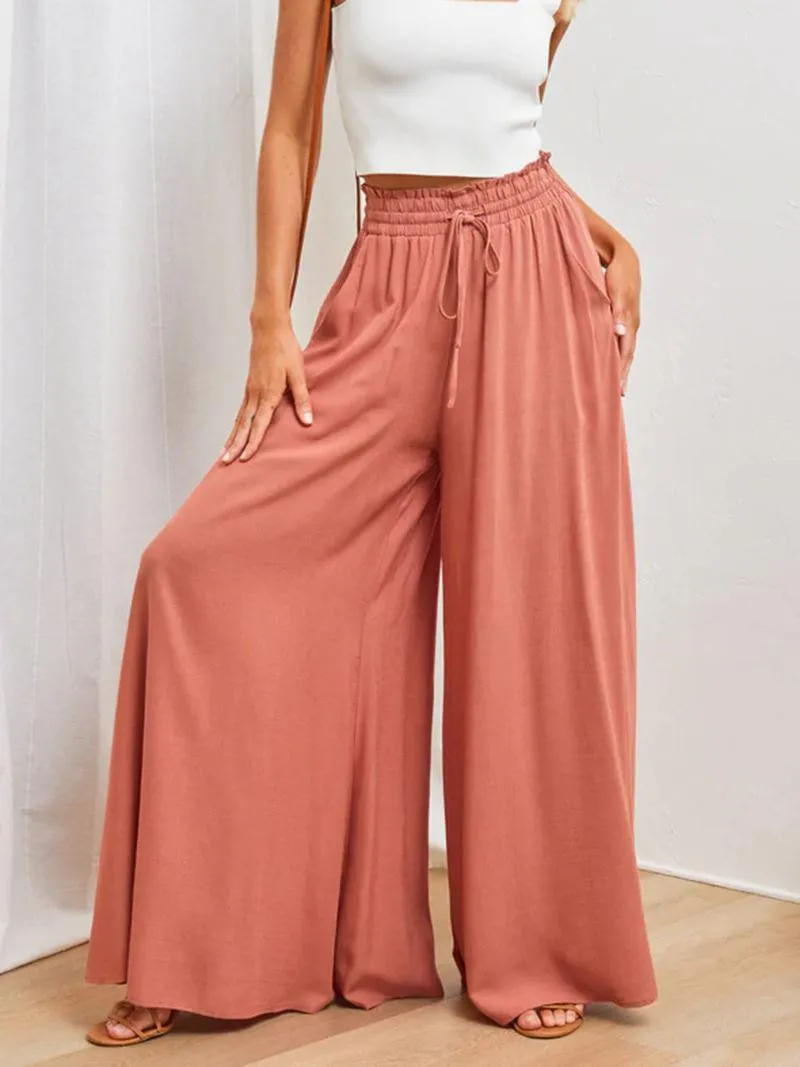
Caring for flowy trousers starts with understanding that delicate fabrics like viscose, rayon, and lightweight linen need a gentler approach than your everyday denim. These breezy styles—including pantalon fluide and pantalon large femme—drape beautifully when new, but improper washing or drying can leave them wrinkled, stretched, or faded. We tested dozens of care methods to identify what actually keeps these trousers looking salon-fresh between wears.
Washing Flowy Trousers Without Damage
Always check the care label first, but most flowy fabrics benefit from cold water and a delicate or hand-wash cycle. Turn trousers inside out to protect the outer finish and any printed details, then place them in a mesh laundry bag to prevent tangling with heavier items like femme veste or denim.
Use a mild liquid detergent and skip fabric softener—it coats fibers and can make lightweight fabrics feel limp or greasy over time. For stubborn stains, spot-treat with a gentle stain remover before washing rather than scrubbing, which can distort the weave.
- Wash in cold water on delicate cycle
- Turn inside out and use a mesh bag
- Choose liquid detergent over powder
- Avoid bleach and fabric softener
- Separate lights and darks to prevent dye transfer
Hand washing is even safer for very delicate rayons or silk blends. Fill a basin with cool water and a capful of gentle detergent, swish the trousers gently for two to three minutes, then rinse thoroughly until the water runs clear.
Drying Methods That Preserve Shape
Never wring or twist wet flowy trousers—this stretches seams and creates permanent creases. Instead, gently press excess water out between two clean towels, then lay the trousers flat on a dry towel or drying rack away from direct sunlight and heat sources.
Hanging wet trousers on a standard hanger often causes the waistband to stretch and the fabric to develop awkward knee bumps. If you must hang them, use trouser clips at the hem so gravity works with the fabric grain rather than against it.
Tumble drying is the fastest way to shrink, wrinkle, or pill these fabrics. If you are short on time, use the lowest heat setting for no more than ten minutes, then remove while still slightly damp and lay flat. We recommend air-drying for styles you want to last multiple seasons, especially when you have invested in quality pieces from Les Petits Imprimes.
- Press water out gently between towels
- Lay flat on a drying rack or clean towel
- Keep away from radiators and direct sun
- Hang by the hem if you lack flat space
- Skip the dryer or use low heat for under ten minutes
Preventing and Removing Wrinkles
Caring for flowy trousers also means managing wrinkles without damaging delicate fibers. Steam is your best tool—hold a handheld steamer six inches from the fabric and work in downward strokes, or hang trousers in the bathroom while you shower to let ambient steam relax creases.
If you must iron, turn trousers inside out, set the iron to the lowest appropriate temperature for the fabric, and place a thin cotton cloth between the iron and the trousers. Never press directly on prints or embellishments. For linen blends, ironing while slightly damp yields the smoothest results.
Many wrinkles disappear simply by hanging trousers properly after wearing. Use a clip hanger at the hem or a padded trouser bar to maintain the drape without stretching the waistband.
| Method | Best For | Speed |
|---|---|---|
| Steamer | All fabrics, prints | Fast |
| Iron (low, inside-out) | Cotton, linen blends | Medium |
| Bathroom steam | Light wrinkles | Slow |
| Hang and wait | Minor creases | Very slow |
Storage Tips to Maintain Drape
Fold flowy trousers along the center crease and drape them over a padded hanger, or fold them flat and store them in a drawer with tissue paper between the folds to prevent permanent creases. Avoid wire hangers, which create shoulder-style marks at the fold point.
If you are storing trousers for the season, clean them first—body oils and invisible stains oxidize over time and become nearly impossible to remove. Place them in a breathable cotton garment bag rather than plastic, which traps moisture and can cause mildew in humid climates.
Keep storage areas cool and dry. Heat and humidity weaken natural fibers and cause synthetic blends to lose their shape. Cedar blocks or lavender sachets deter moths without the chemical smell of mothballs.
- Use padded or clip hangers, never wire
- Fold with tissue paper for drawer storage
- Clean before long-term storage
- Choose breathable cotton garment bags
- Add cedar or lavender to deter pests
Choosing the Right Fabric for Your Lifestyle
Not all flowy trousers demand the same level of care. Polyester and poly-blend wide-leg styles tolerate machine washing and low-heat drying far better than viscose or rayon, which shrink and wrinkle easily. If you want minimal-fuss pieces, look for blends with at least thirty percent synthetic fiber.
Linen and linen-cotton blends wrinkle by nature but also breathe beautifully in warm weather and soften with every wash. Rayon and modal drape elegantly and feel luxurious but require the gentlest care. We recommend matching fabric choice to how often you plan to wear and wash the trousers.
For everyday rotation, a poly-viscose blend offers the best balance of drape and durability. Save pure rayon and silk styles for special occasions or weeks when you have time for hand washing and flat drying.
When to Wash vs. Air Out
Caring for flowy trousers also means recognizing that not every wear requires a full wash. If trousers are not visibly soiled or odorous, hang them in fresh air for a few hours to release wrinkles and refresh the fabric. This extends the life of delicate fibers and reduces fading from repeated washing.
Spot-clean small marks with a damp cloth and a drop of mild soap, then air-dry the treated area. Reserve full washes for every three to five wears, or immediately after sweating or spills. The same approach works for coordinating pieces like a caraco femme or haut manche longue femme when you are building a capsule wardrobe.
Before your next purchase, check the latest discount to save on quality pieces that reward proper care with years of wear.
Quick Care Routine for Busy Schedules
We know not everyone has time for hand washing and flat drying. Here is a streamlined routine that still protects your trousers:
- Wash inside-out in a mesh bag on cold delicate cycle
- Remove immediately when the cycle finishes
- Press water out with a towel—do not wring
- Hang by the hem on a clip hanger or lay flat on a towel
- Steam or iron inside-out while slightly damp if needed
This approach works well for medium-weight fabrics and busy weeks. For very delicate or expensive trousers, switch to hand washing every other cycle to extend their lifespan. Pair your freshly cared-for trousers with a body dos nu or a structured femme veste for an effortlessly polished look that lasts.
 Shopping at Les Petits Imprimes? See today's verified Les Petits Imprimes discount code
Frequently asked questions
Can I put flowy trousers in the dryer?
We do not recommend it. Most flowy fabrics shrink or wrinkle in the dryer. If you must, use the lowest heat for under ten minutes and remove while damp, then lay flat to finish drying.
How often should I wash my pantalon fluide?
Wash every three to five wears unless visibly soiled or after sweating. Between washes, hang them in fresh air to refresh the fabric and reduce wear from repeated laundering.
What is the best way to remove wrinkles from delicate trousers?
Use a handheld steamer held six inches from the fabric, or hang trousers in a steamy bathroom. If ironing, turn inside-out, use low heat, and place a cotton cloth between the iron and fabric.
Do I need to hand wash all flowy trousers?
No. Polyester and poly-blend styles handle machine washing on a delicate cycle. Reserve hand washing for pure rayon, silk, or very delicate fabrics to prevent shrinkage and damage.
How do I store wide-leg trousers without creasing them?
Fold along the center crease and drape over a padded hanger, or fold flat with tissue paper between layers in a drawer. Avoid wire hangers and plastic bags for long-term storage.
Can fabric softener damage flowy fabrics?
Yes. Fabric softener coats fibers and can make lightweight fabrics feel limp or greasy over time. Stick with mild liquid detergent and skip the softener for best results.