

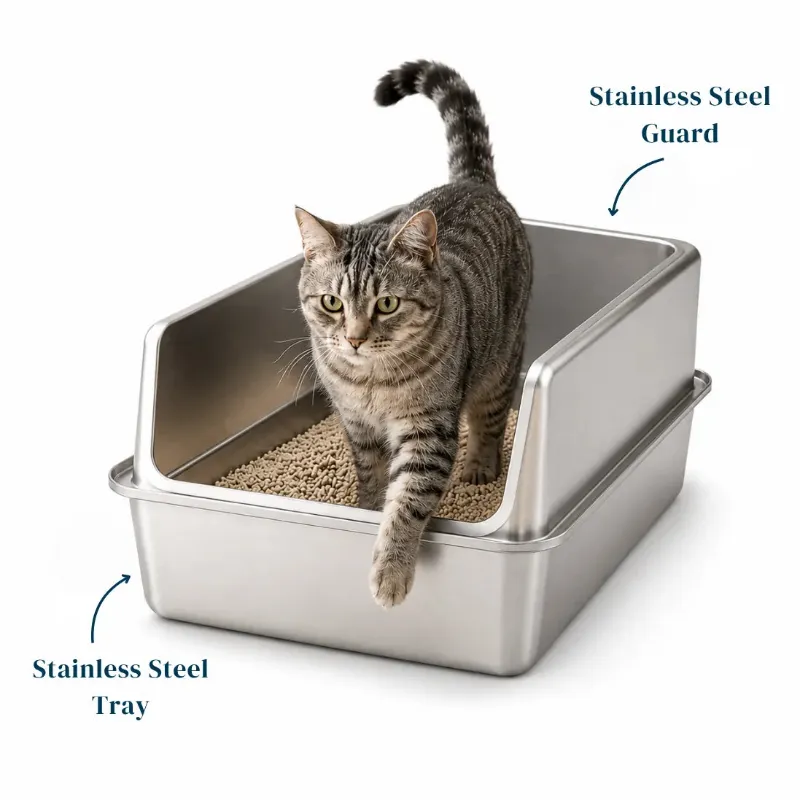
Does Your Cat Need a High Sided Litter Box?
Your cat may need a high sided litter box if litter ends up outside the box more often than inside it. Most cats benefit from vertical containment that standard boxes simply can't provide, especially enthusiastic diggers or larger breeds. A proper high sided litter box reduces mess, contains odor better, and gives your cat the security of higher walls while doing their business.
Signs Your Current Litter Setup Isn't Working
Litter tracking across your floors is the clearest signal that you need better containment. Watch for these specific problems:
- Litter scattered 2+ feet from the box in all directions
- Clumps stuck to your cat's paws or fur after bathroom use
- Visible dust clouds when your cat digs
- Your cat hesitating before entering due to cramped space
- Overflow or spilling during scooping
- Persistent odor even after daily cleaning
If your cat avoids the box or uses other areas of your home, the issue may be accessibility rather than height alone. But when you observe consistent spillage, a high sided litter box or litter box with high sides addresses the root cause directly.
Stainless Steel vs. Standard Materials
The material matters as much as the size. Stainless steel cat litter box options and stainless cat litter box designs outlast plastic by years and resist odor absorption that plastic develops over time. Here's how they compare:
| Feature | Stainless Steel | Plastic |
|---|---|---|
| Durability | 5–10+ years | 2–4 years |
| Odor retention | None | Absorbs odor |
| Cleaning ease | Smooth surface, no scratches | Scratches trap bacteria |
| Cost | Higher upfront | Lower upfront |
| Temperature neutral | Yes | Holds heat/cold |
A stainless steel litter pan or stainless steel cat box costs more initially but pays for itself through longevity and hygiene. Stainless steel won't degrade or stain, and your cat doesn't associate any lingering smells with the box itself.
Sizing Your High Sided Litter Box
Your cat needs a box at least 1.5 times its body length to move comfortably. A high sided litter box should stand 10–15 inches tall to catch litter while remaining accessible for older or smaller cats. Test entry height before buying—senior cats or kittens may struggle with excessive depth.
Capacity matters too. A larger box means fewer clumps touching the sides and less frequent scooping. If you have multiple cats, consider one box per cat plus one extra; a spacious stainless steel litter box for cats serves better than cramping two cats into a standard box.
Containing Mess Beyond the Box Itself
Height alone won't solve litter tracking if you skip secondary containment. Layer your setup with a honeycomb litter mat placed just outside the box entrance. Honeycomb design traps particles in its wells while allowing cats to shake off their paws naturally. Many owners pair this with a high sided litter box for a complete system that stops litter at the source and the exit.
After bathroom use, dust litter off paws with pet wipes for extra mess prevention, especially helpful on carpeted areas or during shedding season.
Maintenance and Long-Term Care
High sided boxes demand regular scooping—the higher walls trap odor more effectively but also concentrate ammonia if waste sits. Scoop daily and do a full litter change weekly. When using a stainless steel cat litter box, wipe it down monthly with mild soap and water to maintain the smooth surface.
If your cat has existing behavioral issues around the box, depth can sometimes make things worse. Watch for signs that your cat feels trapped, then adjust. Most cats adapt to higher sides within days once they realize the added security benefits them.
Who Benefits Most From a High Sided Litter Box
Long-haired cats, large breeds, and enthusiastic diggers see the biggest improvement. Overweight cats benefit from the extra space and support. Senior cats with mobility issues may need careful height selection—aim for 10 inches rather than 15 if your older cat hesitates at entry.
Multi-cat households with limited space often find that one well-designed high sided litter box prevents conflicts better than two cramped standard boxes. Cats feel safer in a contained space, and territorial disputes drop significantly.
Ready to upgrade? Grab the 4FurBaby code for 15% off sitewide, including stainless steel and high-sided options. Check the latest price to see current stock and exact dimensions before you order—sizing is the final piece of getting this right for your cat.
 Shopping at 4FurBaby? See today's verified 4FurBaby discount code
Frequently asked questions
What size high sided litter box do I need for my cat?
Your box should be at least 1.5 times your cat's body length, and the sides should stand 10–15 inches tall. Test the entry height before buying—senior or small cats may struggle with excessive depth.
Does a stainless steel litter box really last longer than plastic?
Yes. Stainless steel resists odor absorption and scratching, typically lasting 5–10+ years versus 2–4 years for plastic. The smooth surface also makes cleaning easier and prevents bacteria from settling in micro-scratches.
Can a high sided litter box work for a senior cat?
It can, but choose a height around 10 inches rather than 15. Monitor your cat for hesitation at entry—if they seem uncomfortable, the sides may be too high and you may need to step back to a standard or medium-height box.
Will a honeycomb litter mat actually stop the tracking?
A honeycomb mat traps particles in its wells and lets cats shake off their paws naturally, catching most loose litter before it spreads across your floor. Pair it with a high sided litter box for maximum containment.
How often should I clean or replace a stainless steel cat litter box?
Scoop daily and do a full litter change weekly. Wipe down the stainless steel box monthly with mild soap and water to maintain its smooth, hygienic surface.
Is my cat avoiding the litter box because it's the wrong size, or for another reason?
Avoidance usually signals accessibility, cleanliness, or location issues before size. Ensure the box is in a quiet area, far from food, and cleaned daily. If those factors check out, height or width may be the issue.