
Charger vs. Power Bank: What's the Difference?

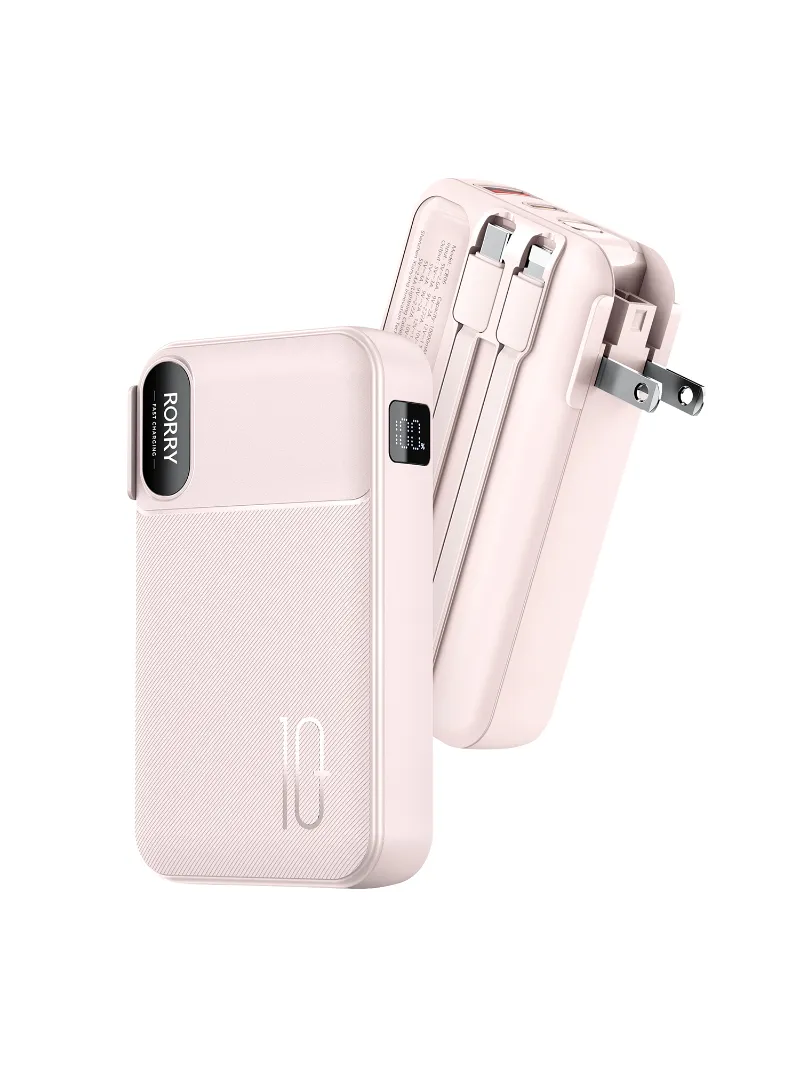
A charger pulls power from a wall outlet to refill your device, while a power bank portatil stores that power in a battery you can carry anywhere. You need a charger when you're near an outlet, and you need a power bank when you're not. If you only buy one for travel, commuting, or long days out, the power bank wins almost every time.
What a Charger Does (and What It Doesn't)
A charger is a bridge, not a battery. A wall adapter, a car charger, or a wireless pad like a qi 2 wireless charger takes electricity from a source and delivers it to your phone at a controlled speed. The moment you unplug from the wall, the charger becomes useless until you find another outlet.
That limitation matters most in the situations where your battery dies fastest:
- Airports and long flights, where outlets are scarce and contested
- Festivals, theme parks, and outdoor events
- Hiking, camping, and beach days
- Commutes where you're navigating, streaming, and hotspotting all at once
A charger is still essential at home and at your desk. It's just not the tool that solves the "I'm at 4% and nowhere near a plug" problem.
What a Power Bank Portatil Actually Is
A power bank portatil is a rechargeable battery with charging circuitry built in. You top it up from a wall outlet or USB source ahead of time, then it becomes your portable outlet. A good option like the rorry portable charger is small enough for a pocket or bag but holds enough energy to refill a phone multiple times before it needs recharging itself.
The rorry portable power bank line goes a step further for people carrying more than one device, adding the capacity and ports to handle a phone, earbuds, and sometimes a tablet in the same trip.
In Spanish-speaking markets you'll often see this category listed as a cargador y batería, or charger and battery, which is honestly the most accurate description: it's both in one unit.
Charger vs. Power Bank: Side-by-Side Comparison
Here's how the two stack up when you're deciding what to pack:
| Charger (wall or wireless) | Power bank | |
|---|---|---|
| Power source | Needs a live outlet | Carries its own stored charge |
| Works on the go | No | Yes, anywhere |
| Unlimited refills | Yes, while plugged in | No, until you recharge it |
| Size | Small adapter or pad | Larger, battery-sized |
| Best for | Home, office, hotel nights | Travel, commutes, outings, emergencies |
The honest answer for most people is that you need both: a fast charger at your regular charging spots, and a power bank for everywhere else.
Which One Fits Your Day?
Pick based on where your battery actually runs down:
- Home and office user: A wall charger and a wireless pad cover 95% of your needs. Add a slim power bank for day trips.
- Commuter: A compact power bank portatil in your bag means a dead phone on the train never happens again.
- Traveler: Capacity matters more than size here. A rorry portable power bank with multiple ports handles a phone, earbuds, and a backup cable in one device.
- Outdoor adventurer: Look for rugged builds and higher capacity, and charge the bank fully the night before.
- Gift or event buyer: Branded portable chargers are a common corporate giveaway for exactly this reason, as Wirecutter notes in its roundup of the best portable chargers and power banks for phones.
How to Match a Power Bank to Your Device
Three specs do most of the work:
- Capacity (mAh): Higher numbers mean more refills for your phone. A slim bank is fine for one phone; go bigger for tablets or multi-device trips.
- Output (watts/amps): This controls charging speed. Match or exceed what your device supports, or you'll wait longer than necessary.
- Ports: One USB-C port is fine for solo users. Two or more ports let you charge a phone and earbuds together.
If you want a second opinion before buying, Wired's guide to the best power banks for keeping all your devices charged is a solid independent reference.
One more practical tip: check the store page for the exact capacity and output of any model before you buy, since specs vary by version. You can check the latest price and current bundle options there too.
Care Tips So Your Power Bank Lasts
Power banks are batteries, and batteries have preferences:
- Avoid leaving it in a hot car or direct sun for hours.
- Don't store it at 0% for months. Top it up every month or two if it sits unused.
- Use a quality cable. Cheap cables waste charging speed and can be flaky.
- Keep the ports clean and dry, especially if it lives at the bottom of a bag.
Treat it well and a quality bank keeps earning its spot in your bag for years.
The Bottom Line
The difference comes down to one question: is there an outlet where you are? A charger is the right tool at your desk and bedside, but a power bank portatil is what saves you everywhere else. If you're building a kit, start with a reliable rorry portable charger for daily carry, then grab a cargador y batería style option with extra capacity for travel. And before you check out, grab the code for 10% off all orders so you're not paying full price for the backup power you'll wonder how you lived without.
Frequently asked questions
Do I need a power bank if I already have a charger?
A charger moves electricity from an outlet to your device, while a power bank is a battery that stores that electricity so you can charge on the go. You need both: the charger to refill the power bank and your devices at home, the power bank for everywhere without an outlet.
What does mAh mean on a power bank portatil?
A higher mAh rating means more phone refills before the power bank itself needs recharging. Match capacity to your usage: slim banks suit one phone a day, while travel or multi-device users should go larger.
Can a power bank charge my phone as fast as a wall charger?
Yes, if the bank's output matches or exceeds what your device supports, it charges at normal speed. A slower output simply means longer charging times, not damage.
How many times can a rorry portable power bank charge a phone?
It depends on its capacity and your phone's battery size, but a quality portable power bank is typically sized to refill a phone multiple times on one charge. Check the specific model's specs on the store page for exact numbers.
How do I make my power bank last longer?
Keep it out of extreme heat, avoid storing it fully empty for long periods, and recharge it every month or two if unused. Good cables and clean ports also help it perform reliably for years.
Is a qi 2 wireless charger a good replacement for cables?
A Qi 2 wireless charger tops up your phone on a pad at your desk or bedside. You'll still want a portable power bank for travel, or choose a model that offers both wired and wireless charging.