

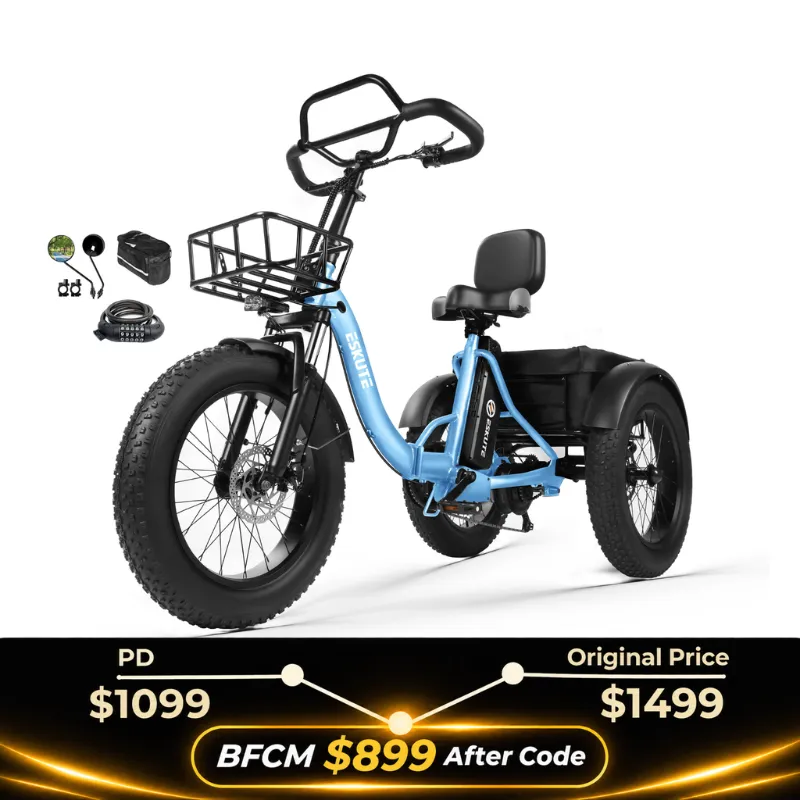
An electric folding trike is the better commuting choice if you want three-wheel stability, carry capacity, and a ride you can fold into a hallway, while a two-wheel electric bike is better if your route is longer, faster, or mixes with traffic. We tested both styles on real commutes and the split comes down to four things: balance, storage, distance, and how much you carry. This guide walks through each so you can pick once and ride for years.
Start With How You Actually Commute
Before you compare specs, write down your week: distance each way, hills, whether you carry a laptop or groceries, where the bike sleeps at night, and whether you take it on a train or into a lift. Those answers decide more than any spec sheet.
- Under 6 miles each way, flat, with cargo or balance concerns: lean trike.
- Over 8 miles, hilly, mixed traffic: lean e-bike.
- Stairs or a narrow hallway at home: check folded dimensions first, on both.
- Train or bus legs: folding matters more than wheel size.
If you want a reference point for the trike side of the decision, start with the electric folding trike we keep in the test fleet and note its folded footprint against your storage space.
What Three Wheel Bikes Do Better
The obvious win is stability. You do not need to put a foot down at every stop, which matters in stop-go city traffic, in rain, and for riders coming back to cycling after years away or managing a knee, hip, or balance issue. That single change makes commuting feel far less like a skill test.
The second win is load. Three wheel bikes carry panniers, a basket, and shopping without the tail-wagging you get when you overload a two-wheeler's rear rack. If your commute includes a grocery stop or a work bag plus a change of clothes, that capacity is the difference between riding and driving.
The third win is low-speed confidence. Tight turns in a bike shed, rolling through a pedestrian zone, or navigating a wet painted line all feel calmer on three wheels.
Trade-offs we noticed, honestly:
- They are wider, so narrow doorways and some cycle-path barriers are a squeeze.
- Cornering at speed needs more attention than on a two-wheeler.
- They are heavier, so lifts and stairs are a real consideration.
- Parking needs more floor space.
What an E-Bike Still Wins
An electric bike is narrower, lighter, and easier to thread through traffic and store in a small flat. It accelerates and handles at speed more naturally, and it is simpler to lock to a standard rack. For a longer commute, that efficiency is worth more than stability.
Our reference here is the eskute electric bikes range, which is what most of our commuter testing runs on. We also keep a mini e bike around for short mixed-mode trips, because a compact frame plus a train leg often beats a full-size bike with a bigger battery.
A quick note on the rest of the catalogue: kawasaki-style dirt bikes, low cost dirt bike builds, e forks, and rr dex parts are off-road or project items, not commuters. They are fun, and we cover them, but they do not solve a daily ride to work. Same for the folding mahjong table and the rtx 5090 fe: great, just not transport.
Trike vs E-Bike, Side by Side
| Factor | Electric folding trike | Electric bike |
|---|---|---|
| Stability at stops | Excellent, no foot down needed | Requires balance |
| Storage footprint when folded | Larger, wider | Smaller, easier to tuck away |
| Cargo capacity | High, stable under load | Moderate |
| Traffic and narrow gaps | Tight squeezes | Easier to filter and park |
| Best commute length | Short to medium | Medium to long |
Battery Range, Charging, and Assembly
Range claims are optimistic. Real-world numbers drop with hills, headwinds, rider weight, assist level, and cold weather. Plan your commute around roughly 60 to 70 percent of the quoted figure and you will rarely be caught out. Charge at your desk or at home, not both, and keep the charger where you actually store the bike so you do not skip it.
Two practical checks before you buy:
- Can you remove the battery to charge it indoors, away from the bike?
- How long is a full charge, and does it fit your overnight window?
Assembly and first ride are usually similar across both styles: front wheel, handlebars, pedals, then a brake and bolt check. Budget an evening, torque everything, and do a slow first ride somewhere quiet before you join traffic. Our assembly checklist is worth a look, and that page also holds the current offer and the code.
Sizing, Fit, and Comfort
An electric bike sizing guide is not just about height. Reach to the bars, standover clearance, and how far your leg extends at the bottom of the pedal stroke all affect comfort on a 40-minute ride. Trikes add another variable: seat-to-pedal distance sits further forward, and you want a seating position you can hold without leaning hard on your wrists.
- Sit on it, or check the standover figure against your inseam.
- Confirm your feet reach the ground comfortably when seated.
- Check folded dimensions against your hallway, lift, and boot space.
- Test the turning circle if you park in a tight shed.
Warranty, Repairs, Shipping, and Spare Parts
Ask four questions before you pay: what the warranty covers and for how long, who does the repairs locally, what the returns window is, and how long shipping takes. Get the returns and refunds policy in writing, including who pays return freight on a heavy trike, because that cost can be significant.
Spare parts and accessories matter more than people expect. Tyres, tubes, brake pads, and a spare charger should be easy to source for the model you pick. Before ordering, confirm the folded size, the delivery window, and the parts list, then check the latest price so you are comparing the real number rather than a headline.
Who Each One Suits
Choose the trike if stability, cargo, and a no-balance-needed ride matter more than speed. Choose the e-bike if distance, traffic, and storage space drive your day. Neither is the "advanced" choice; they solve different problems.
If you are still on the fence, ride both. Twenty minutes on each, on your actual route, settles the question faster than any spreadsheet. Browse the three wheel bikes option alongside the two-wheelers, and grab the code before you check out.
 Shopping at Eskute Ebikes? See today's verified Eskute Ebikes discount code
Frequently asked questions
Is an electric folding trike good for a daily commute?
Yes, especially for short to medium rides where stability and cargo matter. You do not need to put a foot down at stops, and three wheels stay steady under a loaded rack. It is wider and heavier than a two-wheeler, so check doorways, lifts, and parking space first.
How far can I realistically ride on one charge?
Treat the quoted range as a best case. Hills, headwinds, rider weight, assist level, and cold weather all reduce it, so plan around roughly 60 to 70 percent of the published figure and confirm the full charge time fits your overnight window.
Do I need a different size trike than an electric bike?
Fit works differently. On a trike you sit further forward toward the pedals, so check seat-to-pedal reach and that your feet still touch the ground when seated. Use the standover figure and folded dimensions as your two hard numbers before ordering.
Can I take an electric folding trike on a train?
Often yes, but folded dimensions and weight decide it, not the word folding. Measure your local operator's allowed footprint and check you can lift the folded frame onto a platform without help before you commit.
What should I check about warranty and spare parts before buying?
Confirm what the warranty covers, who handles repairs near you, the returns window, and who pays return freight on a heavy item. Then check that tyres, tubes, brake pads, and a replacement charger are easy to source for that exact model.
Are Eskute electric bikes a good alternative to a trike?
They suit riders who need more speed, easier filtering through traffic, and a smaller storage footprint. If your commute is longer or hilly, a two-wheeler generally makes more sense, while a trike wins on balance and load carrying.