

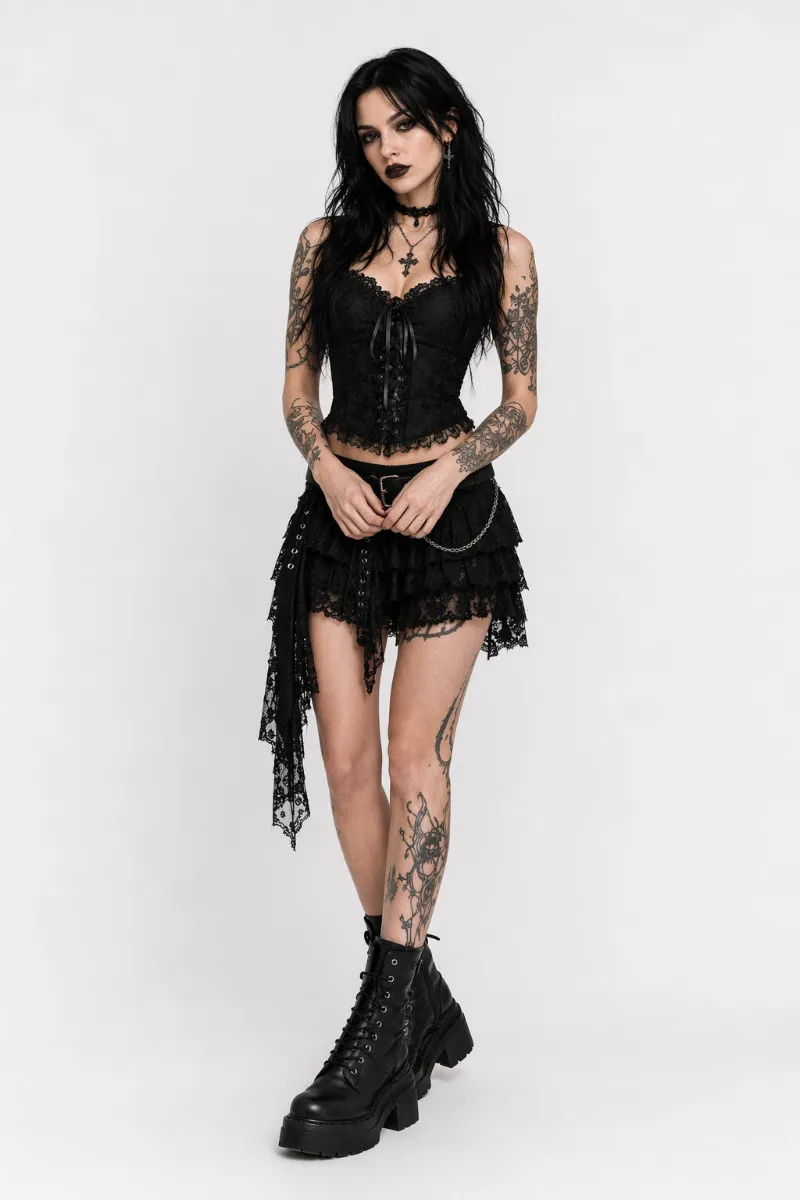
A gothic corset top should offer sturdy boning, quality fabric, and a fit that flatters your shape while staying comfortable for all-day wear. Whether you're building a daily look or assembling a statement outfit, the right corset balances structure with wearability. We tested dozens of pieces from The Cursed Closet to identify what separates a well-made top from one that digs, warps, or falls apart after a few wears.
Boning Type and Placement
The boning determines how much structure your corset provides and how long it holds its shape. Steel boning offers the most support and creates a defined silhouette, while spiral steel allows more flexibility for movement. Plastic boning is lighter and more affordable but tends to warp over time, especially in longer pieces.
Look for corsets with boning channels that run vertically along the torso, spaced one to two inches apart. The channels should be stitched securely on both sides so the boning stays in place during wear. Front-busk closures need at least two bones flanking the closure to prevent gaping. Back lacing should have bones on either side of the grommets to distribute tension evenly.
If you plan to wear your corset over other clothing or for shorter periods, plastic boning works fine. For all-day wear or a more dramatic shape, steel boning is worth the investment. Pair your corset with a gothic skirt or goth pants for a complete look that holds up through long events.
Fabric and Lining Quality
Cotton, satin, brocade, and mesh are the most common corset fabrics, each with different care needs and durability. Cotton breathes well and works for everyday wear, while satin and brocade suit formal or evening looks. Mesh panels add stretch and airflow, useful if you want a closer fit without sacrificing comfort.
Check the lining material. A cotton or cotton-blend lining wicks moisture and prevents the outer fabric from absorbing body oils. Unlined corsets can feel scratchy and show sweat stains quickly. The lining should lie flat without bunching, and seams should be finished cleanly so no raw edges rub against your skin.
Gothic corset top styles often feature lace overlays or leather accents. Lace should be sewn down at stress points, not just glued, or it will peel after a few wears. Faux leather should feel supple, not stiff or plasticky. If you're drawn to layered textures, a gothic lace dress or gothic punk dress from The Cursed Closet offers similar detailing with less structure.
Fit and Sizing Considerations
Corsets run smaller than standard tops because they're designed to cinch. Measure your natural waist and underbust, then compare those numbers to the brand's size chart. Most corsets adjust two to four inches via lacing, so if you fall between sizes, choose the larger one for comfort.
- Underbust corsets sit below the bust and pair well with bralettes or a spiked bra for edge.
- Overbust styles include built-in cups and eliminate the need for a separate bra, though fit can be tricky if your bust and waist are very different sizes.
- Waist cinchers are shorter and sit at the natural waist, ideal for layering over a goth halter top or under a jacket.
Try the corset on over a thin fitted tank to see how it sits. The top and bottom edges should lie flat against your body without digging in or flaring out. If the boning pokes your hips or ribs, the corset is too short for your torso. If it rides up in back, it's too long or the lacing is too loose at the waist.
For help choosing the right measurements, check the latest sizing details on The Cursed Closet's site before you order.
Closure Style and Adjustability
Gothic corsets typically close with a front busk, back lacing, or both. A front busk makes the corset easy to get on and off, while back lacing lets you fine-tune the fit. Combination styles offer the best of both: hook the busk for structure, then tighten or loosen the lacing as needed.
Grommets should be metal, not plastic, and set into reinforced fabric strips. Count at least ten to twelve grommets for a waist-length corset; fewer means less adjustability. The lacing itself should be flat ribbon or cord, not round shoelace-style string that digs into your fingers when you pull.
Side or front zip closures are rare in true corsets but common in corset-style tops. These are faster to put on but offer zero adjustability. If your weight fluctuates or you want versatility across outfits, skip zips in favor of lacing.
Care and Durability
Hand-wash your corset in cool water with mild detergent, then lay it flat to dry. Machine washing can snap boning, fray lace, and warp the fabric. Never put a corset in the dryer. If you wear it frequently, spot-clean underarm areas between full washes to extend the life of the piece.
Store corsets flat or loosely rolled, not folded, so the boning doesn't crease. Hanging them can stretch the fabric at the shoulder straps or waist. If you collect multiple pieces, keep them in a drawer with goth jewelry or goth rings organized nearby for quick styling.
Quality corsets last years with proper care. Budget pieces often show wear after a dozen uses, with fraying grommets, torn lining, or bent boning. If a corset costs less than half the average for its style, check reviews carefully for complaints about construction.
Styling and Versatility
A well-chosen gothic corset top works across casual and formal settings. Layer it over a long-sleeve tee or turtleneck for everyday wear, or pair it with a gothic lace dress as a statement overlay. Underbust styles let you play with contrasting tops underneath, while overbust corsets stand alone with minimal styling.
For a cohesive wardrobe, choose a corset in black, deep red, or purple so it pairs easily with your existing goth clothing dresses and bottoms. Prints and metallics make bold focal points but limit mix-and-match options. If you're new to corsets, start with a classic black underbust in cotton or satin.
Don't forget accessories. A gothic cross necklace draws the eye up and balances the corset's structured lines. Rings and bracelets add detail without competing for attention. Keep the rest of your look streamlined so the corset remains the centerpiece.
Ready to find your next piece? Grab the code and save 10% sitewide at The Cursed Closet.
 Shopping at The Cursed Closet? See today's verified The Cursed Closet discount code
Frequently asked questions
How tight should a gothic corset top fit?
The corset should feel snug but not restrictive. You should be able to breathe normally and sit comfortably. If the boning digs into your ribs or you can't take a full breath, loosen the lacing by an inch or two.
Can I wear a corset top all day?
Yes, if it fits properly and uses quality boning. Start with a few hours and gradually increase wear time so your body adjusts. Take breaks if you feel discomfort, and always loosen the lacing before sitting for long periods.
What's the difference between a corset and a corset-style top?
A true corset uses steel or spiral boning and lacing to cinch the waist. A corset-style top mimics the look with decorative lacing or light boning but offers minimal shaping. True corsets provide more structure and last longer.
Do I need to wear anything under a corset?
A thin cotton camisole or tank protects the lining from body oils and makes the corset more comfortable against your skin. It also makes washing easier since you can clean the underlayer more frequently than the corset itself.
How do I know if the boning is good quality?
Flex the boning gently. Steel should spring back to shape immediately, while plastic may stay bent. Check that the boning sits flat in its channels and doesn't poke through the fabric at the ends.
Can I alter a corset if it doesn't fit perfectly?
Minor adjustments like shortening straps or taking in the lining are possible, but altering boning placement or grommet positions requires specialized skills. It's easier to exchange for a better size than to alter a corset after purchase.