
How to Pick the Right Magazine Holster or OWB Kydex Double Magazine Holster for Range and Daily Carry

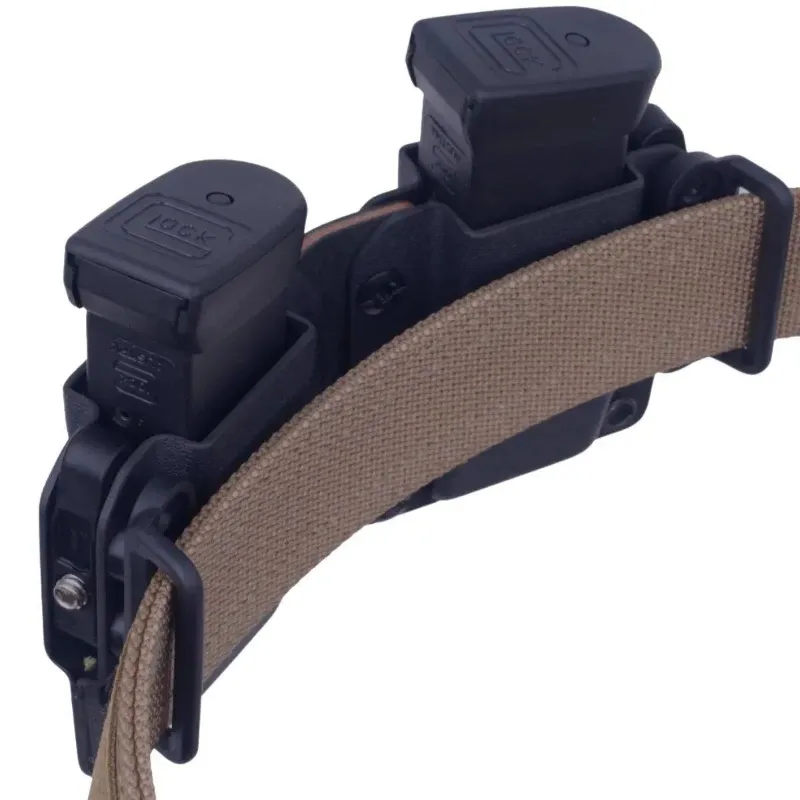
The right OWB KYDEX Double Magazine Holster for range work and daily carry is the one that fits your exact magazines, rides securely on a real carry belt, and gives you a clean reload without digging into your side. If you shoot classes, train often, or want a simple spare-mag setup, OWB makes sense because it is easy to access and easy to put on or take off. Before you buy, it also helps to compare your pistol, belt, and carry style so you are not pairing a good carrier with the wrong support gear.
Start with fit, not just “double mag” labeling
A lot of buyers assume any double carrier will work across several pistols, but magazine dimensions matter. A slim single-stack or micro-compact setup like a glock 43x or lcp can feel very different from a thicker magazine for a glock 29. Even if the carrier looks close, the wrong fit can affect retention, draw speed, and how much the rig leans away from the body.
What we check first:
- Whether the carrier is made for your specific magazine pattern
- How much retention adjustment you actually get
- Whether the mags sit high enough for a full firing grip during reloads
- Whether the body shape spreads the bulk so it does not create a hot spot on the belt line
If you already carry a pistol in kydex holsters, an OWB mag setup often feels familiar because the draw and reholster behavior are similarly crisp. For buyers who switch between pistols, that consistency matters more than a universal claim on the product page.
When an OWB KYDEX Double Magazine Holster makes more sense than IWB
OWB is usually the better pick for training, range sessions, winter carry, and anyone who wants easier access to spare magazines. It is also a smart choice if you spend long hours seated and find inside-the-waistband mag carriers too intrusive.
Here is the quick comparison:
| Setup | Best for | Main tradeoff |
|---|---|---|
| OWB double mag carrier | Range work, classes, open carry, faster access | Harder to conceal under light clothing |
| IWB mag carrier | Deep concealment, lighter daily carry | Slower access for some users and more pressure on the waistline |
| Single OWB carrier | Minimal bulk with one spare mag | Less onboard capacity |
If you want background on the OWB format, Magazine Holster OWB (Dual layer) shows the general design logic well. If concealment is your top priority instead, this overview of IWB Mag Carriers | Inside the Waistband Magazine Carriers is useful for comparing ride style and body contact.
For most shoppers, the decision is simple:
- Choose OWB if access and training speed come first
- Choose IWB if concealment is non-negotiable
- Choose double over single if your normal use includes drills, classes, or longer outings
If you are shopping now, check the latest price instead of relying on an old screenshot or forum post.
Belt choice is what makes or breaks the setup
Even a great carrier will feel mediocre on a floppy belt. The biggest reason people dislike OWB mag carriers is not the holster body itself. It is weak support from the belt.
A sturdy gun belt, tactical belt, or edc belt helps in three ways:
- It keeps the carrier close to the body
- It reduces bouncing during movement
- It gives you a more repeatable draw angle under stress
If your current belt twists when you clip on gear, upgrade that first. In a lot of cases, a proper belt improves comfort more than changing the mag carrier.
Hardware matters too. Some users like belt clips for simple OWB mounting, while others look at ulticlip style attachment for niche setups. For a true OWB double carrier, we usually prefer conventional belt-mounted hardware because it spreads weight better and feels more stable during reloads.
If you are trying to buy once, grab the code before you compare final options.
How to match carry position to your body and daily routine
The best placement for an OWB KYDEX Double Magazine Holster is usually just forward of the support-side hip, where you can reach both magazines cleanly without over-rotating your shoulder. That said, body type and clothing change the ideal position.
Use this checklist:
- Stand naturally and test where your support hand lands without reaching
- Check that your elbow can clear outerwear
- Sit down and make sure the carrier does not jab the chair or your ribs
- Practice one-handed garment clearing if you plan to conceal it under a jacket or overshirt
This is especially relevant if your pistol setup changes. Someone carrying a fn 509c holster may want a different belt tension and spacing than someone running a smaller platform like a kel tec p32 holster. The magazine carrier should support the whole system, not just exist beside it.
For range days, do not forget support gear. A simple set of ear plugs belongs in the same buying decision because comfort and consistency at the range affect how much you actually train.
Materials, retention, and what to inspect before you buy
The main advantage of a kydex-style carrier is predictable retention. That is why so many shooters pair a mag pouch with their existing kydex holsters. You get a firm draw, a clean reinsert, and less collapse than soft pouches.
Before buying, inspect these details:
- Edge finishing so the carrier does not feel sharp against your side or hand
- Screw quality and whether retention can be adjusted without drama
- Attachment spacing that matches your belt width
- Enough clearance to grab the magazine baseplate cleanly
A good OWB KYDEX Double Magazine Holster should hold the mags securely during walking, bending, and getting in and out of a vehicle, but it should not force a violent tug on every reload. If possible, set retention with the exact magazines you use most.
One more practical tip: if you plan to wear heavier layers in colder months, leave room in your setup for a slightly thicker outer garment. That can change how far you need to reach and how tight your belt feels by the end of the day.
Who this setup suits best
An OWB KYDEX Double Magazine Holster is usually a strong fit for:
- Shooters who train reloads regularly
- Range users who want a consistent draw without digging into the waistline
- Carriers who wear jackets, overshirts, or other cover garments often
- Anyone building a more stable belt setup around a dedicated carry belt
It may be less ideal for:
- Very light summer concealment in thin clothing
- Buyers who only want one spare mag and minimum bulk
- People using a soft casual belt that cannot support the weight
Our bottom line is simple: prioritize exact magazine fit, then belt quality, then placement. If you do that, you are far more likely to end up with a carrier you will actually wear and train with. And if you are ready to buy, buy with our code so you can check the current Rounded Gear offer before ordering.
Frequently asked questions
Is an OWB KYDEX Double Magazine Holster good for both range use and daily carry?
Yes, if you want fast access, easy reholstering, and a stable draw from the belt line. For concealed carry, the tradeoff is that OWB usually needs a cover garment and a tighter belt setup than an IWB mag carrier.
What belt should I use with a double mag carrier?
A stiff carry belt matters more than most people expect. A purpose-built gun belt, tactical belt, or EDC belt helps keep the carrier from tipping outward, shifting on the draw, or printing more than necessary.
Do I need different mag carriers for a glock 43x and glock 29?
Usually, yes. Magazine size, width, and retention needs can differ enough that fit and draw consistency suffer if you force one carrier to do everything. Always confirm the carrier is made for your magazine pattern.
Are belt clips or an UltiClip better for a magazine holster?
Standard belt clips are usually the simpler choice for OWB because they pair well with a dedicated belt. UltiClip-style hardware can make sense in some setups, but for an OWB double carrier, belt-mounted hardware is often the more stable option.
How tight should magazine retention be?
Tight enough that the magazines stay put when you move, bend, or sit, but not so tight that your reload feels jerky or inconsistent. If the carrier allows adjustment, tune it with your actual magazines and your normal belt.