
Ping Pong Machines vs Tennis Robots: Training Features Compared

Ping Pong Machine vs Tennis Robot: Which Training Tool Fits Your Game?
A ping pong machine delivers targeted table tennis drills in a compact footprint, while a tennis robot fires balls across a full court for groundstroke practice. Both tools let you train solo with adjustable spin, speed, and ball placement, but they differ sharply in portability, cost, and the physical demands they place on your training sessions. We tested both categories to help you decide which machine matches your sport, space, and skill development goals.
Size, Portability, and Space Requirements
Table tennis robots sit at one end of your ping pong table and typically weigh 5 to 15 pounds. A ping pong machine or pingpong server folds or disassembles for closet storage, making it ideal for basement setups or garage practice. You need roughly 9 by 5 feet of clear floor space plus room to move.
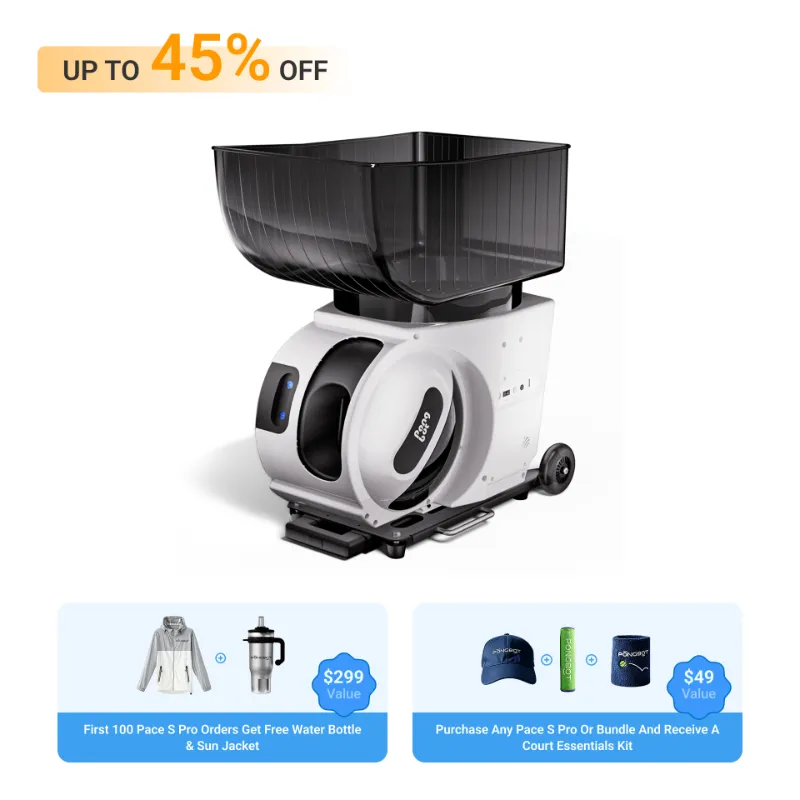
Tennis robots are larger, heavier machines that often include wheels for court transport. A tennis robot like the pongbot pace s pro demands a full tennis court or at least a half-court with a backstop. Many models weigh 30 to 50 pounds and require a tennis ball hopper or built-in ball capacity of 100 to 300 balls. Storage means garage or shed space, and you will need a vehicle to move it between courts unless you have a permanent practice area.
| Feature | Ping Pong Machine | Tennis Robot |
|---|---|---|
| Weight | 5-15 lbs | 30-50 lbs |
| Storage | Closet, shelf | Garage, shed |
| Space needed | 9×5 ft + table | Full or half tennis court |
Training Features: Spin, Speed, and Drill Programming
Both machines offer programmable drills, but the complexity scales with the sport. A robot ping pong machine delivers topspin, backspin, sidespin, and mixed-spin sequences at speeds up to 120 balls per minute. Advanced models let you program multi-ball routines that simulate match patterns, and some connect to smartphone apps for drill libraries. Table tennis rackets benefit most from rapid-fire drills that build reflex speed and spin recognition at close range.
Tennis robots throw balls at speeds from 10 to 80 mph with topspin, backspin, or flat trajectories. The pongbot pace s pro and similar models include oscillation (random or fixed horizontal placement), elevation control (lobs vs. groundstrokes), and interval timing so you can practice movement footwork between shots. High-end machines add two-line drills (crosscourt and down-the-line sequences) and remote control via app or wristband. Pressureless tennis balls work best in these machines because they maintain consistent bounce over thousands of hits without losing pressure.
Ball Capacity, Pickup, and Session Length
Ping pong machines hold 50 to 200 balls in an internal hopper. You spend less time chasing balls because the table and net contain them, and a tennis ball picker upper (designed for tennis) will not help here. Instead, you scoop balls by hand or use a simple collector net. Sessions run 10 to 30 minutes before you reload, and the small ball size makes collection quick.
Tennis robots store 100 to 300 pressurized tennis balls or pressureless tennis balls in a top-mounted hopper. After a drill, you collect balls across the court with a tennis ball hopper or tennis ball picker upper, which can take 5 to 10 minutes depending on ball spread. We recommend pressureless balls for machine use because they last longer and cost less per session, though some players prefer the feel of pressurized balls for match-realistic bounce.
Power Source and Battery Life
Most ping pong machines plug into standard AC outlets, though a few battery-powered models offer 2 to 4 hours of cordless use. You rarely need portability beyond moving the machine from storage to table, so corded power is rarely a limitation.
Tennis robots split between AC and rechargeable lithium batteries. Battery models deliver 2 to 6 hours per charge, enough for multiple practice sessions, but you need access to an outlet for recharging overnight. Court players value battery power because not all courts have nearby outlets. Check the latest price and power specs before you buy, especially if your practice court lacks electrical access.
Cost and Long-Term Investment
A ping pong machine for sale typically ranges from entry-level models under $300 to advanced programmable units near $2,000. The ping pong machine price reflects ball capacity, spin variety, and app connectivity. For most club-level players, a mid-range robot ping pong machine between $500 and $1,000 delivers reliable drills without breaking the budget.
Tennis robots start around $800 and climb above $3,000 for professional-grade machines with full oscillation, app control, and tournament-level spin. The ping pong robot price is lower overall because the balls, mechanics, and court footprint are simpler. You also save on accessories: a professional table tennis racket and a set of ping pong balls cost far less than a tennis ball hopper, hundreds of tennis balls, and court time.
Grab the code if you are shopping for a tennis robot; our discount applies to PONGBOT models and can cut the upfront cost.
Who Should Choose Each Machine
Choose a ping pong machine if you play table tennis regularly, have limited space, and want to sharpen reflexes, spin recognition, and close-range footwork. The compact size and quick setup make it easy to squeeze in 20-minute drills several times a week. A pingpong server suits basement practice, apartment rec rooms, and garage training without requiring a second player.
Pick a tennis robot if you play on outdoor or indoor courts, need groundstroke repetition, and have the space and budget for a larger machine. The pongbot pace s pro and similar models excel at building endurance, movement patterns, and shot consistency over longer rallies. Tennis players who lack regular hitting partners gain the most, and the investment pays off in match performance. If you cross-train with pickleball, a pickleball machine ai offers another option with lighter balls and shorter court dimensions.
For context on how these machines fit into broader training, the guide to buying a table tennis robot 2026 breaks down feature priorities, and recent advances in robotic training show how far machine learning has pushed these tools. You can also explore detailed robot rankings to see how specific models stack up in independent testing.
Final Verdict: Match the Machine to Your Sport and Space
A ping pong machine fits your needs if you play table tennis, value portability, and train in tight quarters. A tennis robot suits outdoor court players who need high-volume ball feeding and movement drills. Both machines cut your dependence on practice partners and let you repeat specific shots until muscle memory takes over. Decide based on your primary sport, available space, and whether you can manage the collection and storage demands of a full-size tennis robot. Either way, consistent machine training accelerates skill gains faster than casual match play alone.
Frequently asked questions
Can I use a ping pong machine on any table tennis table?
Yes, most ping pong machines clamp or rest on the far end of any regulation-size table. Check the machine's base width to ensure it fits your table edge, and confirm your net is removable or adjustable if the machine needs clearance.
Do tennis robots work with both pressurized and pressureless balls?
Tennis robots handle both ball types, but pressureless tennis balls last longer in machine use and maintain consistent bounce over thousands of hits. Pressurized balls offer more realistic feel but lose pressure and require frequent replacement.
How long does it take to collect tennis balls after a robot session?
Collecting 100 to 300 balls across a court takes 5 to 10 minutes with a ball hopper or picker upper. A smaller drill area or backstop net cuts collection time significantly.
What is the average ping pong robot price range?
Entry-level models start under $300, mid-range programmable machines run $500 to $1,000, and advanced units with app control and multi-ball routines reach $2,000. Your choice depends on drill complexity and spin features you need.
Can beginners benefit from a robot ping pong machine?
Absolutely. Beginners use lower speed and simple spin settings to build consistent stroke mechanics and footwork without the pressure of a live opponent. Most machines let you start slow and increase difficulty as you improve.
Are battery-powered tennis robots reliable for outdoor courts?
Yes, battery models deliver 2 to 6 hours per charge, enough for multiple sessions. They are ideal for courts without nearby outlets, but you need to recharge overnight and monitor battery life during longer training blocks.