
Ready-to-Feed vs. Powdered Baby Formula: Pros, Cons, and When to Use Each

# Ready-to-Feed vs. Powdered Baby Formula: Pros, Cons, and When to Use Each
If you're standing in the formula aisle (or scrolling online at 2 a.m.), you've probably noticed there are two main ways to buy baby formula: ready-to-feed liquid and powdered. Both are nutritionally complete and safe for your baby — so which one is right for your family? Let's break down the pros, cons, and real-world scenarios where each option shines.
What Is Ready-to-Feed Formula?
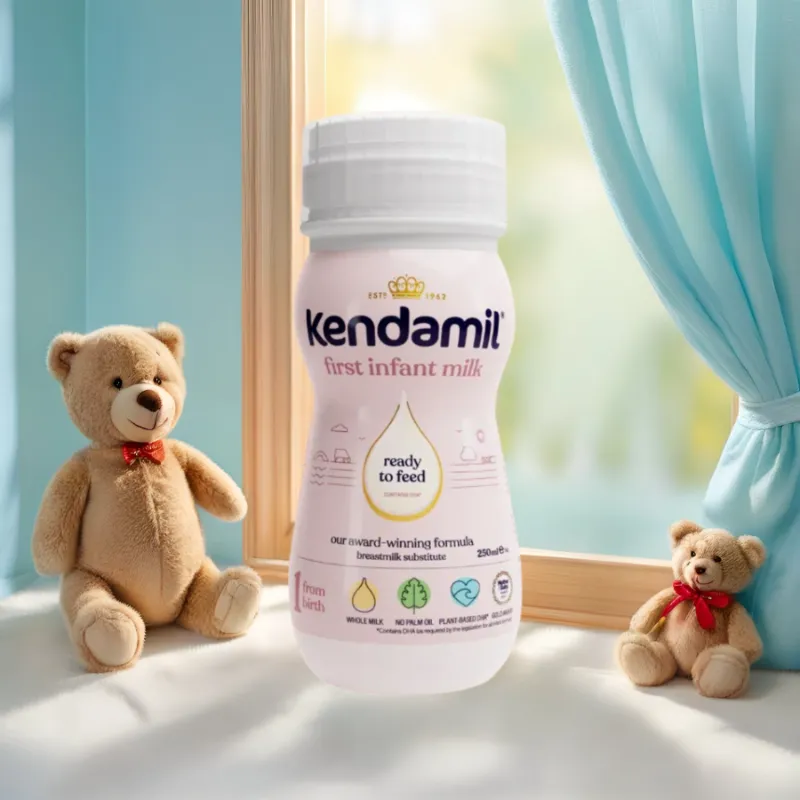
Ready-to-feed (RTF) formula comes pre-mixed in sterile cartons or bottles. There's no measuring, no mixing, and no waiting — you simply open and feed. A favorite among parents is kendamil ready to feed formula, available in convenient single-serve bottles that are perfect for newborns and travel. Parents specifically love the kendamil ready to feed formula stage 1 for its whole-milk creaminess and simple ingredient list, and the version sold as kendamil ready to feed formula with teats even comes ready to attach to a nipple for instant feeding.
Because Kendamil is made in the UK with whole cow's milk and no palm oil, fish oil, or GMOs, the kendamil ready to feed formula organic is one of the cleanest RTF options you can buy — and pairs perfectly with the powdered kendamil formula for everyday use.
Pros of Ready-to-Feed Formula
- Maximum convenience: Open, feed, done. No water, scoops, or temperature guesswork.
- Sterile out of the package: The safest option for newborns under 2–3 months, premature babies, or babies with weakened immune systems, since no water handling means no preparation-related contamination risk.
- Travel-friendly: Perfect for cars, planes, stroller walks, and daycare bags.
- Consistent ratios: No risk of over- or under-dilution from human error.
- Night feeds made easy: No fumbling with measuring in the dark.
Cons of Ready-to-Feed Formula
- Cost: RTF is typically significantly more expensive per ounce than powder. You're paying for the convenience and water content.
- Bulkier to store: Liquid takes up more pantry and diaper-bag space than compact powder tins.
- Shorter shelf life once opened: Opened RTF must be refrigerated and used within 24–48 hours depending on the brand.
- Heavier to ship and carry.
What Is Powdered Formula?
Powdered formula is the most common and economical choice. You mix it with water yourself, which gives you full control over quantity and cost. Popular options include the kendamil organic first infant milk stage 1 800g, the hipp stage 1 organic combiotic formula 800g, and the hipp dutch stage 1 organic combiotic formula — all excellent european baby formula choices known for strict EU organic standards.
Pros of Powdered Formula
- Best value: Powder is the most cost-effective option per feeding, especially for exclusive formula feeding.
- Lightweight and shelf-stable: Unopened tins last months, and a single 800g tin makes dozens of bottles.
- Easy to stage up: As your baby grows, you simply move to products like hipp formula stage 2 without changing format.
- Specialized options: Most specialty formulas — like hipp ha formula and hipp ha (hypoallergenic, partially hydrolyzed) or hipp anti reflux (thickened to reduce spit-up) — are primarily available in powder form.
- Plant-based choices: Options like sprout organic plant-based toddler drink for toddlers are also powder-based.
Cons of Powdered Formula
- Preparation required: You need clean, safe water and accurate scooping — more work, especially for night feeds.
- Not sterile: Powdered formula isn't sterile, which is why it's not recommended for very young or immunocompromised babies unless prepared carefully with hot water per WHO guidelines.
- Room for error: Wrong scoops-to-water ratios can affect nutrition and hydration.
- Travel logistics: You still need access to water (or pre-portioned bottles) on the go.
When to Use Ready-to-Feed
- Newborn stage (0–3 months): Sterility matters most here. Many parents use kendamil ready to feed formula exclusively for the first weeks, then transition to powder.
- Hospital stays and post-birth recovery: Zero prep when you're exhausted.
- Travel and outings: Toss a few bottles in the diaper bag and go.
- Night feeds: Keep one or two in the nursery for instant access.
- Emergency backup: Great to have on hand if your water supply is ever compromised.
When to Use Powdered Formula
- Everyday feeding after the newborn stage: Once your baby is past the highest-risk window, powder is the practical daily choice — try kendamil formula or hipp stage 1 organic combiotic formula 800g.
- Budget-conscious families: If you're feeding formula exclusively, the savings on powder add up fast. Check our The Milky Box discount code page for 10% OFF All Orders to make premium formula even more affordable.
- Babies with special needs: Hypoallergenic hipp ha formula or hipp anti reflux are powder-based and ideal for sensitive tummies.
- Daycare and caregivers: Pre-measured powder portions in formula dispensers are easy for others to prepare correctly.
The Hybrid Approach: Best of Both Worlds
Most experienced parents end up using both. A smart strategy:
- Newborn weeks: RTF for sterility and ease.
- Day-to-day: Powder for value — a good formula milk routine built around options like good formula milk keeps costs manageable.
- Out and about: A stash of kendamil ready to feed formula bottles in the diaper bag.
- Toddler years: Transition to a sprout organic plant-based toddler drink when your little one outgrows infant formula.
How to Choose Quality Formula in Either Format
Whether liquid or powder, look for:
- Strict organic standards: EU-certified european baby formula is held to tougher ingredient rules than many U.S. options — no corn syrup solids, no added sucrose, and GMO-free requirements.
- Whole milk fats: Kendamil's use of whole cream milk provides natural milk fat globules similar to breast milk.
- Stage-appropriate nutrition: Follow your baby's age — start with hipp dutch stage 1 organic combiotic formula or kendamil organic first infant milk stage 1 800g, then move to follow-on stages around 6 months.
- Allergen-aware options: For suspected cow's milk sensitivity, discuss hipp ha with your pediatrician.
To find Kendamil products near you in physical stores, check the official Store Locator.
The Bottom Line
Ready-to-feed formula wins on convenience and sterility — it's the go-to for newborns, travel, and chaotic nights. Powdered formula wins on cost and practicality for everyday feeding once your baby is a bit older. There's no wrong answer, and mixing both is completely normal.
Whatever you choose, The Milky Box has you covered with Europe's most trusted organic formulas in both formats — and don't forget to grab 10% OFF All Orders with our The Milky Box discount code before you check out.
Frequently asked questions
Is ready-to-feed formula safer than powdered formula?
Yes. Ready-to-feed formula is sterile straight from the package, which makes it the safest choice for newborns under 2–3 months, premature babies, and infants with weakened immune systems. Kendamil ready to feed formula is organic and free from palm oil, fish oil, and GMOs.
Why is ready-to-feed formula more expensive than powder?
Yes — ready-to-feed costs noticeably more per ounce because you're paying for pre-mixed liquid and sterile packaging. Many parents use RTF for the newborn stage and travel, then switch to more economical powder like Kendamil or HiPP Stage 1 for daily feeds.
Can I use powdered formula for a newborn?
Yes. Powdered formula is not sterile, so it's generally recommended to use ready-to-feed for babies under 2–3 months. If you do use powder, prepare it carefully with safe water and accurate scoops, following WHO hot-water preparation guidelines for very young infants.
Can I switch between ready-to-feed and powdered formula?
Yes, mixing formats is completely safe and very common. Just transition between bottles as usual — there's no adjustment period needed, and both formats provide complete nutrition when prepared correctly.
How long does opened ready-to-feed formula last?
Once opened, ready-to-feed formula should be refrigerated and used within 24–48 hours depending on the brand. Always check the packaging and discard any leftover formula after a feed — never save partially used bottles.