

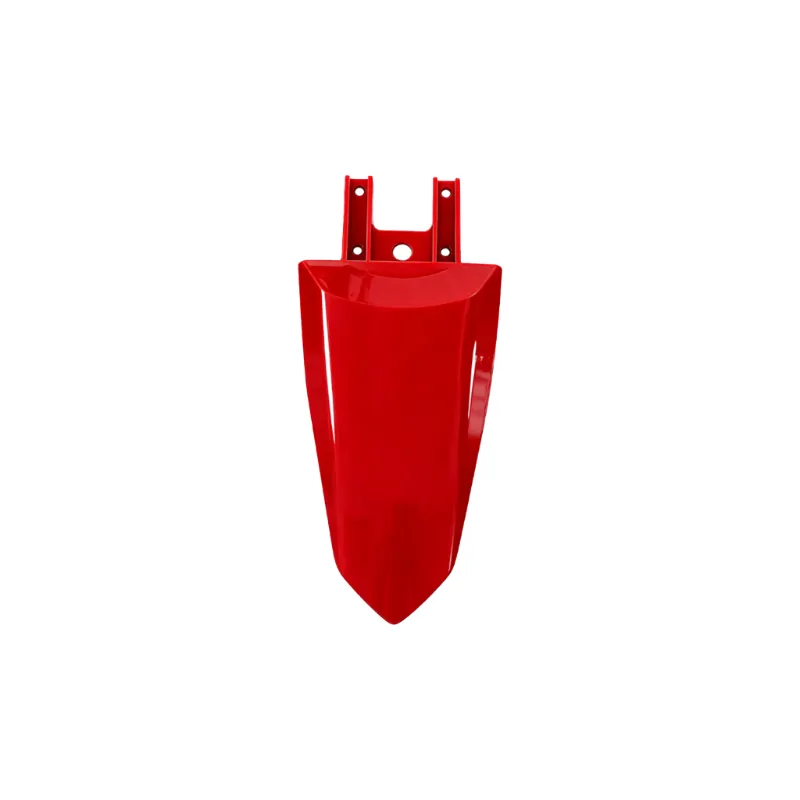
A rear fender is the guard that mounts over the back wheel, and on an Anyland ebike it is the cheapest part you can bolt on to keep mud, grit, and road spray off your battery tray, controller, and back. The confusing part is naming: the same component shows up in listings as a back fender, so shoppers end up comparing two products that do the same job. Here is how we match a rear fender to an anyland rev pro or a wheelie build without buying the wrong mount.
Rear Fender vs Back Fender: One Part, Two Listings
Both names describe the same component. What changes between listings is the mount, the width, and the material, not the job it does.
- Dirt bike and motorcycle catalogs usually say rear fender, and those blades tend to be longer and stiffer.
- Commuter and kids' bike listings usually say back fender, and those guards are shorter and lighter.
- Kit listings bundle the fender with a bracket, which is what you actually want if your frame has no factory mounting holes.
| What the listing says | What you usually get | Check before you buy |
|---|---|---|
| Rear fender | Longer blade, dirt-bike shape | Strut spacing and wheel clearance |
| Back fender | Shorter commuter guard | Rack or seatpost mounting points |
| Fender plus bracket kit | Guard with hardware | Bolt sizes and whether the bracket is model-specific |
If a listing shows a photo of the part mounted on a bike, look at where it attaches, not how it looks in the studio shot. That tells you more than the name in the title.
Matching a Rear Fender to Your Anyland Rev Pro
The anyland rev pro mid-drive electric dirt bike uses a mid-drive layout, which means the motor sits low and central and the rear wheel does the pushing through a chain. That matters for fender choice because a mid-drive dirt bike throws a different spray pattern than a hub-motor commuter: more grit toward the chain line, less toward the axle.
Before you order, run through this list:
- Measure the gap between the swingarm arms where the fender will sit, in millimetres, with the bike on the ground.
- Measure tyre width at the widest knob, not the number printed on the sidewall.
- Confirm the listing includes a bracket, or budget for one separately.
- Prefer listings that name the model or wheel size rather than "universal fit".
That last point is where most returns come from. A guard sold as universal usually fits, but the bracket rarely does without drilling. If you are comparing Anyland Rev Pro models, note that mount points can differ between them, so check the latest price and model details on the store page before you commit.
What to look for in the rear fender itself
- Rigid plastic over soft rubber. Rubber flexes into the tyre under load; stiff plastic holds its shape.
- Rounded edges. Sharp moulded edges chew through cables and riding trousers.
- Two mounting struts rather than one. A single strut lets the guard vibrate at speed.
- A lip at the trailing edge. Without it, water tracks back onto your jacket.
Fender Clearance and Your Wheelie Control Setup
If you run wheelie control or a dedicated wheelie build, fender clearance stops being cosmetic and becomes a safety item. An auto wheelie bike pitches the rear end through a much bigger arc than a commuter ever sees, and a long guard can contact the tyre at full suspension compression.
- Keep at least a finger's width of gap at the tightest point, measured with the bike loaded, not on a stand.
- Check the gap again with the rear suspension fully compressed, or as close as you can get by hand.
- Route brake and motor cables inside the fender line, not under the trailing edge.
- On a self wheelie bike, lean the guard shorter rather than longer. A trimmed fender never hits the tyre.
This is also where controller and fender compatibility comes up. A moxin wheelie controller changes how the rear wheel is driven, not how much room you have, so fit the fender first and tune the controller afterwards. Doing it the other way means you set up your wheelie control around a guard you later move.
Assembly and First Ride Checks After Fitting
Fit the fender on a clean bike so you can see cracks and loose bolts you would otherwise miss.
- Test-fit the bracket with the bolts finger-tight, then check tyre clearance through the full travel.
- Torque the mounting bolts to the spec in your manual, and use thread lock on anything that threads into a plastic boss.
- Spin the wheel by hand and listen for rubbing at the sidewall and the knobs.
- Drop the bike onto its wheels from a few centimetres and watch the guard flex.
- Ride slowly for the first few hundred metres, then recheck every bolt.
Shipping and delivery times are worth planning around here. If your fender arrives after your first ride, you will be riding without one in exactly the conditions that clog a mid-drive drivetrain. Order the guard with the bike where you can.
Care, Spare Parts, and Warranty
A rear fender is a wear item, and treating it like one saves you a messy failure later.
- Wash with mild soap and a soft brush, and skip the high-pressure nozzle near the motor and battery.
- Check the mounting bolts monthly, and after any ride where you bottom out.
- Replace a fender as soon as it cracks at a bolt hole. A crack propagates fast on a vibrating bike.
- Keep the listing and order number. Warranty and after sales support conversations go much faster with them.
- Returns and refunds usually depend on the part being unfitted and undamaged, so test-fit before you drill.
Battery range and charging habits are barely affected by a fender, but a guard that rubs the tyre absolutely will cut your range. That rubbing is one of the most common causes of "my ebike suddenly feels slower".
Where to Buy and How to Use Our Code
Spare parts and accessories for these bikes move quickly, so check what is in stock rather than assuming a listing will stay live. We track the current offer on the Anyland Sport discount page, where the code currently takes $120 off all orders, and that applies whether you are buying a guard, a controller, or the bike itself.
Start with the part you actually need. If the bike is new to you, the fender is the sane first purchase. If you are already chasing wheelie balance, the anyland rev pro and its controller options matter more than the plastic.
Whichever route you take, buy the fender that names your model, measure before you drill, and recheck the bolts after the first ride.
 Shopping at Anyland Sport? See today's verified Anyland Sport discount code
Frequently asked questions
Is a rear fender the same as a back fender?
Yes. Both names describe the guard over the rear wheel, and the difference is only in how a listing is worded. Compare the mounting hardware and width instead of the name.
Will one rear fender fit every Anyland Rev Pro model?
Not always, because mount points can vary between models. Measure your swingarm gap and tyre width, then check that the listing names your model or wheel size before ordering.
Does a fender interfere with wheelie control or a moxin wheelie controller?
It should not, as long as you leave clearance at full suspension compression. Fit and check the fender first, then tune the controller, so your setup is not built around a guard you later move.
How much clearance should I leave between the fender and the tyre?
At least a finger's width at the tightest point with the bike loaded and the suspension compressed. On a self wheelie bike, a shorter or trimmed fender is safer than a long one.
Can I fit a back fender without drilling the frame?
Often yes, if you buy a kit that includes a model-specific bracket. Universal fenders usually need drilling or adaptor plates, which can void a return if it goes wrong.
Where do I check the current price and discount code?
We keep the live offer on the Anyland Sport discount page, including the current $120 off all orders promotion. Check it before you buy a fender or any other spare part.