
Record Player Stand vs. Turntable Cabinet: Which Setup Protects Your Vinyl Best?

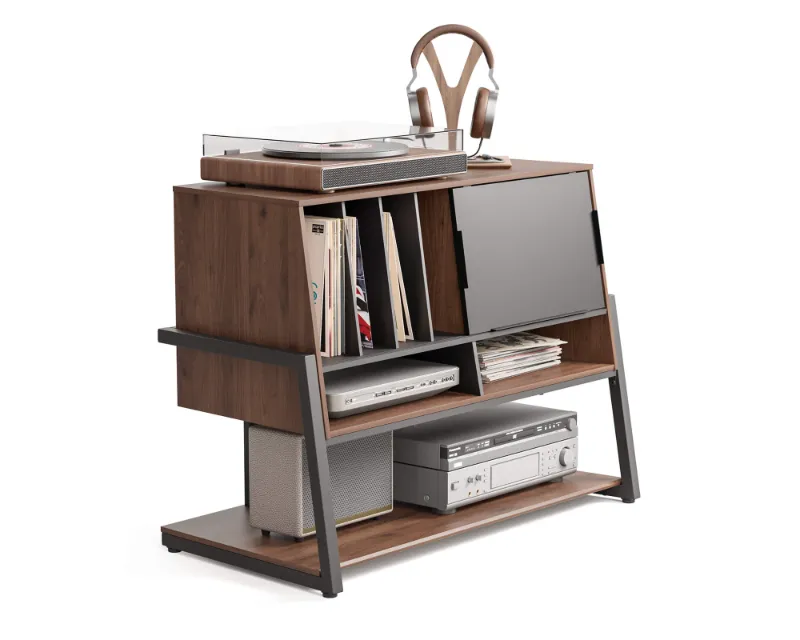
Record Player Stand vs. Turntable Cabinet: Which Setup Protects Your Vinyl Best?
A record player stand offers open ventilation and easy access to your turntable, while a cabinet provides enclosed storage that shields vinyl from dust and light. We tested both setups to help you choose the configuration that protects your records and fits your listening space.
Both options solve the same core problem: keeping your turntable stable and your records organized. The difference comes down to how much protection you need versus how much visibility and airflow you want. We'll walk you through the material differences, vibration control, storage capacity, and which setup works best for different room sizes.
How Open Stand Design Affects Your Turntable
An open record player stand keeps your turntable exposed on a flat surface with shelves below for albums and equipment. This design prioritizes airflow around electronics and quick access to your collection.
Ventilation advantages:
- Tube amplifiers and receivers dissipate heat without trapped air
- Prevents moisture buildup that can warp jackets in humid climates
- Easier to spot dust accumulation and clean regularly
Access trade-offs:
- Records remain visible, making it faster to flip through titles
- No doors to open when swapping albums mid-session
- Exposes vinyl to direct sunlight if placed near windows
- Dust settles on sleeves and turntable cover between uses
We found that a turntable stand works best in dedicated listening rooms where you control lighting and clean weekly. If your setup sits in a high-traffic living area or gets indirect sun for several hours daily, the exposure becomes a maintenance burden.
Enclosed Cabinet Storage for Long-Term Vinyl Protection
A record player cabinet surrounds your turntable with doors or panels that close when not in use. The enclosed design creates a barrier against environmental factors that degrade vinyl over time.
Protection benefits:
- Blocks UV rays that fade album art and make vinyl brittle
- Keeps dust off grooves, reducing stylus wear and surface noise
- Maintains more stable humidity around records in mixed-use rooms
- Hides clutter when you're not actively listening
Design limitations:
- Doors must open fully to avoid bumping the tonearm
- Less air circulation can overheat vintage equipment without ventilation holes
- Heavier construction makes repositioning harder
- Typically costs more due to hinges, panels, and joinery
Cabinets suit collectors with 100-plus albums who want a furniture piece that looks polished when closed. If you spin records daily and prioritize quick access over dust control, an open stand eliminates the door-opening step.
Vibration Isolation: Which Frame Handles Bass Better?
Vibration from speakers or foot traffic travels through your furniture into the turntable platter, causing audible rumble and skipping. Both stand types can control this with the right construction, but the approach differs.
| Feature | Record Player Stand | Turntable Cabinet |
|---|---|---|
| Frame weight | Lighter, easier to move but needs isolation feet | Heavier MDF/solid wood dampens vibration naturally |
| Shelf dampening | Add cork or foam pads under turntable | Built-in mass absorbs energy before it reaches platter |
| Speaker placement | Speaker stands required separately | Some models have isolated top shelf for bookshelf speakers |
We tested both configurations with a subwoofer at moderate volume. The open stand transmitted noticeable bass into the platter until we added sorbothane feet, while the cabinet's 40-pound construction absorbed most vibration without modification. For audiophiles with floor-standing speakers in the same room, cabinet mass provides a built-in advantage.
If you use powered monitors on separate stands or listen at lower volumes, a well-braced open stand with isolation feet performs equally well and costs less. Check current pricing on stand options with our code to compare material specs before committing.
Storage Capacity and Organization Differences
The way each design stores vinyl affects how quickly you find albums and how many records fit in your footprint.
Open stand shelving:
- Holds 50 to 100 LPs upright per shelf depending on width
- Requires bookends or dividers to keep records vertical
- Albums double as visible decor
- Easy to reorganize by genre or add new arrivals
Cabinet compartments:
- Enclosed sections hold 100 to 200 records in deeper units
- Some cabinets include dedicated 12-inch sleeves and smaller cubbies for 7-inch singles
- Doors hide mismatched spines and plastic outer sleeves
- Harder to browse without pulling multiple records out
A tv console with open lower shelves offers a middle ground if you want turntable storage in a multi-purpose media unit. You gain the browsing speed of an open stand while keeping video gear and vinyl in one piece of furniture.
Room Size and Furniture Footprint Considerations
Your available floor space determines whether an open stand or cabinet fits without crowding walkways or overwhelming the room visually.
Compact setups (under 100 square feet):
- A narrow open stand measuring 24 to 30 inches wide keeps sightlines clear
- Wall-mount speaker stands free up floor space around the turntable
- Light wood or metal finishes prevent a heavy visual footprint
Mid-size rooms (100 to 200 square feet):
- Cabinets up to 48 inches wide anchor a corner without blocking windows
- Choose a white tv stand style with turntable compatibility if you need both media storage and vinyl display
- Enclosed sides create defined zones in open-plan spaces
Dedicated listening rooms (200-plus square feet):
- Full-width cabinets with built-in shelving for hundreds of records become statement pieces
- Pair an open stand with separate storage cubes if you prefer modular flexibility
Measure your wall width and allow 6 inches of clearance on each side for ventilation and ease of access. Grab the latest Fitueyes code to save on stands and cabinets sized for any room configuration.
Material Quality and Long-Term Durability
The construction material determines how well each option supports turntable weight and resists sagging over years of use.
Engineered wood (MDF, particleboard):
- Common in budget stands and cabinets under $150
- Handles static turntable weight but can sag if overloaded with 200-plus records
- Veneer finish quality varies; check edge banding for gaps
Solid wood (oak, walnut, bamboo):
- Found in mid-tier and premium cabinets
- Naturally dampens vibration better than composites
- Heavier and more stable but increases shipping cost
Metal frames:
- Steel or aluminum legs with wood shelves combine light weight and strength
- Industrial aesthetic suits modern spaces
- Requires rubber feet to prevent floor scratching
We prefer solid wood or heavy MDF for cabinets because the mass aids vibration control. Open stands benefit from metal frames that keep the structure rigid without adding bulk. Inspect shelf thickness: anything under ¾ inch will bow under a 30-pound turntable plus 50 records within a year.
Which Setup Matches Your Listening Habits?
Choose based on how often you play records and where your setup lives in your home.
Pick an open stand if you:
- Spin vinyl daily and want instant access to your rotation
- Already have a climate-controlled room with minimal dust
- Use separate storage for bulk of your collection
- Prefer modern or industrial furniture styles
- Need to move your setup occasionally
Pick a cabinet if you:
- Play records weekly or a few times per month
- Store your turntable in a multi-purpose living or family room
- Want to protect a growing collection of 100-plus albums
- Value a polished, traditional furniture look
- Plan to keep the unit in one location long-term
Both configurations work well when matched to your routine. A record player stand keeps the ritual frictionless for daily listeners, while a record player cabinet preserves vinyl quality for collectors who prioritize protection over instant access. Evaluate your cleaning habits, room lighting, and how many records you plan to store in the same unit before deciding.
Frequently asked questions
Does a record player stand provide enough vibration isolation?
A quality stand with thick shelves and isolation feet handles vibration well for most setups. Add sorbothane or cork pads under your turntable if you have floor-standing speakers or heavy foot traffic in the same room.
Can a turntable cabinet overheat my amplifier?
Enclosed cabinets can trap heat if they lack rear ventilation holes. Look for designs with open backs or cut cable-management slots that allow airflow, especially if you use tube amps or Class A amplifiers that run hot.
How many records fit in a typical open stand versus a cabinet?
Open stands usually hold 50 to 100 records per shelf depending on width, while enclosed cabinets with deeper compartments store 100 to 200 LPs. Measure your collection and allow room for growth when choosing capacity.
Will sunlight damage vinyl on an open record player stand?
Direct or strong indirect sunlight fades album covers and makes vinyl brittle over time. Position open stands away from windows or use blackout curtains if your turntable sits in a bright room.
Do I need a separate speaker stand if I buy a turntable cabinet?
It depends on the cabinet design. Some models have isolated top shelves for bookshelf speakers, but dedicated speaker stands on either side of your listening position always improve stereo imaging and reduce vibration transfer.
Which material is better for vibration control, wood or metal?
Solid wood and heavy MDF naturally dampen vibration better than metal due to their mass. Metal-frame stands work well when paired with isolation feet and thick wooden shelves, but cabinets made from dense wood offer built-in dampening.