

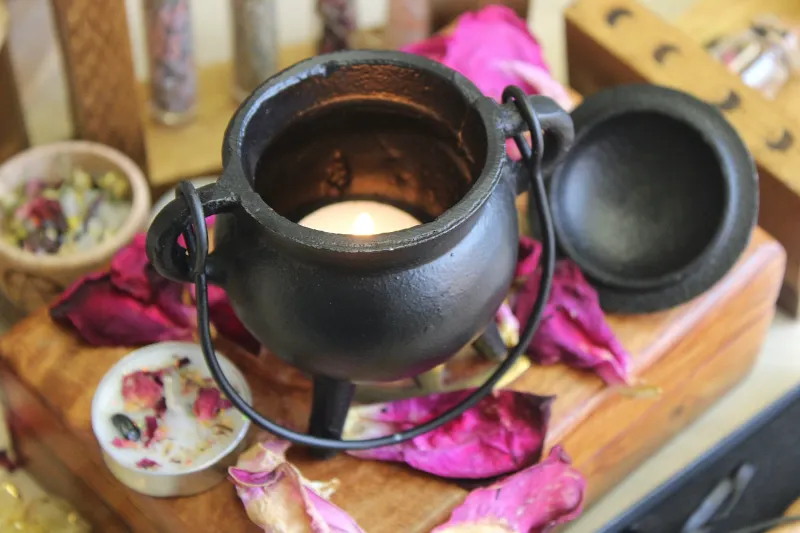
Why Your Cast Iron Witches Pot Needs Seasoning
A cast iron witches pot develops its legendary durability through seasoning, a process that bonds oil to the metal and creates a natural non-stick surface. Without this layer, your cauldron will rust, food and herbs will stick, and the iron will leach into whatever you brew. Whether you just brought home a cast iron witches pot or inherited a vintage piece, seasoning protects your investment and keeps it ready for kitchen witchery, candle work, or decorative use.
Most new cast iron arrives pre-seasoned from the factory, but that initial coat is thin. We recommend adding two or three layers before your first use, then maintaining the patina with regular care. The process takes time but requires minimal effort, and the payoff is a cauldron that lasts generations.
How to Season a New Cast Iron Witches Pot
Start with a clean, dry cauldron. If yours is brand new, wash it with warm water and a stiff brush to remove any factory residue or packaging dust. For unseasoned or stripped cast iron, scrub away any rust with steel wool, rinse thoroughly, and dry completely over low heat on the stove for two minutes.
Apply a thin, even layer of seasoning oil to every surface: inside, outside, the handle, and the bottom. We prefer flaxseed oil for its hard finish or grapeseed oil for availability, but any high smoke-point oil works (avocado, canola, refined coconut). The key word is thin. Wipe the oil on, then wipe it off with a clean cloth until the surface looks almost dry. Excess oil will pool and leave sticky spots.
Place the pot upside down in a cold oven with a sheet of foil or a baking tray on the rack below to catch drips. Heat the oven to 450-500°F and bake for one hour. Turn off the heat and let the cauldron cool completely inside the oven. Repeat this process two to three times for a new pot, or once every few months to refresh the seasoning on a well-used piece. Check current pricing and grab our code before you order.
Daily Care and Cleaning for Cast Iron Cauldrons
After each use, clean your cauldron while it is still warm. Rinse with hot water and scrub with a stiff brush, chainmail scrubber, or non-scratch pad. For stuck-on residue, add coarse salt as an abrasive or simmer a bit of water in the pot to loosen debris. Avoid soap when possible, though a drop of mild dish soap will not ruin seasoning if you rinse thoroughly and re-oil afterward.
Dry your real witches cauldron immediately and completely. We place ours on a warm burner for 30 seconds to evaporate every trace of moisture. While the pot is still warm, rub a few drops of oil into the cooking surface with a paper towel. This quick maintenance builds seasoning over time and prevents rust between uses.
- Never soak cast iron or leave it wet in the sink
- Avoid the dishwasher, which strips seasoning and causes rust
- Do not store with the lid on tight (trapped moisture leads to rust)
- Skip acidic ingredients like tomatoes or vinegar until your seasoning is well established
What to Cook and Burn in Your Cast Iron Witches Pot
Cast iron excels at high-heat searing, slow simmering, and oven baking. In a ritual context, your cauldron can hold candles, burn herbs and resins, brew teas and simmer pots, or serve as a decorative altar piece. For kitchen witchery, cast iron is ideal for cornbread, stews, mulled cider, and rendering fats that further season the surface.
Avoid cooking acidic foods in a newly seasoned pot. Tomato sauce, citrus, and wine can strip the patina before it fully develops. Once your cauldron has six months of regular use and a dark, glassy finish, it will handle occasional acidity without issue.
If you burn loose incense or resin directly in your pot, line the bottom with sand or ash to diffuse heat and prevent thermal shock. Let the cauldron cool naturally after fire work. Quenching hot cast iron with cold water can crack the metal. Many practitioners keep separate cauldrons for cooking and burning. If that appeals to you, consider adding a witchcraft box subscription to discover new herbs and ritual tools each month.
Troubleshooting Rust and Damaged Seasoning
Rust appears as orange or brown spots and feels rough to the touch. It happens when moisture sits on bare iron or when seasoning wears thin. Surface rust is cosmetic and easy to fix. Scrub the affected area with steel wool or a rust eraser until you reach clean metal, rinse, dry thoroughly, and re-season following the oven method above.
If your entire pot has rusted or the seasoning is flaking, strip it down and start fresh. Submerge the cauldron in a 1:1 vinegar and water solution for one to six hours (check every 30 minutes), scrub away the rust and old seasoning, rinse, dry, and season from scratch. For stubborn buildup, a lye bath or electrolysis tank works, but vinegar handles most home projects.
Sticky residue means you used too much oil during seasoning or did not heat the oven hot enough to polymerize it. Wipe away the tackiness with a paper towel, place the pot back in a 500°F oven for an hour, and let it cool. The heat will harden the excess oil into seasoning.
Comparing Cast Iron Sizes and Styles for Witchcraft
Cast iron cauldrons come in a range of sizes, from palm-sized one-cup pots to five-gallon hearth kettles. Consider how you plan to use yours before you buy. A three-legged pot with a handle and spout is traditional for outdoor fire and ritual work, while a flat-bottomed skillet-style cauldron suits stovetop brewing and kitchen witchery.
| Size | Best For | Portability |
|---|---|---|
| 1-2 cups | Burning incense, small candles, travel altar | High |
| 1-2 quarts | Stovetop brews, simmer pots, altar centerpiece | Medium |
| 3-5 quarts | Outdoor fire, large rituals, hearth cooking | Low |
Most practitioners find a two-quart cauldron the sweet spot for versatility. It holds enough for group work or a family simmer pot, fits on a standard burner, and stores easily. If you celebrate the wheel of the year with seasonal decor, pair your cauldron with a crystal moon mystic piece or explore the witch advent calendar for daily surprises leading up to Yule.
Storing and Maintaining Your Cauldron Between Uses
Store your cast iron witches pot in a dry place with good air circulation. We keep ours on an open shelf or hanging from a pot rack. If you must stack cookware, place a paper towel or cloth between pieces to protect the seasoning. Never seal a cauldron in plastic or store it with the lid clamped tight, which traps humidity and invites rust.
Re-season your pot once or twice a year even if it looks perfect. This maintenance coat fills micro-scratches and keeps the patina thick. If you use your cauldron daily, the regular oiling after each wash is usually enough. If it sits idle for months, wipe it with a thin coat of oil before putting it away and again when you bring it back out.
For the best selection and current offers, visit our Witchbox discount code page before you order your next ritual tool or subscription box.
With proper seasoning and daily care, your cast iron witches pot will outlive you and carry your magic forward to the next generation. The patina you build tells the story of every simmer, burn, and ritual, transforming raw iron into a tool with history and power.
 Shopping at Witchbox? See today's verified Witchbox discount code
Frequently asked questions
How often should I season my cast iron witches pot?
Season a new cauldron two to three times before first use, then once or twice a year for maintenance. If you cook or burn in it daily and oil it after each wash, the regular use will build seasoning naturally without extra oven sessions.
Can I use soap on my cast iron cauldron?
A drop of mild dish soap will not ruin seasoning if you rinse thoroughly, dry immediately, and rub a thin layer of oil onto the surface afterward. For most cleaning, hot water and a stiff brush are enough.
What is the best oil for seasoning cast iron?
Flaxseed oil creates the hardest finish, while grapeseed, avocado, and canola oils are affordable and effective. Choose any oil with a smoke point above 400°F and apply it in very thin layers.
Can I burn incense directly in my cast iron pot?
Yes, but line the bottom with sand or ash to diffuse heat and prevent thermal shock. Let the cauldron cool naturally after burning and never quench hot cast iron with cold water.
How do I remove rust from my cauldron?
Scrub the rust with steel wool or a rust eraser until you reach clean metal, rinse and dry thoroughly, then re-season in a 450-500°F oven. For heavy rust, soak the pot in a 1:1 vinegar and water solution for one to six hours before scrubbing.
What size cast iron witches pot should I buy?
A two-quart cauldron offers the best versatility for stovetop brewing, altar work, and small outdoor fires. Smaller one-cup pots suit travel altars and incense burning, while three to five-quart kettles are ideal for group rituals and hearth cooking.