
Self Tan Primer vs No Primer: Does It Actually Make a Difference?

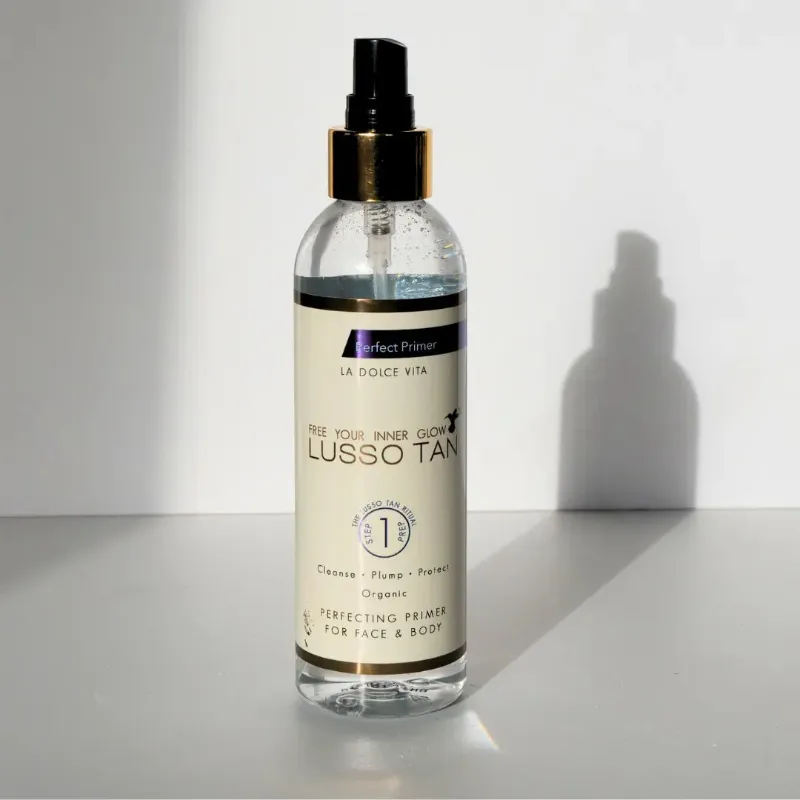
A self tan primer creates a barrier between your skin and tanner that helps the color develop evenly and last longer without patchiness. After testing spray tan primer side by side with bare skin application, we saw noticeable differences in how the color settled, especially around dry patches and areas where tanner typically clings unevenly. Here's what actually changes when you add this step to your routine.
How Self Tan Primer Works on Your Skin
Primer creates a smooth, pH-balanced canvas before you apply tanner. Most self-tanning products contain DHA, which reacts with amino acids on your skin's surface. When your skin has uneven texture, dry patches, or varying moisture levels, DHA clings more heavily to some areas than others.
Spray tan primer addresses this by:
- Filling in fine lines and rough texture so tanner glides on uniformly
- Balancing skin pH to slow down DHA reaction speed and prevent streaking
- Creating a protective layer over extra-dry zones like elbows, knees, and ankles
- Helping tanner absorb at a consistent rate across your entire body
Professional spray tan artists often recommend primer for this exact reason. Why you should use a primer when you tan explains how salons use it to deliver consistent results across different skin types and conditions.
The Real Difference: With vs Without Primer
We tested the lusso self-tanning mousse on one leg with primer and one without to document the actual differences you can expect.
| Test Area | With Primer | Without Primer |
|---|---|---|
| Initial application | Mousse spread smoothly, no drag | Slight patchiness around knees |
| Color after 8 hours | Even medium tan throughout | Darker streaks on dry areas |
| Fade pattern (day 5) | Gradual, uniform lightening | Blotchy spots, uneven fade |
The primer side showed a noticeable advantage in fade quality. Without primer, the tan clung to dry patches and started breaking up around joints by day four. The primed side faded like a gradient, staying attractive for two extra days.
If you're using the lusso self tanning mousse or any mousse formula, primer matters more because mousses are lighter and show texture issues faster than thick lotions. For current pricing and to grab our code for 5% off, check the Lusso Tan discount page.
Best Spray Tan Primer Options and What to Look For
Not all primers deliver the same benefits. The best spray tan primer formulas contain silicone or silica to smooth texture, plus hydrating ingredients that won't make your skin too wet.
Look for these features:
- Fast absorption so you can apply tanner within 2-3 minutes
- Silicone base (dimethicone or cyclopentasiloxane) for slip and smoothness
- No oils that can create a barrier and block DHA penetration
- pH balancers like aloe or chamomile to prep skin chemistry
Designer Skin Sunless Self Tan Primer is a professional-grade option many tanning salons stock because it dries quickly and works under both spray and self-applied formulas. California Tan Sunless Perfecting Primer Spray offers a spray format that's easier to apply evenly on your back and hard-to-reach spots.
For at-home application with the golden glow shimmer mist duo, a spray primer makes the most sense because both products have similar application methods and layer well together.
When Primer Matters Most (and When You Can Skip It)
Primer delivers the biggest benefit if you:
- Have dry or textured skin that shows every imperfection
- Tan frequently and want to extend wear time between applications
- Struggle with streaking around elbows, knees, ankles, or hands
- Use a sunless tanner brush and need extra glide for smooth strokes
You can probably skip primer if your skin is naturally smooth, well-hydrated, and you're only doing an occasional light tan. For pregnancy safe self tanner or self tanning lotions safe during pregnancy, primer adds an extra safety layer since pregnant skin can be more sensitive and reactive to products.
If you're concerned about ingredient safety, stick with water-based primers that list simple ingredients. The sunless tanner and pregnancy category generally avoids heavy fragrance and unnecessary chemicals, and the same principle applies to primers used alongside these formulas.
How to Apply Primer with Your Self Tanner
Proper application timing makes or breaks the results. Follow this sequence for the best outcome:
- Exfoliate 12-24 hours before with a gentle scrub, not right before tanning
- Shower and dry completely so primer goes on clean, bare skin
- Spray or smooth primer everywhere you plan to tan, using slightly more on dry zones
- Wait 2-3 minutes for primer to absorb and create that smooth base
- Apply your self tanner immediately using your normal method and tools
- Blend edges carefully since primer helps tanner spread faster
Use a sunless tanner brush for controlled application, especially around ankles and wrists where primer makes the product more slippery. If you over-apply or make a mistake, keep soap that removes tan nearby to fix errors before the DHA fully develops.
For the current Lusso Tan discount code and pricing, visit the coupon page before you stock up on both primer and tanner together.
The Verdict: Does Primer Actually Matter?
Yes, if you want professional-looking results that last. Our side-by-side test showed that self tan primer extended wear time by roughly two days and eliminated the blotchy fade pattern that makes old self tanner look obvious. The difference is most dramatic on textured or dry skin, but even smooth skin benefits from the pH-balancing and slip that primer provides.
Skip it only if you're doing a very light, short-term tan and your skin is already in excellent condition. For anyone tanning regularly or dealing with uneven color, the spray tan primer and extender benefits justify the extra step and cost. The product pays for itself in fewer applications and better-looking results between tans.
Frequently asked questions
Does self tan primer really prevent streaking?
Yes, primer smooths texture and balances moisture so tanner absorbs evenly instead of clinging to dry patches. We saw significantly fewer streaks on primed skin compared to bare application, especially around joints and rough areas.
Can I use regular moisturizer instead of spray tan primer?
Regular moisturizer adds too much oil and water, which can block DHA and cause uneven color. Primer is designed to smooth without creating a barrier, so it works better for even tanner application.
How long does primer make self tan last?
In our testing, primer extended tan life by about two days and created a more gradual, attractive fade. Without primer, the tan started looking patchy by day four instead of fading evenly.
Do I need primer if I use Lusso self-tanning mousse?
Mousse formulas show texture issues faster than thick lotions, so primer helps significantly. It gives the mousse a smooth surface to grip and prevents the lightweight formula from settling unevenly into dry spots.
Should I apply primer everywhere or just dry areas?
Apply primer everywhere you plan to tan for consistent results, but use slightly more on elbows, knees, ankles, and other dry zones. This creates uniform absorption across your entire body.
Is spray tan primer safe during pregnancy?
Most water-based primers with simple ingredients are considered safe, but check with your doctor. If you're using pregnancy safe self tanner, pair it with a fragrance-free, minimal-ingredient primer for extra caution.