
SUNLU PETG Vs PETG-CF: When Is Carbon Fiber Worth It For Stronger Functional Prints?

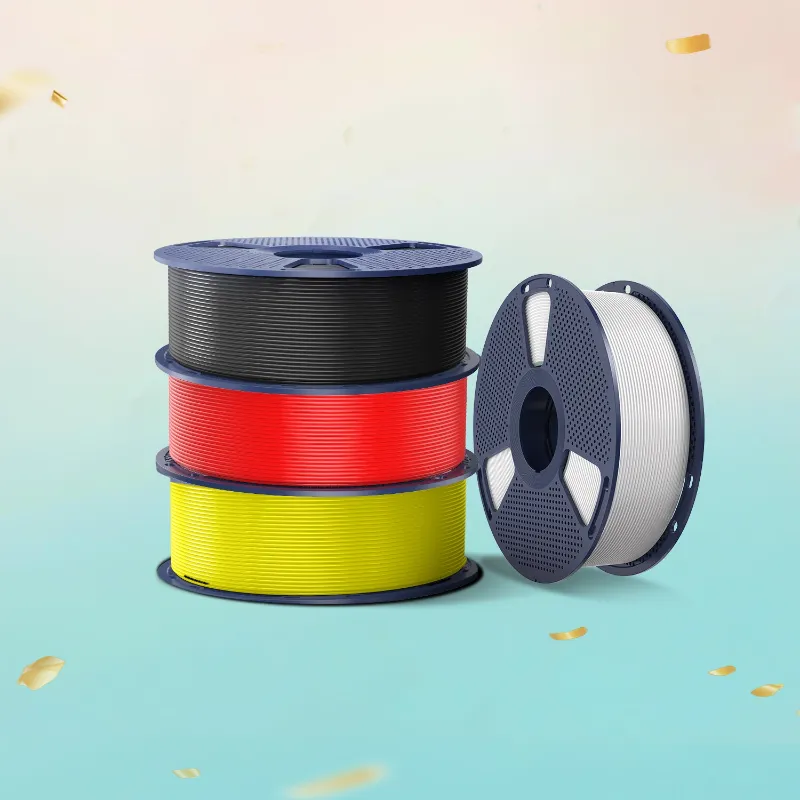
sunlu petg is the smarter choice for most functional prints because it is tough, easier on hardware, and usually easier to tune than petg cf. Carbon fiber PETG becomes worth paying for when your part fails from flex, you want a stiffer feel, or you need cleaner surfaces with less gloss. If you want the current deal before you buy, grab the code.
sunlu petg vs PETG-CF at a glance
Both materials sit in the practical middle ground between easy-printing PLA and more demanding engineering filaments. Regular sunlu petg usually wins on versatility, while PETG-CF leans toward stiffness, dimensional feel, and a more premium matte finish.
| Material | Best for | Tradeoffs |
|---|---|---|
| SUNLU PETG | General functional parts, brackets, boxes, clips, outdoor-use parts | More stringing potential, glossier finish, can flex more under load |
| PETG-CF | Jigs, mounts, enclosures, parts that should feel rigid and look cleaner | More abrasive, less forgiving, may be less ideal for parts that need impact toughness |
In plain terms:
- Choose PETG when the part needs toughness and some give.
- Choose PETG-CF when the part should resist bending and feel more rigid.
- Stay with PETG if you want easier maintenance and broader printer compatibility.
- Move to PETG-CF if you already have a hardened nozzle and decent tuning habits.
When carbon fiber is actually worth it
The biggest reason to upgrade is not raw bragging-rights strength. It is stiffness. Carbon fiber filled PETG can help when a part bends too much before it breaks, which matters for:
- camera or sensor mounts
- printer accessories and tool holders
- fixture arms and alignment jigs
- larger flat parts that sag or vibrate
- enclosures where fit and rigidity matter
That does not mean PETG-CF automatically beats PETG in every durability test. Many real-world parts fail from impact, fatigue at stress points, or bad layer bonding, not from simple bending. In those cases, standard PETG may still be the better material.
A good rule we use is this:
- Print the first version in regular PETG.
- Test where it fails: flex, cracking, heat, or wear.
- Upgrade to PETG-CF only if excess flex is the real problem.
If your part needs a bigger leap in stiffness and heat performance than either PETG option can give, sunlu pa6-cf may be the better step up, but it is a more demanding nylon-based material.
Printability, nozzle wear, and setup differences
If you care about easy, repeatable printing, regular PETG has the edge. PETG-CF is still approachable, but it asks more from your setup.
| Factor | SUNLU PETG | PETG-CF |
|---|---|---|
| Ease of tuning | Easier | Moderate |
| Nozzle wear | Low with standard use | Higher due to abrasive fill |
| Surface finish | Smoother, often shinier | More matte, often hides layer lines better |
| Best hardware match | Most modern printers | Best with hardened nozzle and stable extrusion |
For many home setups, a dryer matters as much as the filament choice. Moisture can make both materials string, pop, or leave rough surfaces. If you print often, a dedicated sunlu s4 or sunlu s2 filament dryer can be a more meaningful upgrade than switching materials too early.
If you are still dialing in a profile, the community discussion on SUNLU PEtG settings VS Bambu Labs PETG is useful for comparing starting points, especially for people searching for sunlu petg settings bambu lab. For general reference, SUNLU PETG Filaments is also handy if you are looking for a starting sunlu petg profile, datasheet-style notes, or a quick check against your own tuning.
sunlu petg settings, drying, and profile tips
The most common tuning mistakes with PETG are too much cooling, printing wet filament, and using PLA habits. PETG usually wants a steadier approach.
Use these practical starting habits:
- Dry the spool if it has been open for a while.
- Reduce cooling if layers look weak or brittle.
- Slow down outer walls before raising temperature too far.
- Watch first-layer squish. PETG can fuse too hard to some build surfaces if you overdo it.
- Tune retraction gently. Aggressive retraction can create jams or inconsistent extrusion.
A few buyer notes matter here:
- If you want the easiest path, regular PETG is usually the safer pick.
- If your printer already handles engineering filaments well, PETG-CF becomes much more attractive.
- If you are reading sunlu petg review threads, pay more attention to printer match and drying than to one person's temperature number.
Before ordering, check the latest price rather than relying on a fixed number, since pricing and bundles can change.
Which one suits your printer and your parts?
Your printer setup changes this decision a lot. On a basic machine with a standard brass nozzle, regular PETG makes more sense. On a tuned machine such as sunlu lite with wear-resistant hardware and controlled filament storage, PETG-CF is easier to justify.
Choose regular PETG if you print:
- storage bins and drawer parts
- protective covers
- clips with a little flex
- outdoor accessories
- prototypes you may reprint often
Choose PETG-CF if you print:
- rigid brackets
- low-flex mounts
- functional cosmetic parts where finish matters
- shop aids that should feel solid and precise
If appearance is your top goal and the part is not heavily stressed, materials like Matte PLA 3D Printer Filament can still make sense. But for practical parts exposed to heat, load, or outdoor conditions, PETG remains the safer baseline.
Our recommendation for most buyers
For most shoppers, we recommend starting with sunlu petg and only moving to PETG-CF after you have identified a real stiffness problem. That path costs less, prints more easily, and avoids unnecessary nozzle wear.
PETG-CF is worth it when:
- the part bends too much in use
- you want a more rigid, premium-looking finish
- your printer is already set up for abrasive materials
- the extra hardware wear is acceptable
Standard PETG is the better buy when:
- you want the broadest usefulness
- you need toughness more than rigidity
- you are still refining your PETG workflow
- you do not want added maintenance
That is why we see regular PETG as the default and PETG-CF as the targeted upgrade. If you are ready to buy or want the current store offer, see the latest code and pricing here.
Frequently asked questions
Is SUNLU PETG or PETG-CF better for most functional parts?
For most brackets, covers, organizers, and general workshop parts, regular PETG is the better buy because it balances toughness, easier printing, and lower nozzle wear. PETG-CF makes more sense when stiffness and reduced flex matter more than impact resistance.
Do I need a hardened nozzle for petg cf?
Yes, a wear-resistant nozzle is the safer choice for PETG-CF because the carbon fiber content is abrasive. A standard brass nozzle can wear faster and change your print consistency over time.
What are good starting points for sunlu petg settings?
Start with the temperature and cooling guidance on the spool or product page, then tune for your printer and enclosure. If you use a Bambu machine, the community thread on [SUNLU PEtG settings VS Bambu Labs PETG](https://forum.bambulab.com/t/sunlu-petg-settings-vs-bambu-labs-petg/234096) is a useful reference point.
Does PETG-CF make prints stronger than sunlu petg?
It often makes parts stiffer, but stiffer is not always stronger in real use. If a part needs to flex or absorb shock, standard PETG can actually be the better choice.
Should I dry SUNLU PETG and PETG-CF before printing?
Yes, both materials print more consistently when kept dry, especially if they have been sitting out. Dry filament can reduce stringing, popping, and surface defects.