

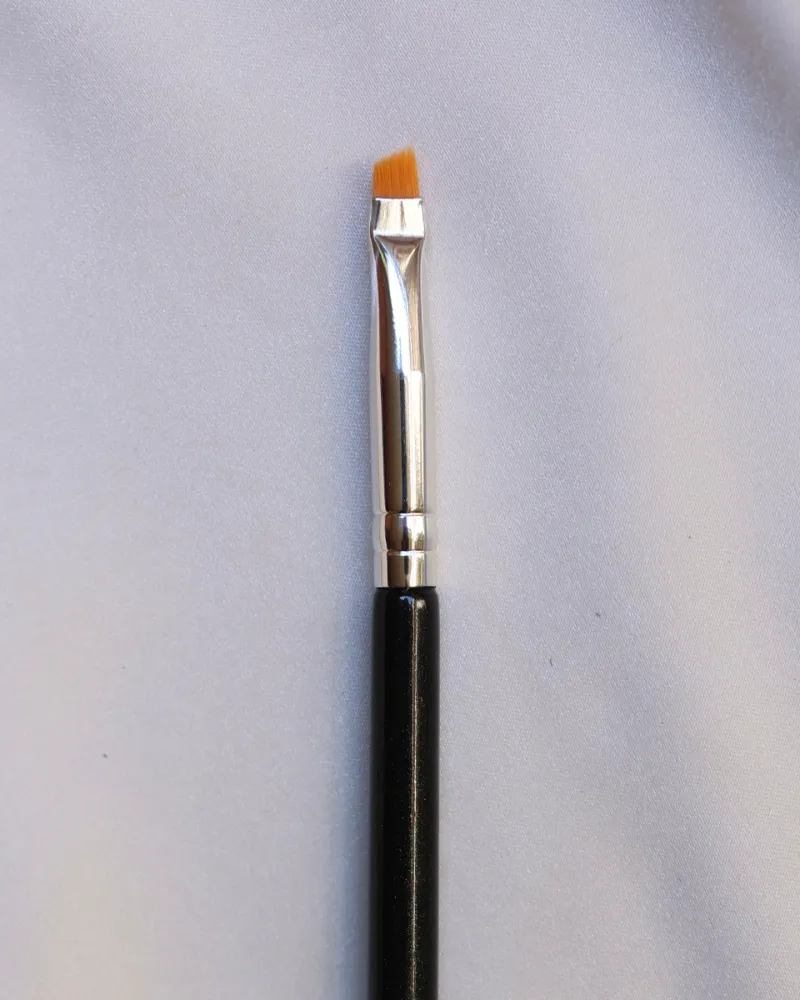
An angled eyeliner brush gives you the crisp, controlled edge you need for winged liner: the slanted bristles act like a built-in stencil, so you can stamp the wing's angle first and then connect it back to your lash line. Get that one move right and the rest of the liner becomes almost easy. In this guide we walk through exactly how to use one, which brush shapes suit which looks, and how to keep your brush performing like new.
Why an Angled Eyeliner Brush Works So Well for Wings
Freehand liner with a pencil or felt tip depends on the tool's tip, which bends, dulls, and drags. An angled eyeliner brush puts the control in your hand instead. The sharp, slanted edge gives you:
- A precise outer corner: the thin, angled tip fits into the tightest part of the outer lash line, where wings start.
- A repeatable angle: you can lay the flat side against the outer corner at the same tilt every time, which is what makes both eyes match.
- Clean edges with gel or cream: the dense bristles pick up pigment evenly and press it onto the lid instead of skipping.
Our go-to is the angled eyeliner brush from Happy Eyelids. The slant is shallow enough for tight inner-corner work but wide enough to stamp a bold wing in one press. If you want to see current pricing or grab the discount code, check the latest offer before you buy.
How to Use an Angled Eyeliner Brush for Winged Liner, Step by Step
Here is the method we use when testing brushes. It works with gel, cream, or tightly packed powder liner.
- Load the brush properly. Drag the angled edge through your gel liner a couple of times so both sides of the slant carry product. Wipe any excess on the back of your hand so the tip is coated, not blobbed.
- Mark the wing's tail. Rest the flat side of the angled eyeliner brush against the outer corner of your eye, angled up toward the end of your brow. Press down once to lay the bottom edge of the wing.
- Build the wing shape. Turn the brush so the slant faces the other way and fill from the tip of the tail back toward the lash line, forming a small triangle. The angled edge does the straight lines for you.
- Connect and line the lash line. Use the thin tip in short strokes, pressing pigment into the roots of the lashes from the middle of the eye outward. Join it to the wing's triangle with no gap.
- Clean up. Dip the tip in makeup remover, blot it, and run the clean edge along the underside of the wing to sharpen the line.
A curved eyeliner brush like the curved eyeliner brush is a good alternative if your hands shake: the curved head rocks along the lash line and needs less steady pressure. Some people use one brush for stamping and the curved one for the lash line itself.
Angled Eyeliner Brush vs Pencil vs Felt Tip
If you are deciding whether the switch is worth it, here is how the main options compare:
| Tool | Best for | Wing precision | Works with |
|---|---|---|---|
| Angled eyeliner brush | Wings, tightlining, gel and cream liner | Highest, edge is controlled by you | Gel, cream, powder |
| Pencil liner | Soft everyday lines, smudged looks | Medium, tip dulls fast | Pencil formulas |
| Felt tip pen | Quick flicks, liquid looks | Good, but fixed tip wears down | Liquid only |
The angled brush wins on precision and flexibility because you can wash it and reuse it with any formula. The felt tip wins on speed. Many of us keep both.
Which Brush Shape for Which Task
Happy Eyelids makes several shapes, and each has a job in an eye look:
- Angled eyeliner brush: wings, tightlining, and sharp lower-lash liner. The core tool for this guide.
- Angled eye brush: a slightly broader slant that doubles for brows and softer, smokier liner. Great if you want one brush that does liner and brow work.
- Angled eyeshadow brush: for smudging liner along the lash line or pressing shadow into the outer V. The angled eyeshadow brush is the bridge between a crisp liner and a smoky edge.
- Eyeshadow eyelid brush: a flat, denser head for packing shadow across the lid. It has no place in the liner step, but it preps the lid so your liner sits on an even base.
- Curved eyeliner brush: rocks along the lash line for an even line with minimal hand control.
A simple starter trio for winged looks is the angled eyeliner brush, the eyeshadow eyelid brush for the lid base, and the angled eyeshadow brush for smudging and softening. If you prefer one brush that handles liner and brows, the angled eye brush is the pick.
Bristle Materials and What to Look For
Most angled liner brushes use synthetic bristles, and for gel and cream liner that is the right choice:
- Synthetic (usually taklon or similar): non-porous, so it does not soak up cream products, and it cleans fast. Best for gel, cream, and liquid liner.
- Natural hair: softer and better for powder, but it absorbs cream pigment and is harder to clean. Fine for smudging powder liner, not ideal for gel.
Check the ferrule (the metal part) too. It should be crimped tight so bristles do not shed into your eye, and the slant should be a clean, sharp line, not a ragged edge. Happy Eyelids' liner brushes are synthetic for exactly these reasons.
Cleaning and Care So Your Wing Stays Sharp
A dirty angled brush loses its crisp edge because built-up pigment rounds off the slant. Keep it sharp with this routine:
- Weekly wash: swirl the head in gentle soap or brush cleanser, rinse with the bristles angled downward, and reshape the slant with your fingers.
- Dry flat or angled down: never upright while soaked, or water loosens the glue in the ferrule.
- Spot clean between uses: a quick wipe on a dry towel after each use keeps the tip crisp for the next wing.
With that care, a good angled liner brush lasts years, which makes it one of the cheapest upgrades in your makeup bag. Happy Eyelids runs a standing 10% off deal, so grab the code if you are stocking up on more than one shape.
Who This Method Suits
Winged liner with an angled brush suits almost everyone, but it is especially worth it if:
- Your hands are not steady enough for freehand flicks with a pen.
- You wear gel or cream liner and want it to last all day without smudging.
- You have hooded or monolid eyes and need to draw the wing open-eye first; the brush's flat edge makes that mapping easier.
- You are tired of replacing dried-out felt tip pens.
Start small: one brush, one gel liner, and the five-step method above. Once the stamp-and-connect motion clicks, winged liner stops being a coin flip and becomes a two-minute step.
 Shopping at Happy Eyelids? See today's verified Happy Eyelids discount code
Frequently asked questions
Can I use an angled eyeliner brush with gel liner only, or does it work with other formulas?
Yes. Gel and cream liner give the crispest edges with an angled brush, but a tightly packed powder liner or even a dark eyeshadow pressed along the slant works too. Synthetic bristles handle all three without soaking up product.
How do I stop my wings from coming out uneven on hooded eyes?
Mark the wing open-eyed using the flat edge of the brush as a guide, then check the angle with your eye closed or half-closed before filling it in. The brush's built-in slant keeps the tail consistent even when your lid shape changes.
Is an angled eyeliner brush better than a felt tip pen for wings?
Both make sharp lines, but an angled eyeliner brush works with gel, cream, and powder formulas, cleans up completely, and never dries out. A felt tip is faster for quick flicks but has a fixed tip that wears down and can't be reused once dry.
Can I use an angled eyeshadow brush for liner too?
Yes. The angled eyeshadow brush has a broader slant designed for smudging liner along the lash line and softening edges into the outer corner. Use it after you've drawn the wing to blur it into a smoky finish.
How often should I clean my angled eyeliner brush?
A quick wipe after each use keeps the tip crisp, and a proper wash with gentle soap once a week keeps pigment from rounding off the slant. Dry it flat or angled downward so water doesn't loosen the ferrule.
What bristle material is best for a curved eyeliner brush or angled liner brush?
Most quality liner brushes, including the ones we use from Happy Eyelids, are synthetic. Synthetic bristles are non-porous, so they don't absorb cream pigment, they clean quickly, and they hold a sharp slant longer than natural hair.