

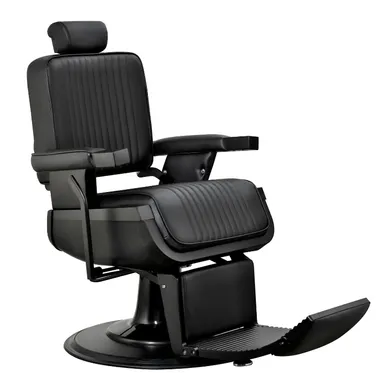
The short answer: buy a salon chair if your day is built around cutting, colouring, blow-drying and longer appointments, and buy a barbershop chair if you run fast, upright clipper work on shorter hair. Most growing businesses eventually own both, but the first purchase should match the services that actually pay your rent. Here is how we compare them, size them and care for them in real shops.
Barbershop Chair vs Salon Chair: The Core Differences
Both are hydraulic or pump chairs with a seat, backrest and footrest. The difference is how they hold the client and what that lets you do.
| Feature | Salon chair | Barbershop chair |
|---|---|---|
| Typical services | Cut, colour, blow-dry, styling | Clipper cuts, fades, beard work |
| Recline | Often reclines for colour and rinsing | Usually stays upright |
| Height range | Set for a stylist working at the sides | Higher lift for standing barbers |
| Footrest | Detachable or flip-up | Heavier, fixed footrest |
| Look | Softer lines, upholstery-led | Strong frame, classic or modern barber styling |
A reclining salon chair is what makes colour, foils and rinsing comfortable for a client sitting for an hour or more. A barbershop chair trades that recline for a taller lift and a solid platform, because barbers stand, lean in and work close to the head all day.
If you are weighing barber chair vs salon chair for a single room, ask which service you sell most of. A shop that does 80 percent clipper work will feel wrong in a soft recliner, and a colour salon will feel wrong in a chair that will not lay back.
Choosing Salon Chair Size Before You Order
Sizing is where most returns start, so measure your room and your clients before you measure your budget.
- Seat width and depth. Wider seats suit bigger clients and longer appointments. Narrow seats save floor space in tight rows.
- Seat height range. The top of the pump travel matters more than the lowest point. A stylist who is tall or short needs the chair to land at the right working height.
- Weight capacity. Check the stated rating rather than assuming, especially if you serve a broad client base.
- Armrest clearance. Removable armrests make colour and capes easier; fixed armrests feel more secure for clipper work.
- Base footprint. A wide hydraulic base needs clearance for the stylist's feet and for a trolley passing behind.
Write the numbers down and compare them against the listing on the store page. If two chairs look identical but one costs less, the base, the pump and the foam density are usually where the difference hides. You can check the latest price on the Aria Chairs offer page before you commit.
Upholstery, Foam and Pump Quality
The parts you cannot see decide how long a chair lasts.
- Foam density. Dense foam holds its shape for years. Soft foam feels great in the showroom and flattens within a season of full-time use.
- Upholstery material. Vinyl is standard because it wipes clean and resists colour, bleach and styling products.
- Pump type. Hydraulic pumps lift smoothly and hold position. Cheaper gas lifts creep down under load.
- Frame and welds. A heavy frame resists the sideways lean that barbers put on a chair every day.
For upholstery care and cleaning, wipe down after every client rather than once a day, and use a disinfectant rated for salon surfaces. lucas cide is the product we reach for because it is made for this job, not for kitchens. Avoid solvent-heavy cleaners on printed or stitched panels, and never soak seams, because trapped moisture is what turns a small split into a replacement.
Fitting Chairs Into Your Salon Furniture Plan
Chairs are only half the room. The rest is salon furniture, and the layout decides how many clients you can serve without crowding.
- Shampoo area. Check shampoo bowl and faucet fit before you buy either piece. A shampoo bowl faucet needs the right deck spacing and supply lines, and retrofitting a bowl to the wrong faucet is a plumbing job nobody budgets for.
- Nail services. A nail desk needs ventilation, client legroom and a technician seated at the right height. Do not squeeze it into leftover space beside a reclining chair.
- Pedicure. A pedicure chair brings pedicure chair plumbing needs with it: hot and cold supply, a drain and a safe electrical point. Plan that before the flooring goes down.
- Barber stations. Upright barbershop chairs work best in a line with shared back-bar storage and mirrors at standing height.
Sketch the floor plan with chair bases marked as circles, then walk the route a client takes from door to chair to basin. If you cannot walk it without turning sideways, the layout is too tight.
Assembly, Delivery and Warranty Coverage
Most chairs arrive part-built in a crate. Assembly and installation is usually a case of bolting the base to the seat, fitting the footrest and checking the pump, and two people can handle it in an hour. Keep the packaging until you have tested the lift through its full range.
Before you order, read three things:
- Order tracking and delivery. Confirm whether the courier delivers to the door or inside the premises. A heavy crate left on a pavement is your problem, not theirs.
- Returns and exchanges. Check the window and whether opened or assembled items are excluded.
- Warranty coverage. Note what is covered on the pump, frame and upholstery separately, because upholstery is often treated differently from mechanical parts.
If you are buying several pieces at once, apply a discount code at checkout rather than buying in two orders. The store page explains how to apply a discount code and shows the current offer, so grab the code before you build the cart.
Which One Suits Your Business?
Choose the chair that matches your average appointment, not your dream shop.
- Full-service salon, colour-heavy: a reclining salon chair is the priority, plus a proper basin and shampoo bowl faucet.
- Barber-focused shop: barbershop chairs first, then durable stations and a washbasin for the clients who want one.
- Nail and pedicure led: nail desks and pedicure chairs come before styling chairs, because that is where revenue sits.
- Mixed or growing: buy one of each and let demand tell you what to add next.
If you are still deciding, order the chair you will use every day and add the second type once the diary is full. See the current Aria Chairs offer to price a starter setup, and check sizes against your room before you order rather than after.
 Shopping at Aria Chairs? See today's verified Aria Chairs discount code
Frequently asked questions
Is a barbershop chair or a salon chair better for a new shop?
It depends on your main service. If most appointments are clipper cuts and beard work, a barbershop chair suits you better. If you colour, style and blow-dry, a reclining salon chair will earn its keep from day one.
How do I choose the right salon chair size for my space?
Measure your seat height range, seat width, armrest clearance and the base footprint, then compare those figures with the listing. Leave enough room behind the chair for a stylist to stand and lean, and enough in front for a trolley to pass.
Does a pedicure chair need special plumbing?
Yes. Pedicure chairs with a basin need hot and cold water supply, a drain and a safe electrical point nearby. Plan the plumbing before the flooring goes in, because retrofitting is far more expensive than installing it up front.
Can I use a salon chair for barbering?
You can, but a reclining chair sits lower and softer than most barbers want. For heavy clipper work, a barbershop chair with a higher lift and a fixed footrest is more comfortable for a standing barber.
How should I clean salon chair upholstery?
Wipe the upholstery down between clients with a disinfectant made for salon surfaces, and avoid soaking the seams. Solvent-heavy cleaners can damage printed panels and stitching over time.
What should I check before ordering salon furniture online?
Confirm the delivery method, the returns window, and what the warranty covers on the pump, frame and upholstery separately. Then apply the discount code at checkout rather than placing two separate orders.