

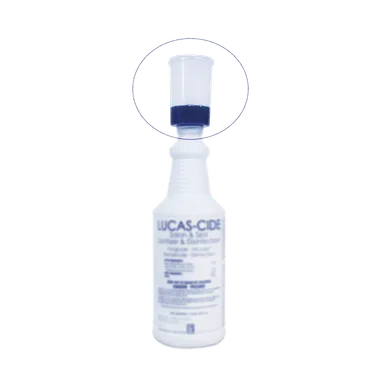
The short answer: lucas cide is a disinfectant concentrate you dilute to the label directions, then apply to the hard, non-porous surfaces of your salon chair, nail desk and pedicure chair, allowing the full contact time before wiping. It is not a fabric cleaner and it is not a substitute for scrubbing off visible debris first. Get that order right and the rest of your cleaning routine falls into place quickly.
Below is the routine we use when we test salon furniture, plus the parts of it people get wrong most often.
What Lucas Cide Does and Where It Fits in Your Routine
Every surface in a salon needs two separate things done to it: cleaning and disinfecting. Cleaning removes hair, dust, product residue and oils. Disinfecting reduces pathogens on a surface that has already been cleaned. Skip the first step and the disinfectant has to fight through a film of styling product, which is why so many chairs end up looking clean but never really getting disinfected.
Our working order is always:
- Clear the station. Brush off clippings, remove towels and tools, empty the nail desk tray.
- Clean. Wipe with a mild detergent or soap solution and a microfiber cloth. Work top to bottom.
- Disinfect. Apply lucas cide at the dilution on the label, wet the whole surface, and leave it for the stated contact time.
- Dry and reset. Wipe dry where the surface is glossy, then restock.
A spray bottle of diluted solution and a labelled cloth per station keeps this fast. Mix small batches and use them within the day rather than storing a bucket of solution for a week.
Step-By-Step: Disinfecting a Salon Chair and Nail Desk
The salon chair
The salon chair is the surface clients touch longest, so it deserves the most attention.
- Wipe the armrests, the hydraulic lever, the footrest and the base first. These are the high-touch points.
- Pay attention to seams and the gap where the backrest meets the seat. Clippings collect there and stay damp.
- Use a soft cloth, not a scouring pad. Abrasives dull the finish on vinyl and leave a dull patch you cannot buff out.
- If the chair has a headrest or neck pillow, remove it and clean the strap and the back of the cushion too.
- Never spray directly into the hydraulic mechanism or the base cylinder. Spray the cloth, then wipe.
The nail desk
A nail desk is a different problem because you are dealing with dust, filings, solvent and polish rather than hair.
- Clear the work surface completely. Disinfectant cannot reach a surface that is covered in bottles.
- Brush or vacuum dust out of the drawer fronts and the wrist rest area before wiping.
- Wipe the laminate or glass top with your diluted solution. On a glossy top, follow with a clean, dry cloth to avoid streaks.
- Dab, do not flood, any absorbent pads or leather-look wrist cushions. Check the label on the cushion material first.
- Wipe the cord channel and the edge of the lamp arm, which is where acetone residue builds up.
Quick reference by surface
| Surface | Cleaning step | Disinfecting step |
|---|---|---|
| Vinyl upholstery | Soap and water, soft cloth | Diluted solution, brief dwell, wipe dry |
| Laminate or glass tops | Detergent wipe | Wet the full surface, respect dwell time |
| Metal frame and levers | Damp cloth | Spray the cloth, not the joint |
| Finished wood trim | Damp cloth, dry immediately | Light wipe only, dry right away |
| Cushions and fabric | Vacuum and spot clean | Follow the fabric care label |
Upholstery Care and Cleaning: What to Wipe and What to Leave Alone
Upholstery is where most damage happens, and it is almost always avoidable. Vinyl and polyurethane covers handle regular disinfectant wiping well. Fabric, suede-look and perforated materials do not, because liquid goes straight through the perforations into the foam.
- Always check the care code on the underside of the seat or the manufacturer's insert before using any chemical.
- Test on a hidden patch, such as the back of the seat or under the skirt, and let it dry fully before committing.
- Use the least wet method that works. Damp cloth, not a soaked one.
- Do not use bleach, acetone or abrasive cream cleaners on upholstery. They strip plasticiser and cause cracking.
- Dry the chair in airflow, not in direct sun, and not next to a hot lamp.
- Repair small cracks early with a vinyl repair kit. Once water gets under the surface, the foam is gone.
If your chairs are already showing wear, replacement covers or a reupholstery job is often cheaper than a new salon furniture set, and it keeps your station layout unchanged.
Pedicure Chair, Shampoo Bowl and Faucet: The Wet Zones
Wet areas need a slightly different rhythm because moisture sits in the fittings.
- Pedicure chair: wipe the basin and the jet area after every client, then run the tub's cleaning cycle with a dedicated pipe cleaner. Plenty of tub problems are plumbing issues rather than hygiene issues, so check pedicure chair plumbing needs before you assume a stain is permanent. A pedicure chair with a magnetic jet is far easier to clean than an older fixed-jet model.
- Shampoo bowl and faucet: rinse and dry the bowl after every wash, and wipe the spray head and the handle, which collect shampoo residue and hard water. If you are replacing fittings, check shampoo bowl and faucet fit carefully, since bowl hole size and spacing vary.
- Around the shampoo bowl faucet: use a soft cloth and a diluted solution, then dry. Chrome left wet develops spotting that looks like damage but usually is not.
- Drains and traps: clear hair weekly. No disinfectant fixes a slow drain.
Barber Chair vs Salon Chair: Same Routine, Different Wear Points
People ask about the barbershop chair difference regularly. The cleaning method is identical, but where you focus changes. Barber chairs usually have heavier vinyl, a wider footrest and more exposed metal, so clipper oil and talc build up on the armrests and the frame. Salon chairs tend to collect colour and bleach splatter, which needs wiping immediately rather than at the end of the day. In both cases, wipe spills when they happen, because dried colour is far harder to remove than fresh colour.
Before you buy, also get the sizing and assembly questions out of the way. Choosing salon chair size comes down to seat height range against your floor and your average client, and assembly and installation is usually a bolt-together job you can do in the room.
Where to Buy and How to Save
Buying through Aria Chairs means you can bundle your disinfectant with the furniture itself. Apply the store discount code at checkout by entering it in the promo field before you pay, and confirm the discount appears in the order summary. If you want the current offer in one place, grab the code here and check the latest price before you commit.
Once you order, keep the confirmation email. Order tracking and delivery updates come through it, and it is the reference you need for returns and exchanges or a warranty coverage claim later.
A simple rule to finish on: clean first, disinfect second, dry third, and keep your lucas cide dilution matched to the label every time you mix a fresh batch.
 Shopping at Aria Chairs? See today's verified Aria Chairs discount code
Frequently asked questions
Can I use Lucas Cide on fabric salon chairs?
Only if the fabric care label allows liquid disinfectants. On most fabric and suede-look covers, liquid soaks through into the foam, so stick to vacuuming and spot cleaning with a product your manufacturer approves.
Should I spray Lucas Cide directly on a salon chair?
Spray it onto a cloth and wipe, then wet the surface evenly. Direct spraying into seams, hydraulic levers or the base cylinder can push liquid where it will not dry and can affect the mechanism.
How often should a nail desk be disinfected?
Wipe the work surface between every client and do a full clean, including drawer fronts and the wrist rest area, at the end of each day. Heavier dust build-up means more frequent full cleans.
Does disinfectant damage pedicure chair jets?
Not when you use the product made for that purpose and follow the tub's cleaning cycle. Use a dedicated pipe or line cleaner for the internals and keep the surface disinfectant for the basin and surrounds.
Can I clean a shampoo bowl faucet with the same solution?
Yes, on the plated surfaces, as long as you wipe it dry afterwards. Keep the solution out of the aerator and the handle internals, and avoid abrasive pads that scratch the finish.
Where do I apply the discount code when I order?
Enter it in the promo or discount field at checkout before you pay, then confirm the reduction shows in your order summary. Our store coupon page has the current offer and the details.