

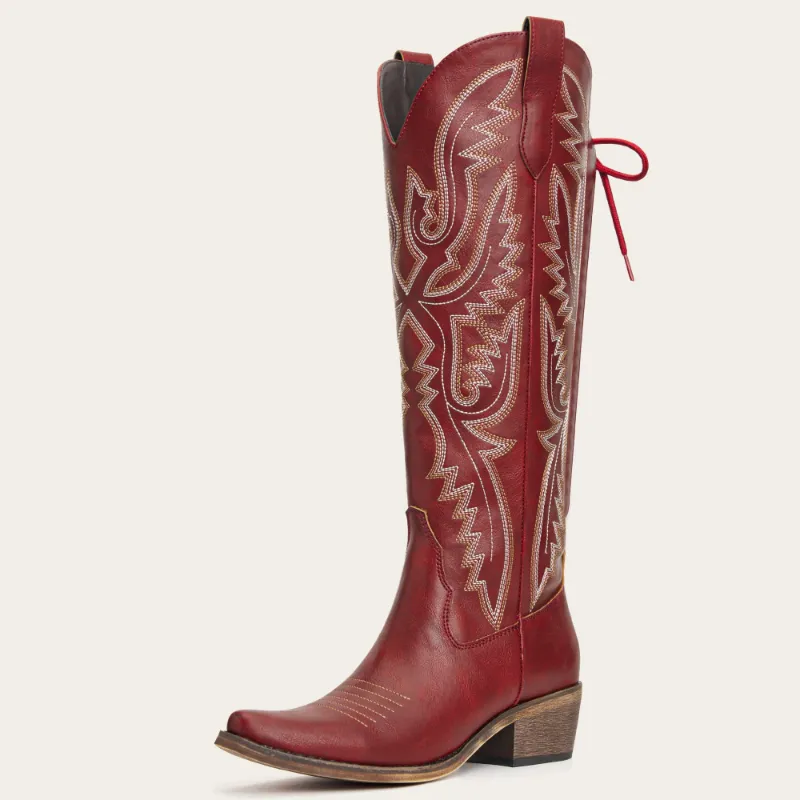
Tight burgundy cowboy boots usually need a break-in period, not a return label. In most cases the leather at the vamp, instep and heel counter softens within a handful of wears and the fit settles down. Below are the checks and fixes we run through at home, including what genuinely works on leather, what does not, and when a pair really is the wrong size.
First, Check the Fit: When Tight Is Normal and When It Is Not
A new western boot should feel snug, but snug is not the same as painful. Before you start any break-in routine, work out where the tightness actually sits, because that decides whether stretching will help or waste your time.
- Toe box: you should be able to wiggle your toes freely. If the widest part of your foot is pinched, the boot is too narrow and no amount of wear will fix it.
- Instep: firm pressure across the top of the foot is normal in new leather. Sharp pain, numbness or a hot spot is not.
- Heel: a small amount of lift is expected in a stiff new sole. If your heel slides up more than a centimetre, the boot may be too long.
- Width versus length: most "too tight" boots are actually too narrow rather than too short, which is why sizing up often makes the boot too long instead of more comfortable.
Our cowgirl boot sizing guide walks through how to measure at the end of the day, when feet are at their largest, and how to check the current offer while you decide.
Break-In Steps That Work on Burgundy Cowboy Boots
Break-in is mostly heat, moisture and repeated flex, in that order. None of these steps are dramatic, and that is the point: slow, repeated wear shapes leather without wrecking it.
- Wear them indoors first. Twenty to thirty minutes at a time, on carpet, for three or four days. This softens the leather against your own foot heat before you commit to a long walk outside. Keep the soles clean so you can still return the pair if needed.
- Flex the vamp by hand. Bend the boot at the point where your foot naturally creases, working it back and forth while you watch TV. This is the single most effective trick for a stiff new pair.
- Use the right socks. A medium-weight wool or cotton sock adds gentle pressure that stretches leather where you need it. Skip thick hiking socks if the boot already pinches at the widest part of your foot.
- Try a targeted stretch. A boot stretcher, or a stretch spray applied inside the instep, works well on leather. Place the stretcher in while the leather is warm, leave it overnight, then repeat. We do not recommend soaking full leather boots in water: it can stain the finish and weaken the sole.
- Condition as you go. A light conditioner before the first wear and again after the first week keeps the leather supple enough to give. Dry leather cracks instead of stretching.
- Increase wear time gradually. Move from 30 minutes indoors to a short errand, then a half day. Give the boot a rest day in between so the leather can settle.
If you are ordering a second colour while you break the first pair in, burgundy cowboy boots and red western boots tend to be cut from similar lasts, so the fit advice carries over from one to the other.
Leather Versus Synthetic: What Break-In to Expect
Material matters more than any stretching method. Leather has memory and gives; synthetic uppers mostly do not. Here is the honest comparison.
| Material | How it breaks in | What to expect |
|---|---|---|
| Full-grain or top-grain leather | Molds to your foot with warmth and flex | Noticeable give in 5 to 10 wears |
| Suede and nubuck | Softens quickly, stretches unevenly | Comfortable early, shape can drift |
| PU or vegan leather | Minimal stretch, mostly padding compresses | Fit stays close to day one |
This is the key difference between leather and synthetic materials. A pair of vegan cowboy boots is a good choice for a lot of reasons, but treat sizing as a one-shot decision: buy the size that fits comfortably out of the box rather than assuming it will relax like leather. With leather, buying half a size small and breaking in is a workable strategy. With synthetic, it usually is not.
Adjusting Fit Without Returning
Sometimes the fix is not break-in at all, it is what you put inside the boot. These adjustments are cheap and reversible.
- Insoles: a thin leather insole takes up volume in a slightly loose boot. Never add one to a boot that is already tight.
- Heel grips: useful if the foot fit is good but the heel slips, which is common in tall western boots where the shaft fit and the foot fit are separate issues.
- Sock swaps: thinner socks buy you a surprising amount of room in the toe box, and thicker ones help a boot that is snug across the instep.
- Boot trees: cedar trees hold the shape of the vamp between wears and stop the leather from collapsing where it creases.
One thing worth knowing: a snug shaft on a tall boot is not the same problem as a tight foot. The shaft relaxes with wear around the calf, so do not size up just because the upper feels close in the first week.
Care and Storage During Break-In
Boot care and storage during the first month decides whether the shape holds. Condition sparingly, every couple of weeks at most, and buff off excess so the leather can breathe. Keep the pair away from radiators, car boots and sunny windowsills, since heat dries leather and causes cracking rather than stretching. Store them upright with trees in, in a dry cupboard, and rotate with another pair so each boot has a full day to dry out. If you want the exact pairs we test alongside these, the Redtop store page lists the range and the current 15% off offer.
When to Exchange Instead
Break-in cannot fix a wrong size, and pushing through pain is how people end up with blisters and pairs that never get worn. Exchange the pair if any of these sound familiar:
- Pain at the ball of the foot that does not ease after two weeks of consistent short wears.
- Toes touching the front of the boot, or the widest part of your foot sitting on the widest part of the sole with pressure on both sides.
- Heel lift that stays the same after the sole has started to flex.
- Redness, rubbing marks or numbness during a normal day.
Check the returns and exchanges window before you wear them outside, and keep the box and tags. If you are deciding between colours, this is where ordering two and returning one works well, whether that means pink cowgirl boots for a summer outfit or a neutral cream pair for everyday wear. Our page also explains how to apply a discount code at checkout and how we check whether an offer is verified, so you are not chasing a code that has already expired.
The short version: give leather a fair two weeks of gentle, repeated wear, adjust the fit from the inside where you can, and only then decide. Most tight pairs come good, and the ones that do not were the wrong size from the start.
 Shopping at Redtop? See today's verified Redtop discount code
Frequently asked questions
How long do burgundy cowboy boots take to break in?
Most leather pairs feel noticeably better after five to ten short wears, with the vamp and heel counter softening first. Stiff soles and heavy leather can take a couple of weeks of consistent, short sessions. If nothing has changed after two weeks, the size is probably wrong.
Can I stretch tight cowboy boots at home?
Yes, leather responds well to a boot stretcher or a stretch spray used with gentle warmth and repeated flexing by hand. Avoid soaking the boots in water, which can stain the finish and damage the sole. Synthetic uppers barely stretch, so buy the right size instead.
Should I size up in vegan cowboy boots?
Treat the first fit as final, because vegan leather stretches far less than real leather. If you are between sizes and the boot feels snug across the widest part of your foot, go up rather than waiting for it to relax.
Why are tall western boots tight around the calf but fine in the foot?
Shaft fit and foot fit are separate. A close shaft is normal in a new tall boot and loosens as the leather softens around your calf, so do not size up for the shaft alone if the foot feels right.
What is the difference between snug and too small in a new boot?
Snug means firm, even pressure with wiggle room for your toes. Too small means pinching at the widest part of your foot, toes touching the front, or numbness. The first improves with wear, the second does not.
Can I return cowboy boots after wearing them indoors?
Many stores accept returns on boots that have only been worn indoors on clean carpet, provided the box and tags are intact. Check the returns and exchanges window before you wear them outside, and keep the soles clean until you are sure.