
Building a 1/64 Scale Garage Diorama: Essential Parts and Layout Tips

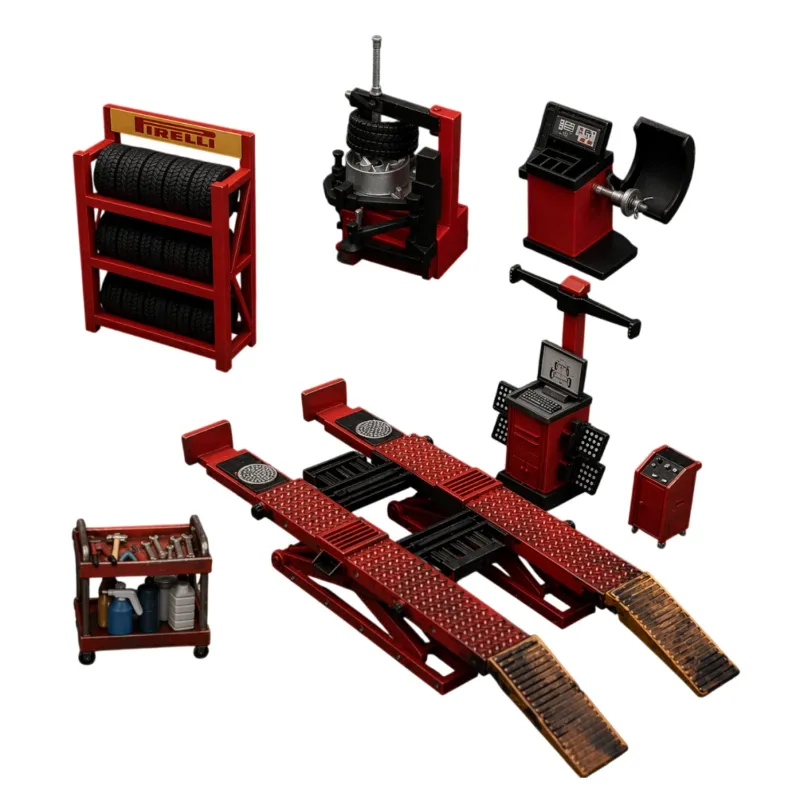
A 1 64 scale garage diorama transforms your diecast collection into a realistic automotive scene when you combine the right buildings, accessories, and layout strategy. We've tested dozens of diorama kits and detail parts to identify what works best for collectors building workshop, street, or showroom displays around popular models like the takumi ae86 and custom hot wheels.
What Makes a Great 1/64 Scale Garage Diorama
The foundation of any diorama is accurate scale proportion and thematic consistency. Your garage scene needs structures sized correctly for 1:64 models, which measure roughly 2.5 to 3 inches long for standard sedans.
Key elements include:
- Base platform – foam board, wood, or pre-made diorama bases that support your layout without warping
- Buildings and walls – garage bays, tool cabinets, or storefront facades scaled to match your cars
- Accessories – workbenches, floor jacks, tool chests, and automotive details like a nos bottle or spoiler diecast
- Figures and signage – mechanics, posters, and branded decals that add realism
A complete 1 64 scale garage diorama kit bundles walls, flooring textures, and basic accessories, saving you hours of sourcing individual pieces. We recommend starting with a kit if this is your first build, then expanding with standalone accessories as your scene grows.
For pricing on complete kits and individual parts, check the latest deals and our discount code before you buy.
Choosing the Right Diorama Buildings and Structures
1/64 diorama buildings set the visual tone for your entire scene. Single-bay garage kits work well for tight spaces and solo car displays, while multi-bay shops or street storefronts suit larger collections.
Material matters:
- Resin buildings offer fine detail and durability but cost more and require painting
- Printed cardstock kits assemble quickly, weigh less, and many come pre-printed with brick or siding textures
- 3D-printed structures let you customize dimensions, though surface finish varies by printer quality
We've found that Japanese-themed kits, like the initial d diorama, pair naturally with tuner cars and provide authentic touge or mountain-road backdrops. For American muscle or modern sports builds, industrial garage bays with roll-up doors and concrete textures deliver a workshop vibe.
Tip: Measure your display shelf before committing to a building footprint. A typical single-bay 1:64 garage spans 8 to 10 inches wide and 6 to 8 inches deep.
Essential 1/64 Diorama Accessories for Realism
Accessories bridge the gap between a static model and a lived-in scene. Shoppers often search for 1/64 diorama accessories that add mechanical detail, and these categories deliver the most impact per square inch:
| Accessory Type | Examples | Why It Works |
|---|---|---|
| Engine parts | 13b rotary engine, valve covers | Suggests work in progress |
| Wheels & tires | 370z nismo wheels, blitz 03 wheels, bbs wheels lmr | Fills workbench or floor space realistically |
| Tools & equipment | Floor jacks, toolboxes, lifts | Anchors the "working garage" theme |
| Small details | Oil cans, tire stacks, nos bottle | Adds color and narrative |
Wheel sets like 370z nismo rims work double duty: display them on a workbench as spare parts or mount them on a lift alongside your car. Mixing loose detail parts with your hero vehicle creates depth and invites the viewer's eye to explore the scene.
According to Shop Diecast Garage Collectibles, layering accessories at multiple heights prevents flat, one-dimensional layouts.
Layout Strategies for a 1 64 Scale Garage Diorama
Composition determines whether your diorama feels cramped or balanced. Start by designating foreground, midground, and background zones.
Foreground (closest to viewer): Place your hero car or truck here, angled slightly to show detail. Add a floor jack or mechanic figure beside it to suggest action.
Midground: Position workbenches, tool chests, or a second vehicle. This is where accessories like a spoiler diecast on a bench or an engine block on a stand shine.
Background: Mount wall-hung tools, pegboards, posters, or a 1:64 diorama house facade if you're building a street scene instead of a closed garage.
Avoid symmetry. Offset your car from center, cluster accessories in groups of odd numbers, and vary heights with shelving or stacked tire sets.
If you're building a novelty or humor scene, a shopping cart go kart adds a playful accent that breaks the serious tuner-shop mood.
Lighting and Finishing Touches
Lighting elevates a static diorama into a display piece. Battery-powered LED strips fit easily under shelves or behind walls, casting realistic shadows and highlighting paint details on your custom hot wheels.
Quick upgrades:
- Warm white LEDs (3000K) mimic incandescent shop bulbs
- Adhesive strips mount cleanly without drilling
- Flickering LEDs simulate welding or neon signs
For flooring, apply weathering powders or dry-brush acrylic paint to simulate oil stains, tire marks, and concrete wear. Real garages show use, and a pristine floor reads as sterile.
Finally, consider a dust cover or acrylic case. Dioramas collect dust faster than standalone models because of their horizontal surfaces and small crevices.
Grab our 5% discount code to save on diorama kits, accessories, and detail parts from 164model.
Who Should Build a 1/64 Garage Diorama
This scale suits collectors who want maximum detail in minimal space. A compact 1 64 diorama kits setup fits a standard bookshelf, making it ideal for apartment dwellers or anyone without room for larger scales like 1:18 or 1:24.
Dioramas also appeal to:
- Photographers who shoot diecast for social media and want realistic backdrops
- Customizers displaying before-and-after builds with spare parts visible
- Themed collectors building specific eras (90s JDM, classic Americana, Formula Drift paddock)
If you enjoy world-building and storytelling, dioramas let you create narrative scenes rather than simply lining up cars on a shelf. Each accessory and layout choice tells a piece of your garage's story.
Frequently asked questions
What size base do I need for a 1 64 scale garage diorama?
Most single-car garage dioramas work well on an 8x10 inch or 10x12 inch base. Multi-car scenes or street layouts may need 12x18 inches or larger, depending on how many vehicles and accessories you plan to display.
Can I mix different diorama kits and accessories together?
Yes, as long as everything is true 1:64 scale. Buildings, figures, and accessories from different manufacturers will match in size, though you may need to repaint or weather pieces to unify the color palette and wear level.
Do I need to paint resin diorama buildings?
Most resin buildings ship unpainted in a single neutral color, so painting is necessary for realism. Use acrylic hobby paints and apply a primer coat first for best adhesion and detail.
Where should I place lighting in my garage diorama?
Mount LED strips along the top rear edge or under shelving to cast downward light, mimicking overhead shop lights. Side lighting creates dramatic shadows but can obscure detail if too harsh.
Are 1/64 diorama accessories compatible with Hot Wheels and Matchbox cars?
Yes, Hot Wheels and Matchbox are both 1:64 scale, so diorama accessories, buildings, and figures will match their size. This makes them perfect candidates for custom garage scenes.
How do I prevent dust buildup on my diorama?
Use an acrylic display case or a clear dust cover. For open displays, a soft brush or compressed air every few weeks keeps accessories and surfaces clean without disturbing the layout.