
How to Choose the Right Bailey Brush for Your Cat's Coat Type

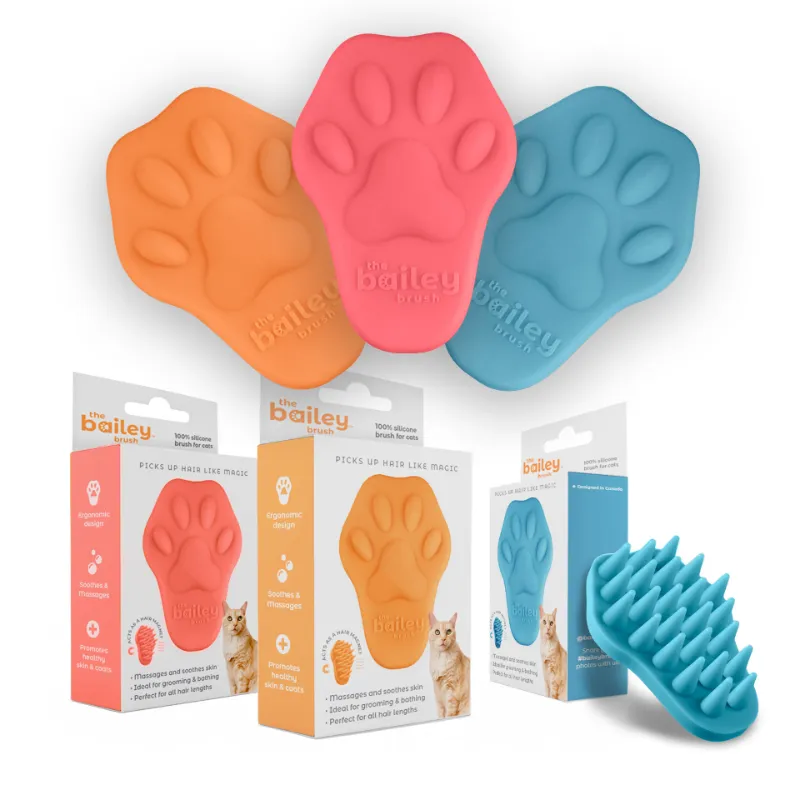
Understanding Your Cat's Coat Before You Buy a Cat Brush
The right cat brush depends entirely on whether your cat has short, medium, or long fur, plus how much they shed. We tested the full Bailey Brush lineup on cats with different coat types, and matching the tool to the fur made grooming faster, more comfortable, and far more effective. Skip the guesswork by identifying your cat's coat characteristics first, then choosing the brush designed for that texture and length.
Short-Haired Cats: Smooth Coats That Shed Year-Round
Breeds like American Shorthairs, Siamese, and Bengals have close-lying fur that sheds constantly but doesn't mat. For these cats, a short hair cat brush with fine, flexible bristles lifts loose hair without scraping sensitive skin. We found that rubber-tipped pins work especially well because they massage while they collect fur.
A cat brush for shedding is your go-to for weekly maintenance on short coats. Run it along the back, sides, and tail in the direction of hair growth. Most short-haired cats tolerate brushing well, so this is also a great bonding ritual. Grab the current discount if you're stocking up on grooming tools for multiple cats.
Medium and Long-Haired Cats: Preventing Mats and Tangles
Persian, Maine Coon, Ragdoll, and Himalayan cats need daily or every-other-day brushing to prevent painful mats. For these coats, a cat slicker brush with angled wire pins reaches through the topcoat to remove loose undercoat without pulling. We tested slicker brushes on a long-haired rescue with moderate matting, and the Bailey version cleared tangles in half the time of generic brands.
Start at the head and work toward the tail in small sections. If you hit a mat, hold the fur close to the skin and gently work the slicker through from the outside in. For cats that already have heavy shedding, pair the slicker with a cat brush deshedding tool once a week during peak shed seasons (spring and fall). The deshedding rake has wider-spaced teeth that pull out the dense undercoat long-haired breeds shed in clumps.
Shedding vs. Deshedding: What's the Difference?
A standard cat brush removes surface fur and distributes skin oils, which keeps the coat shiny. A deshedding tool goes deeper, pulling out the thick undercoat that causes furball tumbleweeds and excessive shedding. According to experts at The Spruce Pets, deshedding tools can reduce loose hair by up to 90% when used correctly.
We recommend using a deshedding brush only once or twice a week, even during heavy shed periods. Overuse can irritate skin or thin the coat. For daily grooming, stick with a slicker or bristle brush, then add the deshedding session mid-week.
Coat Texture Matters: Fine, Coarse, and Double Coats
Not all short-haired cats have the same texture. Russian Blues and Burmese have plush, fine fur that needs a softer touch, while domestic shorthairs often have coarser guard hairs. Fine coats do best with a rubber or silicone brush that won't break delicate hairs. Coarse or wiry coats tolerate firmer slicker pins.
Double-coated breeds like the British Shorthair shed their undercoat seasonally and need a two-tool approach: a slicker for the topcoat and a deshedding rake for the dense underlayer. Single-coated breeds (like the Siamese) have no undercoat, so a basic bristle or pin brush is enough.
| Coat Type | Best Brush Style | Frequency |
|---|---|---|
| Short, single coat | Rubber or soft bristle | 1-2 times/week |
| Short, double coat | Slicker + deshedding tool | 2-3 times/week |
| Long, single or double | Slicker brush daily, deshedding weekly | Daily + weekly |
Self-Cleaning Features and Maintenance
Bailey Brush tools include a self-cleaning button that retracts or ejects collected fur with one press. We tested this feature across all models, and it genuinely saves time when you're grooming multiple cats or dealing with a heavy shedder. After each session, tap the release, peel off the fur pad, and you're done.
Clean the brush itself every few weeks by rinsing the pins with warm water and a drop of dish soap, then air-dry completely. This prevents oil buildup and keeps the bristles working smoothly. Check the latest pricing and our exclusive code before you order.
Matching Brush to Behavior: Sensitive and Anxious Cats
Some cats hate being brushed, especially around the belly and legs. If your cat is brush-shy, start with the least invasive tool (a soft bristle brush or grooming glove) and work up to slickers and deshedding rakes. Keep sessions short (two to three minutes), offer treats, and stop if your cat shows stress signals like tail flicking or ears pinned back.
For cats that tolerate grooming well, you can move through the full coat in five to ten minutes. Long-haired cats may need longer sessions, but break them into smaller chunks if your cat gets restless. Retailers like Chewy and PetSmart offer a wide range of brushes if you want to compare styles in person, but we found Bailey Brush tools consistently outperform generic options in durability and comfort.
Our Take: Start with Coat Type, Then Adjust
We tested the Bailey Brush lineup on nine cats ranging from a sleek Abyssinian to a heavily matted stray. The cat slicker brush handled long coats beautifully, while the short hair cat brush made quick work of our Siamese's weekly grooming. The self-cleaning mechanism worked flawlessly on every model, and the ergonomic handles reduced hand fatigue during longer sessions.
Match the brush to your cat's coat first, then adjust frequency and technique based on their tolerance and shedding cycle. Most cats benefit from a two-brush system (daily maintenance plus weekly deep grooming), and Bailey Brush makes it easy to build a kit that works for your household.
Frequently asked questions
Which cat brush is best for short hair cats?
A soft bristle or rubber-tipped brush works best for short-haired cats because it lifts loose fur without irritating sensitive skin. For heavy shedders, add a deshedding tool once or twice a week.
How often should I brush my long-haired cat?
Long-haired cats need daily brushing with a slicker brush to prevent mats and tangles. Add a deshedding session once a week during spring and fall when they shed their undercoat.
Can I use a deshedding brush on any cat?
Deshedding brushes work best on double-coated cats with a thick undercoat. Single-coated breeds like Siamese don't need deshedding tools; a standard slicker or bristle brush is enough.
What does a self-cleaning cat brush do?
A self-cleaning brush has a button that retracts or ejects collected fur in one motion, so you don't have to pull hair off the bristles by hand. It saves time when grooming multiple cats or dealing with heavy shedding.
How do I stop my cat from hating the brush?
Start with a soft brush and short sessions (two to three minutes), offer treats, and avoid sensitive areas like the belly at first. Gradually work up to firmer tools like slickers once your cat is comfortable.
Do I need different brushes for shedding season?
Yes. Use your regular slicker or bristle brush daily, then add a deshedding rake once or twice a week during spring and fall to pull out the dense undercoat that sheds in clumps.