
How to Choose the Right Telescope for Stargazing Beginners

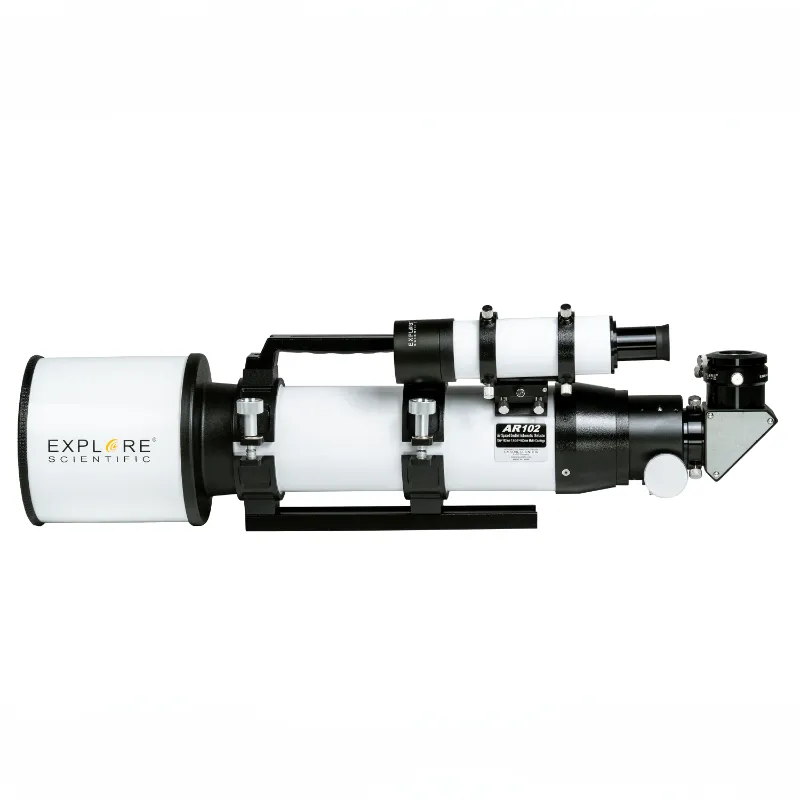
Buying your first telescope is exciting — but the wall of options at any store can be overwhelming. Dobsonian or refractor? What magnification do you actually need? And what about all those accessories? In this beginner's guide, we'll walk you through exactly how to choose the right telescope for stargazing, so your first look at Saturn's rings or the craters of the Moon becomes the start of a lifelong hobby rather than a disappointing purchase.
# How to Choose the Right Telescope for Stargazing Beginners
Why the Right First Telescope Matters
A cheap, wobbly telescope that produces blurry images has ended more beginner astronomy journeys than cloudy weather ever has. The good news: you don't need to spend a fortune to get incredible views. You just need to understand a few key principles — aperture, mount, and type — before you buy.
Our top pick for beginners is the The Space telescope, which balances ease of use, optical quality, and value. For those on a tighter budget or wanting a classic design, the galileo telescope is a fantastic entry-level alternative that echoes the instrument that started it all.
Step 1: Understand Aperture — The Only Spec That Really Matters
Beginners often obsess over magnification ("How far can it see?"). In reality, aperture — the diameter of the main lens or mirror — determines everything:
- Light gathering: Bigger aperture = brighter images of faint objects like nebulae and galaxies.
- Resolution: Bigger aperture = sharper detail on the Moon and planets.
- Maximum useful magnification: Roughly 50x per inch of aperture. A telescope advertised as "600x power" with a tiny lens is marketing nonsense.
Beginner sweet spot: 70–130mm (2.75–5 inches) of aperture. This is enough to see Saturn's rings, Jupiter's moons, lunar craters, star clusters, and even brighter galaxies.
Step 2: Choose Your Telescope Type
There are three main optical designs:
Refractors (Lens-Based)
- Best for: Beginners, lunar/planetary viewing, low maintenance
- Pros: Sealed tube (no collimation), rugged, great contrast
- Cons: Larger apertures get expensive
Reflectors (Mirror-Based / Newtonians)
- Best for: Deep-sky objects, budget-friendly aperture
- Pros: Most aperture per dollar
- Cons: Need occasional collimation (mirror alignment)
Catadioptrics (Compound)
- Best for: All-around use, portability
- Pros: Compact, versatile
- Cons: More expensive per inch of aperture
If you're unsure, a small refractor like the The Space telescope is the classic beginner choice — point it, focus it, enjoy.
Step 3: Don't Skimp on the Mount
The mount matters as much as the optics. A shaky mount turns Jupiter into a vibrating blob.
- Alt-Azimuth (up/down, left/right): Simple and intuitive — ideal for beginners.
- Equatorial: Tracks the sky's rotation but has a learning curve.
- Dobsonian: A simple, stable alt-azimuth mount for reflectors — superb value for aperture.
Rule of thumb: if the tripod wobbles when you touch the focuser, move on.
Step 4: Essential Accessories
Your telescope purchase should include:
- A low-power eyepiece (25mm) for wide views and finding objects
- A higher-power eyepiece (10mm) for planets and the Moon
- A red-dot finder to aim the telescope
- A star chart or astronomy app
Pro tip: Start every session with your lowest power eyepiece. High magnification makes finding things harder and worsens atmospheric shimmer.
Step 5: Know What to Expect on Your First Night
With a quality beginner telescope, you can realistically see:
- The Moon: Stunning crater detail — but use a filter, it's bright!
- Jupiter: Its four largest moons and cloud bands
- Saturn: Its rings, unmistakably
- Venus and Mars: Phases and polar caps
- Star clusters: The Pleiades is breathtaking
- Orion Nebula: A fuzzy, glowing cloud of star formation
Galaxies will look like faint smudges — save those expectations for darker skies.
Step 6: Learn From the Pros — Free Resources
Before you even buy, explore what professional observatories are seeing right now. Browse the WorldWide Telescope project, a free virtual sky platform that lets you pan across real astronomical imagery from your browser. For cutting-edge imagery, see What is Webb Observing? on NASA's site — the James Webb Space Telescope's current targets will inspire your own observing list. And for those considering a career or serious study in astronomy, the Scientific Community resources from the Space Telescope Science Institute are invaluable.
Following the James Webb telescope's latest discoveries and Hubble telescope images of deep-sky objects gives you a target list for your own scope — seeing M42 in a photo from Webb and then finding it yourself through an eyepiece is a magical experience.
Beyond the Telescope: The Perfect Beginner's Kit
Astronomy is more fun with the right companions. A few favorites from The Space Store:
- The Space telescope — our top beginner recommendation for optical quality and ease of use
- galileo telescope — a classic design that connects you to the history of stargazing
- fisher space pen — writes in any condition, perfect for logging observations in cold weather
- galileo thermometer — a beautiful desk companion while you plan your observing sessions
- nasa watch — keep track of your session times and ISS passes
- solar eclipse solar glasses — essential safety gear for solar viewing (never look at the Sun through a telescope without proper filters!)
- The Space tellurium — a mechanical model of the Earth-Moon-Sun system, brilliant for learning the sky's mechanics
- golden globes and day globe — decorative globes that celebrate our home planet
- space space suit — for the young astronaut in your family
- scott kelly — his memoir of a year in space is the perfect read between observing sessions
- artemis 2.0 — a collectible celebrating humanity's return to the Moon
💡 Save 10% sitewide with the current offer at our The Space Store discount code page — a great way to stretch your budget into that extra eyepiece.
Quick Buying Checklist
Before you click "buy," confirm:
- ✅ Aperture of at least 70mm (ideally 100mm+)
- ✅ Sturdy, stable mount
- ✅ At least two eyepieces included
- ✅ Red-dot finder or finderscope
- ✅ Realistic expectations set (no, you won't see Hubble-style images)
- ✅ Room in the budget for a planisphere or astronomy app
Final Thoughts
The best telescope for a beginner is the one you'll actually use — portable enough to carry outside, simple enough to set up in minutes, and solid enough to deliver sharp, bright views. Start with the Moon, work your way to the planets, and let the deep sky reveal itself as your skills grow. Clear skies! 🔭
Frequently asked questions
What size telescope is best for a beginner?
For most beginners, 70–130mm (2.75–5 inches) of aperture is the sweet spot. This is enough to see the Moon in detail, Saturn's rings, Jupiter's moons and cloud bands, star clusters, and brighter nebulae and galaxies.
Is more magnification better?
No. Aperture matters far more than magnification. Excessive magnification on a small telescope produces dim, blurry images. A useful rule of thumb is about 50x magnification per inch of aperture.
Which type of telescope should a beginner buy?
A small refractor on a simple alt-azimuth mount is usually the easiest to use — point, focus, and observe. The The Space telescope is our top beginner pick, with the galileo telescope as a great classic alternative.
Can I buy a good beginner telescope for under $150?
Yes, as long as the mount is stable. Avoid cheap wobbly models, and make sure the telescope includes at least two eyepieces and a finder. Also check our 10% off sitewide offer to get more for your budget.
What will I actually be able to see with a beginner telescope?
The Moon, planets (Jupiter, Saturn, Venus, Mars), star clusters like the Pleiades, and brighter nebulae like Orion. Galaxies appear as faint smudges from typical suburban skies.