
Why Your Detangling Shampoo Isn't Working (And What to Try Instead)

You bought a detangling shampoo. You lathered up, rinsed, expected magic... and your brush still snagged halfway through your hair. Sound familiar? You're not alone. Detangling shampoo is one of the most misunderstood products on the shelf, and most people use it in a way that almost guarantees disappointment.
Here's the truth: no single product can melt knots on its own. Detangling is a *system* — the right detangling shampoo, the right conditioner or leave-in, and the right brush working together. In this guide, we'll break down why your current routine is falling flat, what actually works (for adults, curls, 4c hair, and even pups), and the exact tools we recommend to make wash day painless.
Why Detangling Shampoo Alone Doesn't Work
A shampoo's job is to cleanse. Even the best detangling shampoo only adds slip during the rinse — and that slip washes right down the drain. Here's what's going wrong:
1. You're Expecting the Shampoo to Do Everything
Shampoo opens the hair cuticle to lift dirt and oil. That's the opposite of what smooth, tangle-free hair needs. Detangling happens *after* cleansing, when a conditioner or detangler flattens the cuticle back down and adds lubrication. If you're skipping conditioner, you're asking your detangling shampoo to do two jobs at once — and it can't.
The fix: Always follow with a conditioning detangler. The knotty to nice conditioning detangler is a leave-in that keeps working after you've towel-dried, giving you slip where shampoo can't.
2. You're Detangling at the Wrong Time
Wet hair is at its most fragile — it can stretch up to 50% more than dry hair before breaking. Yanking a brush through soaking-wet strands snaps hair at the weakest points.
The fix: Detangle in stages. Finger-detangle in the shower with conditioner in, blot gently with a microfiber towel, apply your leave-in, and *then* brush from the ends up.
3. You're Using the Wrong Brush
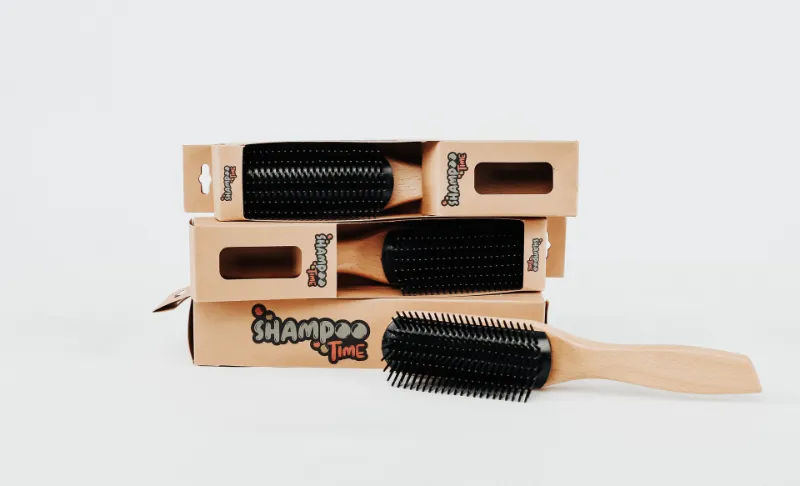
Not all brushes are created equal. A dense paddle brush will rip through curls; a boar-bristle brush will fight textured hair entirely. This is where a proper denman hairbrush earns its cult following — the staggered-pin design grips and releases in sections instead of tearing through the whole head at once. For finer hair, the smaller denman vrush gives you the same gentle sectioning control on shorter lengths or smaller hands.
4. You're Not Sectioning
Working through tangles "all over at once" is how small knots merge into one mega-knot. Section your hair into 4–6 parts, clip away what you're not working on, and brush each section from the bottom up.
5. Product Buildup Is Undoing Your Progress
Silicones and heavy oils from detangling products can accumulate, leaving hair coated, dull, and *more* prone to tangling. A clarifying wash every few weeks with a quality detangling shampoo resets your strands. Fun fact: even the pros need proper ergonomics for wash day — that's why stylists swear by a shampoo neck rest at the sink. If backwashing leaves you (or your client) craning your neck for 20 minutes of detangling, that alone can turn wash day into a chore.
What the Best Detangling Shampoo and Conditioner Routine Actually Looks Like
If you're wondering *what is the best detangling shampoo and conditioner* combo, the honest answer is: the one paired with the right technique. Here's the routine we recommend:
- Pre-detangle dry with fingers or a wide-tooth denman hairbrush to remove loose knots before water tightens them.
- Shampoo the scalp, not the ends. Let the suds rinse through your lengths naturally — that's enough to cleanse without stripping.
- Condition generously, focusing on mid-lengths and ends. Let it sit 3–5 minutes.
- Detangle in the shower with the conditioner still in, using your fingers first, then a brush.
- Rinse with cool water to seal the cuticle.
- Apply a leave-in like the knotty to nice conditioning detangler for all-day slip.
- Style in sections — never rush the brush through dry, unslipped hair.
> 💡 Pro tip: Want 10% off everything in your wash-day cart? Use our ShampooTime discount code for 10% OFF sitewide.
Choosing the Right Detangling Shampoo for Your Hair Type
Detangling Shampoo for Curly Hair
Curls tangle because each bend is a potential snag point. Look for sulfate-free formulas with slip agents (like guar hydroxypropyltrimonium chloride or behentrimonium methosulfate). A detangling shampoo for curly hair should never leave hair squeaky — squeaky means stripped, and stripped hair tangles *more*.
Detangling Shampoo for Black Hair & 4C Hair
A detangling shampoo for 4c hair (or any tight coil pattern) needs to prioritize moisture above all. 4c strands have the tightest curl pattern and the most cuticle-lifting points, so hydration is non-negotiable. Look for creamy, low-lather formulas and always follow with a deep conditioner. When browsing, products like The Alpha Easy On The Curls Hydration Shampoo show what a hydration-first formula looks like — moisture plus slip in one step.
Detangling Shampoo for Adults
Kids' detangling shampoos smell like bubblegum and often lack the conditioning power adult hair needs. A detangling shampoo for adults should balance gentle cleansing with richer conditioning agents — especially if you heat style or color-treat.
Detangling Shampoo for Dogs
Yes, it's a thing — and it works the same way! A detangling shampoo for dogs uses similar slip agents to loosen mats before brushing. The technique transfers too: work from the paws up, never brush dry, and reward generously.
The Finishing Touch: Accessories That Prevent Tangles in the First Place
Detangling is only half the battle — preventing knots matters just as much:
- Beaded braids stay contained. Adding beads from a bead box to braids and twists doesn't just look adorable; weighted, beaded ends move freely and tangle far less than loose hair. Same goes for the individual bead time styling tools that let you snap beads on without a bead-spinner.
- Protect at night. A satin pillowcase or bonnet reduces friction-based tangling dramatically.
- Keep ends trimmed. Split ends latch onto neighboring strands like velcro. Every knot is a mini split-end factory.
The Bottom Line
Your detangling shampoo isn't broken — your system is. Pair a gentle detangling shampoo with a hydrating conditioner, a proper detangler like the knotty to nice conditioning detangler, and a sectioning-friendly brush like the denman hairbrush, and you'll cut your detangling time in half while keeping every strand intact.
And don't forget: grab 10% OFF sitewide with our ShampooTime discount code before you check out. Your knots won't know what hit them.
Frequently asked questions
Does detangling shampoo actually work?
A detangling shampoo adds temporary slip during washing, which helps loosen tangles, but it can't detangle hair on its own. Because shampoo opens the cuticle to cleanse, detangling actually happens best afterward — with conditioner, a leave-in detangler, and the right brush working together.
What is the best detangling shampoo and conditioner?
The best detangling shampoo and conditioner combo is one that's sulfate-free, moisturizing, and paired with a leave-in detangler and proper technique. No product combination works without sectioning the hair and brushing from the ends upward.
What should I look for in a detangling shampoo for 4c hair?
Look for a creamy, sulfate-free, hydration-first formula, and always follow with a deep conditioner. Tight curl patterns need moisture and slip more than lather — and a Denman brush is ideal for detangling in sections.
Can I use detangling shampoo on my dog?
Yes. Detangling shampoos for dogs use similar slip agents to loosen mats before brushing. The same technique applies: work from the ends up, never brush dry, and keep sessions short and gentle.
Why is my hair still tangled after using detangling shampoo?
You may be skipping conditioner or a leave-in detangler, using the wrong brush, detangling soaking-wet hair, or dealing with product buildup. Detangling is a system — shampoo alone can't do the job.