
How to Fill a Plasma Tube with Xenon Gas Safely

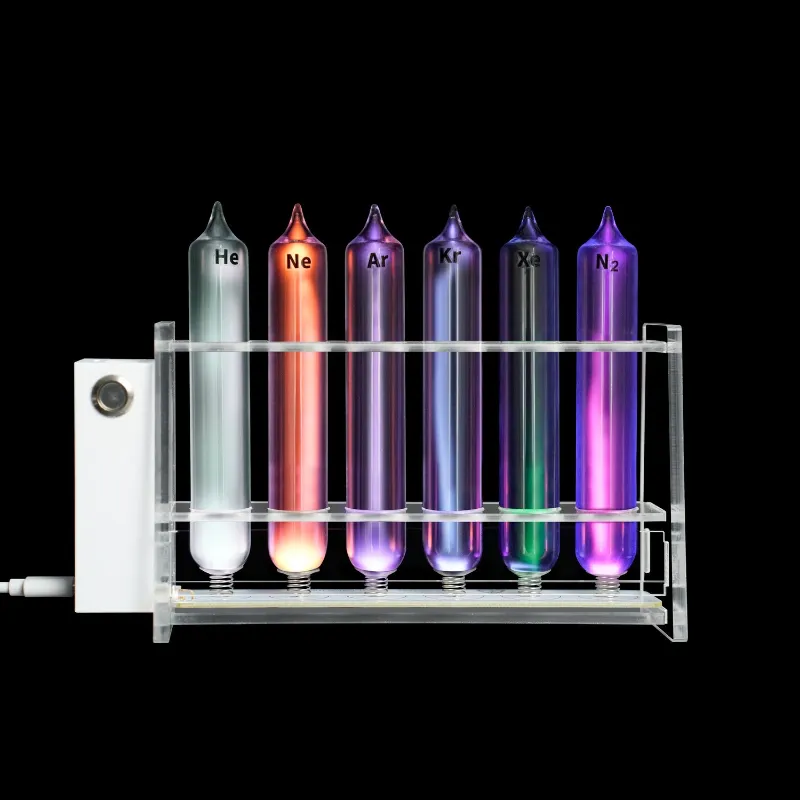
Filling a ring shaped glass tube for plasma with xenon gas demands precision, proper vacuum equipment, and strict safety protocols to avoid contamination and achieve the characteristic purple-white glow. Whether you're working with a plasma toroid or a round plasma tube, the process centers on evacuating air, introducing purified noble gas at the correct pressure, and sealing the tube without thermal shock.
Why Xenon Gas Creates the Best Plasma Display
Xenon produces a brilliant white-blue plasma discharge at lower voltages than neon or argon, making it ideal for ring shaped plasma tube projects and decorative plasma ring displays. The gas ionizes efficiently at partial pressures between 1 and 10 torr, and its high atomic weight creates a dense, stable glow under RF excitation.
We recommend starting with research-grade liquid xenon sources that guarantee 99.999% purity. Even trace oxygen or nitrogen contamination will degrade the plasma color and reduce electrode lifespan. Fluorescent gas mixtures that combine xenon with mercury vapor can extend the visible spectrum, but pure xenon remains the safest choice for beginners.
Equipment You Need Before Starting
Before attempting to fill any glowing cylinder or toroidal tube, assemble these essentials:
- Vacuum pump capable of reaching 10⁻⁴ torr or lower
- Glass manifold with high-vacuum stopcocks and a pressure gauge
- Xenon gas cylinder with a precision regulator and needle valve
- Torch or sealing station for borosilicate glass (propane-oxygen or MAPP gas)
- Leak detector (helium mass spectrometer or high-frequency coil tester)
- Safety glasses rated for UV exposure and thermal work
- Fume hood or ventilated workspace to handle trace gas emissions
The schematic representation of plasma source electrode configurations illustrates how electrode geometry affects discharge stability, which matters when you design your fill port placement.
Step-by-Step Xenon Fill Process
1. Prepare the Tube and Vacuum System
Attach your ring shaped glass tube for plasma to the manifold via a thin-walled tubulation or sidearm. Bake the entire assembly at 300°C for 2 to 4 hours under vacuum to degas the glass walls and internal electrodes. This step removes adsorbed water and organic residues that would otherwise ionize and contaminate the plasma.
2. Evacuate to High Vacuum
Pump the tube down to at least 10⁻⁴ torr. Monitor the pressure with an ionization gauge or thermocouple sensor. If the pressure plateaus above 10⁻³ torr, check for leaks at joints and stopcocks using a Tesla coil or helium sniffer. A toroidal plasma tube with complex curves may trap virtual leaks in pockets, so gentle heating while pumping helps release trapped gas.
3. Backfill with Xenon to Target Pressure
Close the valve to the pump and slowly introduce xenon through the regulator until the tube reaches 2 to 5 torr. This range works for most RF-driven displays and plasma glob units. Higher pressures (8 to 10 torr) produce a brighter, more diffuse glow but require stronger electric fields to ionize. Lower pressures yield a thinner, more violet discharge. Check the latest price on precision xenon regulators if your current setup lacks fine control.
4. Seal the Fill Port
While xenon remains at pressure, heat the tubulation with a torch until the glass softens, then pull and twist to create a clean seal. Work quickly to avoid overheating the main tube body. Let the sealed tube cool naturally. Rapid cooling can crack the glass or create internal stress points. Research on floating electrode effects shows that thermal gradients near electrodes can alter discharge paths, so uniform cooling matters.
5. Test the Plasma Discharge
Connect your tube to a high-voltage RF power supply or induction coil. A properly filled tube should glow uniformly within seconds. If the plasma is patchy or refuses to ignite, the pressure may be too high or contaminants are present. If you see orange or pink hues, air leaked in during sealing and you'll need to refill.
Safety Protocols for Xenon Handling
Xenon is non-toxic but acts as a simple asphyxiant in confined spaces. Always work in a well-ventilated area. Store cylinders upright and secured, away from heat sources. When handling liquid xenon dewars, wear insulated gloves to prevent frostbite.
High-voltage plasma systems present electric shock and UV radiation hazards. Never touch electrodes while powered, and shield your eyes during discharge testing. The experimental investigation of dynamical structures in plasma highlights instabilities that can cause localized hot spots, so monitor your tube for unusual bright filaments or electrode erosion.
If a tube shatters during sealing or testing, ventilate the workspace immediately and clean up glass shards with damp paper towels to avoid inhaling silica dust.
Common Mistakes and How to Avoid Them
Skipping the bake-out: Water vapor is the most common contaminant. Even a small amount will create a hazy, unstable discharge and corrode electrodes over time.
Sealing under vacuum: If you seal the tube while it's evacuated, atmospheric pressure will crush thin-walled glass. Always backfill with xenon first.
Using impure gas: Industrial-grade xenon may contain oxygen or hydrocarbons. Invest in high-purity fluorescent gas supplies for consistent results.
Overheating during sealing: Excessive flame exposure can devitrify borosilicate glass, creating weak points that fail under thermal cycling or mechanical stress.
Grab the code for 5% off premium xenon and vacuum supplies to ensure you're working with quality materials from the start.
Comparing Fill Gases for Plasma Tubes
| Gas | Glow Color | Ionization Voltage | Best Use Case |
|---|---|---|---|
| Xenon | White-blue | Low (1-2 kV) | Bright displays, toroids |
| Neon | Orange-red | Medium (2-3 kV) | Decorative signs |
| Argon | Violet | Medium (2-3 kV) | Educational demos |
| Krypton | Pale blue | Low (1-2 kV) | Specialty color effects |
Xenon remains the top choice for plasma toroid and ring shaped plasma tube projects because of its low starting voltage and intense luminosity.
Who Should Attempt Xenon Filling
This process suits makers and researchers with glassworking experience and access to vacuum equipment. If you lack a fume hood or high-vacuum pump, we recommend purchasing pre-filled tubes from specialty suppliers. Many glowing cylinder and plasma ring products ship factory-sealed with optimal xenon pressure and electrode configurations.
Hobbyists building their first plasma display should start with simpler projects like air-plasma globes or low-pressure neon tubes before tackling xenon-filled toroids. The risk of glass breakage and the cost of xenon make this a poor choice for trial-and-error experimentation.
For advanced builds that combine plasma with kinetic elements, consider pairing your finished tube with a memory metal flower or fluid simulation pendant to create a multi-sensory display piece.
Frequently asked questions
What pressure should I use when filling a ring shaped glass tube for plasma with xenon?
Most plasma tubes perform best at 2 to 5 torr of xenon pressure. Lower pressures produce a thinner violet glow, while higher pressures up to 10 torr create a brighter, more diffuse discharge.
Can I reuse xenon gas if I need to refill a plasma tube?
Yes, but only if you can recapture the gas into a clean storage cylinder during pump-down. Most hobbyists find it more practical to vent the small amount of xenon and refill from a fresh supply cylinder.
Why does my plasma tube glow orange instead of white-blue after filling?
Orange or pink glow indicates air contamination, usually from a leak during sealing or insufficient pump-down. You'll need to re-evacuate and refill with pure xenon to restore the correct color.
Do I need a special torch to seal a plasma toroid after filling?
A standard propane-oxygen or MAPP gas torch works for borosilicate glass tubes. Work quickly to avoid overheating the main tube body, and let the seal cool naturally to prevent thermal stress cracks.
Is xenon gas dangerous to handle at home?
Xenon is non-toxic but displaces oxygen in confined spaces. Always work in a ventilated area, store cylinders upright, and wear insulated gloves when handling liquid xenon dewars to avoid frostbite.
How long does xenon last inside a sealed plasma tube?
A properly sealed tube can maintain stable xenon pressure for years. Electrode sputtering and micro-leaks eventually degrade performance, but high-quality borosilicate tubes typically last 5 to 10 years or longer with intermittent use.