
JumpFly Dome Climber vs Traditional Climbing Playsets: Which Is Safer for Kids?

Which Climbing Structure Is Safer?
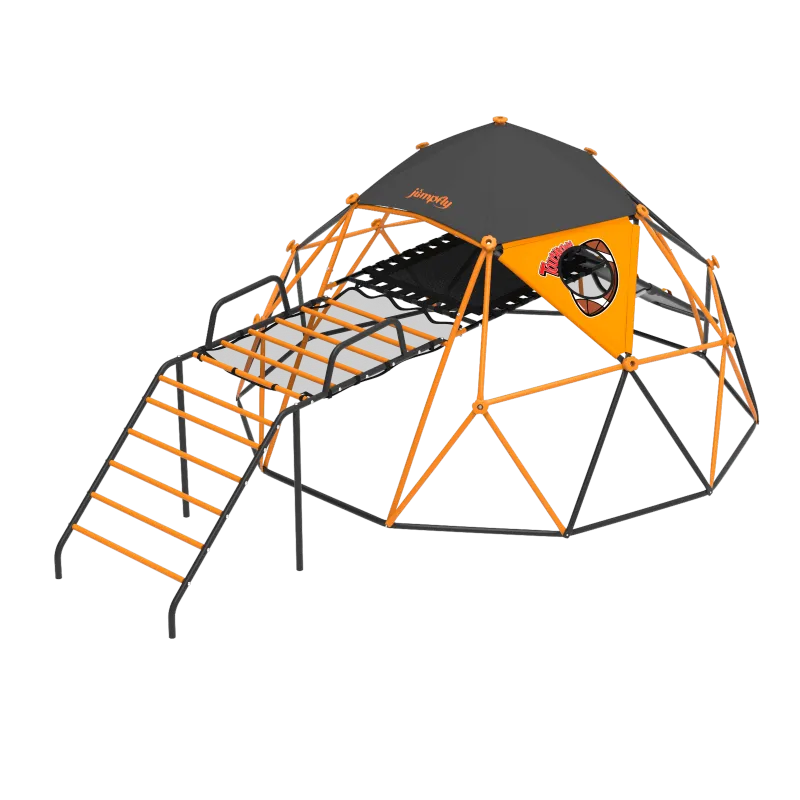
A dome climber playset typically offers better visibility, lower maximum fall heights, and more intuitive climbing paths than traditional tower-style playsets, though both can be safe when properly installed and supervised. We tested JumpFly's climbing dome alongside conventional playsets to compare injury risks, age suitability, and real-world durability so you can choose the right backyard climber for your family.
Fall Height and Impact Zones
The most significant safety difference lies in how children fall. Traditional climbing towers and A-frame structures place kids 6 to 10 feet above ground at their highest points, creating longer fall distances and higher-impact landings. A dome climber playset keeps the apex around 5 to 6 feet, and its curved geometry means most climbing happens at mid-height where falls are shorter.
Dome structures also distribute climbing activity across a wider footprint. Instead of funneling all kids up a single ladder or climbing wall, geodesic designs offer dozens of hand- and footholds in every direction. This spreads children out naturally and reduces collision risks during active play.
Key fall-safety factors:
- Maximum reachable height (lower is safer for younger kids)
- Surface area of the impact zone (wider domes need more safety surfacing)
- Number of pinch points or entrapment gaps
- Whether the structure encourages risky behavior like jumping from the top
Both structure types require impact-absorbing ground cover. We recommend 9 to 12 inches of wood mulch, rubber tiles, or pea gravel extending at least 6 feet beyond all sides. Traditional towers with slides or platforms may need deeper surfacing directly beneath exit points.
Visibility and Supervision
Parents consistently rank supervision ease as a top safety priority. Dome climbers win here. The open lattice framework gives you sightlines to every child from any angle, while traditional enclosed towers, tube slides, and covered platforms create blind spots where you cannot see what kids are doing.
JumpFly's dome design uses powder-coated steel bars with roughly 12-inch spacing, wide enough to see through but narrow enough that toddlers cannot slip through headfirst. Lifetime's climbing tower with slide and similar traditional playsets often include fully enclosed upper decks that block your view entirely.
If you are supervising multiple children or watching from a kitchen window, the 360-degree visibility of a dome structure makes monitoring significantly easier.
Age Range and Skill Progression
Traditional playsets often segment activities by age: toddler swings on one side, a climbing wall for older kids, a slide in the middle. A dome climber playset instead offers gradual difficulty. Younger children naturally stick to the lower rings and outer edges where bars are closer to the ground, while older kids challenge themselves by climbing higher or traversing the apex.
Recommended age guidance:
- Climbing dome for toddlers: 3+ years on lower third only, with adult within arm's reach
- Ages 5 to 8: Full dome access with visual supervision
- Ages 9+: Independent play, though weight limits (typically 600 to 800 lbs total) still apply
Some families add a trampoline for kids alongside their dome climber to diversify activity options. Trampolines introduce different risks (bouncing injuries, multiple users), so we recommend enclosures like a trampoline with a tent if young children will use both structures.
Installation Stability and Anchoring
Ground anchoring determines whether a climber stays put during vigorous play or tips during a storm. Traditional wooden playsets use 4x4 posts sunk into concrete footings or anchored with auger-style ground stakes. These are stable but time-intensive to install.
Most dome climbers, including JumpFly's model, use a hub-and-spoke design with ground stakes or surface-mount anchors at each leg. The geodesic shape is inherently stable due to triangulated load distribution, but you must install every anchor point correctly. Skipping even one stake can create a weak point that allows rocking or tipping.
Installation safety checklist:
- Level the site within 2 inches across the entire footprint
- Drive all ground stakes to the collar (typically 10 to 12 inches deep)
- Check for underground utilities before digging
- Retighten all bolts after the first week of use
If you are adding accessories later, a basketball hoop for trampoline or trampoline with basket ball hoop can complement active play without requiring additional anchoring.
Material Durability and Maintenance Safety
Rust, splinters, and cracked plastic create injury risks over time. Traditional wood playsets require annual sealing or staining to prevent rot and splinter formation. Untreated wood can become slippery when wet and harbor mold in humid climates.
Powder-coated steel domes resist rust for years with minimal upkeep. Inspect welds and joints every few months for cracks or sharp edges, and check that plastic end caps remain in place to cover bolt ends. If you notice paint chipping, sand the area smooth and apply rust-inhibiting spray paint to prevent sharp rust flakes.
We have seen dome climbers last 8 to 10 years outdoors with only occasional tightening of bolts, while wooden playsets often need board replacement or structural reinforcement within 5 years.
For trampoline owners, keeping a trampoline repair kit or trampoline patch kit on hand prevents small tears from becoming safety hazards. The same proactive maintenance mindset applies to climbing structures.
Comparing Costs and Extras
Safety features affect price. A basic dome climber playset runs $150 to $400 depending on size, while traditional playsets with multiple activity stations start around $500 and climb past $2,000 for cedar models with swings, slides, and climbing walls.
Budget for safety surfacing separately. A 12 ft climbing dome needs roughly 400 square feet of impact zone, which costs $200 to $600 for rubber mulch or tiles.
| Feature | Dome Climber | Traditional Playset |
|---|---|---|
| Fall height | 5-6 feet max | 6-10 feet typical |
| Visibility | 360° open sightlines | Blind spots common |
| Maintenance | Low (inspect joints) | Moderate to high (seal wood) |
| Footprint | Circular, 8-12 ft diameter | Rectangular, 12-20 ft length |
Some families integrate both structure types or pair a dome with a 12 feet trampoline for variety. Mixing equipment lets kids rotate activities and reduces wear on any single piece.
Where to Buy and Save
JumpFly's dome climber combines the safety advantages we have outlined with straightforward assembly and a weight capacity suitable for multiple children. You can grab the current discount code for 5% off all orders, including climbing domes and complementary gear like the trampoline basketball hoop.
Before purchasing, measure your yard's usable space and confirm you can maintain the required safety surfacing. If you are limited on space or have very young children, a smaller dome or a climbing dome for toddlers with lower height may be the safer starting point.
Both dome climbers and traditional playsets can provide years of safe outdoor play when installed correctly, maintained regularly, and supervised appropriately. The dome's open design, lower fall risk, and minimal upkeep make it our top recommendation for families prioritizing visibility and ease of supervision. Check the latest pricing to see which model fits your backyard and budget.
Frequently asked questions
What age is safe for a dome climber playset?
Most manufacturers recommend ages 3 and up, with toddlers supervised closely on the lower sections and older children given more independence. Always stay within arm's reach of children under 5.
Do dome climbers tip over easier than traditional playsets?
No, geodesic dome structures are inherently stable due to their triangulated design, but only if every ground stake is installed correctly. Skipping anchors creates tipping risk.
How much safety surfacing do I need under a climbing dome?
Extend impact-absorbing material like rubber mulch or wood chips at least 6 feet beyond all sides of the dome, with a depth of 9 to 12 inches to cushion falls.
Can adults use a dome climber playset?
Most domes support 600 to 800 lbs total capacity, so adults can climb if the combined weight of all users stays below the limit. Check your specific model's rating.
What maintenance does a steel dome climber need?
Inspect joints and welds every few months for cracks, retighten bolts as needed, and touch up any chipped powder coating with rust-inhibiting paint to prevent sharp edges.
Is a dome climber safer than a trampoline for kids?
Both have different risk profiles. Dome climbers present fall and collision risks, while trampolines add bouncing injuries. Enclosed trampolines with nets reduce ejection risk, and both require active supervision.