

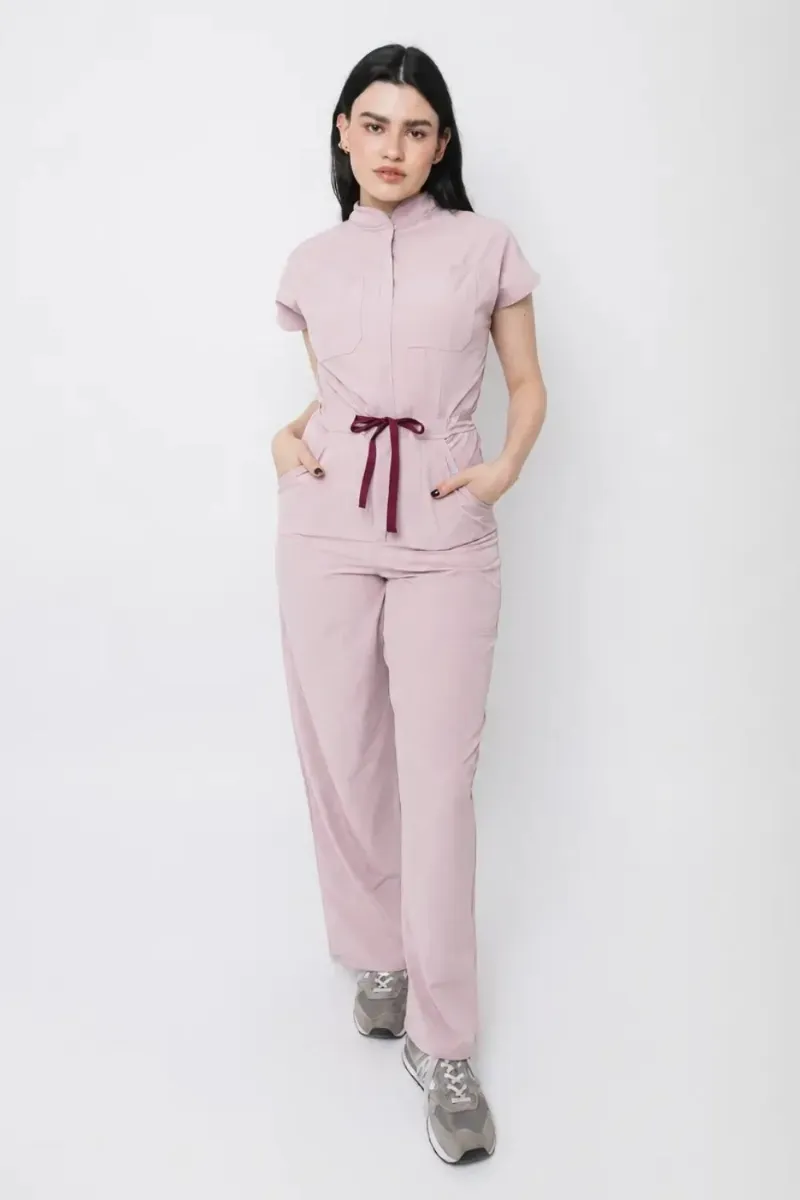
Jumpsuit Scrubs Deliver All-Day Coverage While Romper Scrubs Keep You Cool
Jumpsuit scrubs give you full-length pants and a connected top in one streamlined garment, ideal for air-conditioned hospitals and shifts where you want coverage without waistband bunching. Romper scrubs trade the long legs for shorts, making them a lighter, breezier choice for warm clinics, pediatric floors, or anyone who runs hot during twelve-hour days. Both styles eliminate the hunt for matching separates and speed up your morning routine, but your ideal pick depends on dress code, climate, and how much mobility you need when bending, squatting, or reaching.
We tested both silhouettes across double shifts to see which holds up under real-world wear. Below we break down fabric performance, pocket placement, sizing quirks, and when each style shines so you can decide which one-piece fits your workflow.
How Jumpsuit and Romper Scrubs Compare
| Feature | Jumpsuit Scrubs | Romper Scrubs |
|---|---|---|
| Leg Coverage | Full-length pants | Shorts (mid-thigh to knee) |
| Climate | Cooler environments, year-round | Warm clinics, summer shifts |
| Mobility | Slightly restricted when squatting | Unrestricted leg movement |
| Dress Code | Accepted in most hospitals | Check facility policy on shorts |
Both styles typically feature a back or side zipper, adjustable waist ties or elastic, and chest or side pockets. The jumpsuit scrubs we evaluated included reinforced knee panels and a two-way zipper for restroom breaks, while the romper scrubs offered a drawstring waist and deeper side pockets that actually held a phone without sagging.
Fabric and Stretch: What Works for Movement
One-piece scrubs live or die by their stretch blend. Look for at least five percent spandex or elastane woven into a polyester or cotton base so the fabric moves with you during patient lifts, floor work, or overhead reaches. Jumpsuits demand more give through the torso and crotch since you cannot adjust the top and bottom independently; a rigid fabric will pull at the shoulders every time you bend.
Rompers are more forgiving because the shorts allow hip and thigh freedom, but you still want four-way stretch across the bodice. Moisture-wicking finishes keep both styles fresh when you are hustling between rooms. We found that blends heavier than 200 GSM held their shape through repeated washing but dried slower, while lighter weaves felt airier but showed sweat faster.
The scrub onesie option from Jogs Scrubs uses a technical poly-spandex that rebounds after every squat and wicks faster than standard cotton blends. If you want current pricing or want to grab the discount code, the store page lists the exact fabric specs and care instructions.
Sizing and Fit Challenges Unique to One-Piece Scrubs
Jumpsuits require you to match torso length, hip width, shoulder breadth, and inseam in a single size, which is why many wearers size up and then tailor the waist or hem. Short-torso or long-legged builds often find standard sizing pulls uncomfortably at the crotch or bags at the ankles. Rompers ease this slightly since leg length matters less, but you still need the bodice to hit at your natural waist without riding up when you raise your arms.
Key fit checkpoints before you buy:
- Crotch rise: sit, squat, and reach overhead in the dressing room or during your return window
- Shoulder seams: should land at the edge of your shoulder, not halfway down your arm
- Zipper placement: back zippers require help; side zippers offer independence but can dig into your ribs if the pull sits too high
- Waist adjustability: drawstrings or elastic tabs let you fine-tune after weight shifts or layering a compression tank underneath
Jogs Scrubs publishes a detailed size chart with torso length and hip measurements, and their tucson jogs jogger-style bottoms share the same sizing system if you want to cross-reference fit across their line.
Pocket Placement and Utility in Jumpsuit vs Romper Designs
Pockets make or break a scrub uniform, and one-piece styles force designers to rethink placement. Chest pockets on jumpsuits sit higher and work well for pens, badges, or a small phone, but anything heavy pulls the neckline forward. Side seam pockets at hip level are deeper and more stable, though harder to access if you are wearing a lab coat over the top.
Rompers typically offer the same hip or side pockets as jumpsuit versions, but the shorter leg length means fabric does not interfere when you sit or kneel. Some designs add a back patch pocket, which is great for gloves or a folded mask but risky for anything you do not want to sit on. We appreciated jumpsuits with a hidden interior pocket for keys or a credit card, a feature usually found in higher-end athletic scrub lines.
For maximum utility, prioritize at least two pockets that can each hold a standard smartphone without the weight dragging the waistband down. The polka dot scrubs collection includes both jumpsuit and romper cuts with reinforced pocket openings that resist tearing when you jam hands in and out all day.
When to Choose a Jumpsuit and When a Romper Wins
Pick jumpsuit scrubs if you:
- Work in air-conditioned hospitals or surgery centers where exposed legs feel cold
- Need full coverage for facility dress codes that prohibit shorts
- Prefer a sleek, uniform silhouette without waistband lines showing under fitted tops
- Want protection from splashes or spills across your entire legs
Pick romper scrubs if you:
- Work in pediatrics, dental offices, or warm clinics where temperature control is inconsistent
- Value maximum leg mobility for kneeling, squatting, or active patient play
- Run warm naturally and want breathability during high-intensity shifts
- Have a facility that permits shorts-length uniforms
Both styles shine when you want to eliminate the morning mix-and-match routine and reduce laundry sorting. If your facility allows either, consider owning one of each so you can rotate based on the forecast or the floor assignment that week. You can check the latest pricing and apply our code to save on multi-piece orders.
Care Tips to Extend the Life of Your One-Piece Scrubs
One-piece garments see more stress per wash than separates because every movement pulls on a single set of seams. Turn jumpsuits and rompers inside out before washing to protect zippers and reduce pilling on high-friction zones like the inner thighs and underarms. Wash in cold water on a gentle cycle and skip fabric softener, which coats moisture-wicking fibers and traps odors over time.
Air-dry when possible or tumble on low heat to prevent elastic waistbands and spandex fibers from breaking down. High heat also sets stains, so pre-treat any blood, iodine, or medication spots with an enzyme cleaner before the wash cycle. Store one-piece scrubs on hangers rather than folded to avoid creasing the torso, which can weaken fabric along repeated fold lines.
If a zipper snags or a seam splits, repair it immediately rather than letting the tear travel. Most alteration shops can replace a zipper for less than the cost of a new uniform, and a quick stitch across a pocket seam takes minutes. Rotating at least three one-piece uniforms through your weekly schedule reduces wear on any single garment and gives each piece time to fully dry and air out between shifts.
Jogs Scrubs designs hold up well to industrial laundering if your facility provides uniform service, but always check the care label for temperature and bleach restrictions. With proper care, a quality jumpsuit or romper should deliver a year or more of daily wear before the stretch gives out or the color fades past professional standards.
 Shopping at Jogs Scrubs? See today's verified Jogs Scrubs discount code
Frequently asked questions
Can I wear jumpsuit scrubs if I have a long torso?
Yes, but you may need to size up and hem the legs, or look for tall-specific cuts. Many brands list torso length in their size charts, so measure from your shoulder to your crotch and compare before ordering.
Are romper scrubs allowed in most hospitals?
It depends on your facility's dress code. Many hospitals permit shorts-length uniforms in non-sterile areas like pediatrics or outpatient clinics, but operating rooms and some acute-care floors require full-length pants. Always check your employee handbook before purchasing.
Do one-piece scrubs take longer to use the restroom in?
Jumpsuits and rompers with front or side zippers are only slightly slower than separates. Look for two-way zippers or snap-crotch designs if speed is critical, though most wearers adapt within a few shifts.
Which style is better for night shifts in a cold hospital?
Jumpsuit scrubs offer better coverage and warmth in air-conditioned environments. Rompers leave your legs exposed, so you would need to layer tights or leggings underneath, which reduces their breathability advantage.
How do I know if a romper will be too short on me?
Check the inseam measurement in the size chart and compare it to a pair of shorts you already own. Most scrub rompers have a three- to five-inch inseam, hitting mid-thigh. If you prefer more coverage, look for Bermuda-length options or stick with a jumpsuit.
Can I mix a jumpsuit top with regular scrub pants?
No, jumpsuits and rompers are one-piece garments. If you want the streamlined look with more flexibility, consider a matching scrub set or a jogger-style bottom like the Tucson Jogs that pairs with a fitted top.