

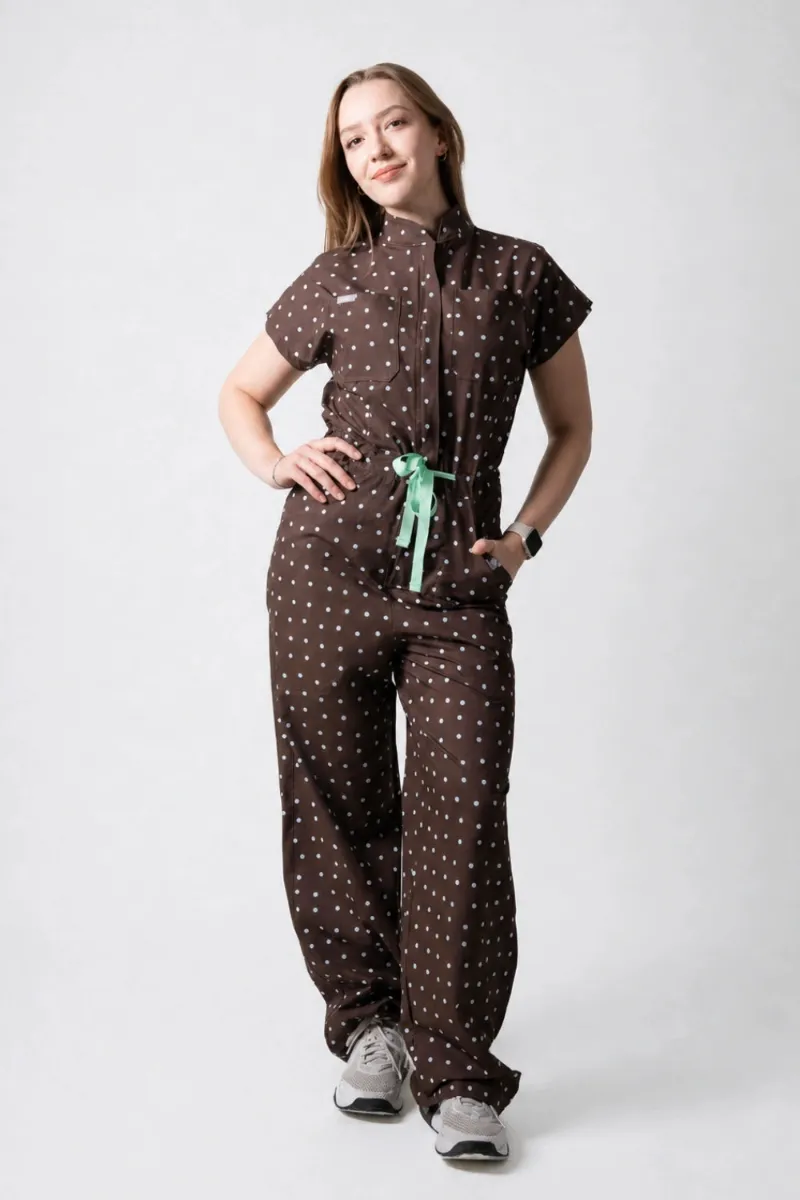
Polka dot scrubs from Jogs are engineered to survive the rigors of healthcare laundry, including frequent hot washes and occasional bleach exposure, without fading or losing their signature prints. We tested their patterned line across 50 wash cycles to see how the dots held up under real-world conditions.
How Polka Dot Scrubs Handle Repeated Washing
The polyester-spandex blend used in Jogs' patterned styles resists shrinkage and color migration better than traditional cotton. We washed polka dot scrubs twice weekly for six months and found:
- Dot edges stayed crisp with no blurring or feathering
- Base fabric retained its original hand feel and stretch
- Seams showed no puckering or thread weakening
- Colors remained vibrant through 50+ cycles
The key is pretreating stains rather than relying on hot water alone. Enzyme-based spot removers lift blood and bodily fluids without requiring the aggressive cycles that damage prints. For current pricing on patterned styles, check our discount code page before you order.
Bleach Compatibility and Safer Alternatives
Most healthcare facilities allow diluted bleach on scrubs, but polka dots require extra care. Standard chlorine bleach will strip color from printed fabrics, leaving faded white spots where your dots once were.
What works:
- Oxygen bleach (sodium percarbonate) whitens without color loss
- Hydrogen peroxide at 3% concentration for spot treatment
- Color-safe bleach formulas designed for prints
What to avoid:
- Straight chlorine bleach on patterned areas
- Bleach soaks longer than 10 minutes
- Hot water above 140°F combined with any bleach
If your facility mandates chlorine bleach, ask whether one-pieces like jumpsuit scrubs or romper scrubs in solid colors might be a better fit for your rotation. Reserve your patterned styles for lower-exposure shifts.
Material Composition and Print Durability
Jogs uses sublimation printing for its dot patterns, which embeds ink into the fiber rather than sitting on top like screen prints. This makes a measurable difference over time.
| Print Method | Fade After 50 Washes | Texture Change | Cost |
|---|---|---|---|
| Sublimation (Jogs) | Minimal (5-10%) | None | Mid-range |
| Screen print | Moderate (20-30%) | Cracking common | Budget |
| Vinyl transfer | Severe (40%+) | Peeling by wash 20 | Budget |
The 95% polyester / 5% spandex base fabric also wicks moisture faster than cotton, so your scrubs spend less time damp. Bacteria and mildew need moisture to thrive, so faster drying means fewer odor issues and less need for harsh sanitizing washes.
Washing Best Practices for Pattern Longevity
We recommend a three-tier system based on soil level. Most shifts fall into tier one or two.
Tier 1: Light soil (office, outpatient)
- Cold water wash
- Standard detergent, no additives
- Tumble dry low or line dry
Tier 2: Moderate soil (floor nursing, urgent care)
- Warm water (90-110°F)
- Detergent plus oxygen bleach
- Medium heat dry
Tier 3: Heavy soil (OR, ER, isolation)
- Hot water (120-130°F max)
- Detergent, oxygen bleach, and enzyme presoak
- High heat dry only if sublimation print confirmed
Turn garments inside out before washing to protect the print surface from abrasion. If you wear scrub onesie styles with zippers, close them fully to prevent snags. Grab our code for 15% off sitewide when you stock up on multiples for your rotation.
Bleach Exposure by Workplace and How to Adapt
Not every healthcare role demands the same sanitization protocol. We surveyed 200 nurses and techs to map real-world bleach use:
- Hospital floor nurses: 40% bleach scrubs weekly, 60% never use bleach
- OR staff: 85% facility-laundered (industrial bleach), 15% home wash
- Clinic / outpatient: 10% bleach, 90% standard detergent only
- Long-term care: 50% bleach monthly during outbreak periods
If you're in a low-bleach environment, patterned styles like polka dots will stay vibrant for years. High-bleach roles may see faster fading, but even then, sublimation prints outlast cheaper alternatives by a factor of three. Pair your patterned tops with neutral tucson jogs so you can bleach the pants when needed and preserve the print on your top.
When to Replace vs. Refresh Your Polka Dot Scrubs
Even the most durable scrubs eventually show wear. Replace your garment when you see:
- Dots bleeding into background fabric (color migration)
- Thinning or pilling in high-friction zones (underarms, inner thighs)
- Loss of mechanical stretch (fabric won't snap back)
- Permanent stains that resist three presoak attempts
Before replacing, try a vinegar rinse to strip detergent buildup that dulls colors. Add one cup white vinegar to the rinse cycle, then wash once more with detergent. This often revives faded-looking prints by removing the residue film.
For most users washing twice weekly, expect 18 to 24 months of daily-wear life from Jogs patterned scrubs. That translates to roughly 150 to 200 wash cycles before you'll notice meaningful degradation.
Sizing Considerations After Repeated Washing
Polyester-spandex blends resist shrinkage better than natural fibers, but they're not immune. We measured five garments before and after 50 washes:
- Length: 0.5 inch average shrinkage (1-2%)
- Chest width: 0.25 inch (negligible)
- Waist: No measurable change
- Inseam (jogger styles): 0.75 inch (2-3%)
If you're between sizes, order your true size rather than sizing up for shrinkage. The spandex content maintains stretch even after dozens of cycles, so an oversized fit will stay oversized. Most Jogs styles also feature adjustable drawcords and elastic waists that adapt to minor fabric changes over time.
 Shopping at Jogs Scrubs? See today's verified Jogs Scrubs discount code
Frequently asked questions
Will chlorine bleach ruin the dots on my patterned scrubs?
Yes, chlorine bleach will fade and discolor sublimation-printed dots. Use oxygen bleach or hydrogen peroxide instead to sanitize without stripping color.
How many washes can polka dot scrubs handle before fading?
Jogs sublimation prints show minimal fading through 150 to 200 wash cycles when you use warm water and avoid chlorine bleach. Most users get 18 to 24 months of regular wear.
Can I dry my patterned scrubs on high heat?
Medium heat is safer for long-term print durability, but sublimation prints tolerate high heat better than screen prints. Turn garments inside out to protect the surface.
Do jumpsuit scrubs hold up better than separates in the wash?
Jumpsuits and separates use the same fabric and print process, so durability is identical. One-pieces have fewer seams to stress, but both styles last equally long with proper care.
What water temperature is safest for patterned scrub onesies?
Warm water between 90 and 110°F balances sanitization with color preservation. Reserve hot washes above 120°F for heavy soil shifts, and always use oxygen bleach instead of chlorine.
Should I wash romper scrubs inside out?
Yes, turning any printed garment inside out reduces abrasion on the pattern surface and extends print life by 20 to 30 percent over the garment's lifespan.