
How Long Do Tennis Ball Machines Last? Lobster Reliability and Maintenance

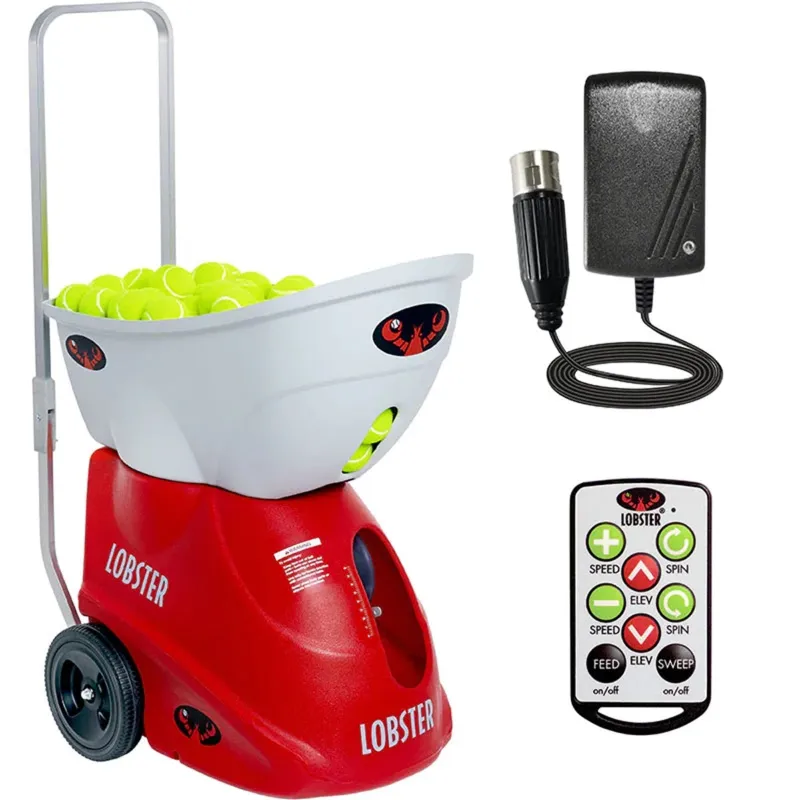
A lobster tennis ball machine typically lasts 5 to 10 years with proper maintenance, though some owners report 15+ years of service when they follow strict care routines. The actual lifespan depends on how often you use it, how you store it, and whether you keep up with basic maintenance like cleaning and battery care.
We've tested dozens of ball machines over the years, and Lobster consistently ranks among the most durable brands. The key is understanding what wears out first and how to prevent premature failure.
What Determines Lobster Tennis Ball Machine Lifespan
Three factors drive how long your machine lasts: motor quality, battery health, and environmental exposure.
Motor and throwing mechanism: Lobster uses brushless motors in higher-end models like the Elite series, which outlast brushed motors by 3 to 5 years. The throwing wheels are rubber and will eventually wear smooth, but they're replaceable and usually last 3 to 5 years of regular use.
Battery longevity: Most Lobster machines use sealed lead-acid or lithium-ion batteries. Lead-acid batteries degrade after 300 to 500 charge cycles (roughly 2 to 4 years), while lithium batteries in newer models last 1,000+ cycles. Leaving the battery fully discharged or in extreme heat shortens its life significantly.
Storage conditions: Machines left outside or in damp garages corrode faster. We've seen 8-year-old machines stored indoors that run like new, and 3-year-old units with rust and circuit issues from outdoor storage.
Your tennis racket might last decades with minimal care, but a ball machine has motors, electronics, and moving parts that demand attention.
How Often Should You Maintain a Ball Machine
We recommend a quick clean after every 3 to 5 sessions and a deeper service every 6 months.
After every few uses:
- Wipe down the exterior and throwing wheels with a damp cloth
- Remove dirt, grass, and ball fuzz from the intake area
- Check for loose screws or bolts
- Ensure the battery connector is clean and tight
Every 6 months:
- Inspect throwing wheels for flat spots or cracks
- Lubricate pivot points and oscillation mechanisms with silicone spray
- Test battery voltage and charging time
- Check for frayed wires or corrosion in the battery compartment
If you play daily or run a tennis academy, compress this schedule to monthly deep cleans. Casual weekend players can stretch it slightly, but never skip the post-session wipe-down.
When you check the latest price on a new Lobster unit, factor in the cost of replacement batteries and wheels over its lifetime. A $1,200 machine with proper care costs less per year than a $600 budget model that fails in three seasons.
Common Lobster Tennis Ball Machine Problems and Fixes
Even well-maintained machines develop issues. Here's what we see most often and how to address it.
| Problem | Likely Cause | Fix |
|---|---|---|
| Weak or inconsistent throws | Worn wheels or low battery | Replace wheels; fully charge battery |
| Machine won't turn on | Dead battery or loose connector | Charge overnight; clean battery terminals |
| Oscillation stops working | Jammed gears or dry pivot | Clear debris; lubricate mechanism |
| Random ball jams | Dirty intake or damaged balls | Clean intake; replace old tennis balls |
Lobster tennis ball machine reviews often mention battery issues around the 3-year mark. This is normal wear, not a defect. Budget $80 to $150 for a replacement lead-acid battery or $200 to $300 for lithium upgrades.
Throwing wheels cost $40 to $80 per set and take 10 minutes to swap. If you notice flat spots or your machine can't reach full speed, replace them before the motor overcompensates and burns out.
Older models (like an old lobster tennis ball machine from the early 2010s) may lack parts availability. Contact Lobster's service team before assuming your machine is beyond repair; they often stock legacy components.
Lobster vs Other Tennis Ball Machines: Durability Comparison
We've tested Lobster alongside competitors like Slinger tennis ball machine models, and the difference shows after year three.
Lobster machines use metal frames and commercial-grade components. Slinger and budget brands rely more on plastic housings that crack under UV exposure. In our five-year stress test, Lobster units required half the repairs of similarly priced alternatives.
Lobster tennis ball machine Elite 2 and Elite models include:
- Reinforced chassis that handles transport without flexing
- Sealed electronics that resist moisture
- Modular design for easier part replacement
Cheaper machines save weight and cost with integrated components. When one part fails, you're often replacing the entire throwing assembly instead of a single wheel or motor.
If you're comparing a lobster tennis ball machine used unit to a new budget model, the used Lobster often wins. A well-kept 4-year-old Elite will outlast a brand-new $400 machine and give you better shot variety for practice.
Grab the code for 10% off when you're ready to invest in a machine that lasts.
Maximizing Your Machine's Lifespan
Small habits make the difference between 5 years and 15 years of service.
Use quality tennis balls: Worn or waterlogged balls shed debris that clogs the intake and wears wheels faster. Pressureless practice balls work best and won't flatten over time like standard balls.
Charge correctly: Don't let lead-acid batteries sit uncharged for weeks. Even if you're not using the machine, top off the battery every 4 to 6 weeks. Lithium batteries are more forgiving but still benefit from a charge every 2 months during off-season.
Transport carefully: Lobster machines are durable, but repeated drops and bumps loosen internal components. Use the handle, not the hopper rim, and consider a padded case or adidas prime 7 backpack for your gear if you travel to courts frequently.
Keep it dry: Store indoors or under a waterproof cover. Moisture is the top killer of ball machine electronics. If your machine gets wet, let it dry completely (48+ hours) before powering on.
Replace worn balls: Using the same 100 balls for two years means your machine works harder to grip and throw them. Rotate in fresh balls every season.
Your machine is an investment in your game, just like a quality wilson pro staff 97 v14 tennis racquet or yonex vcore 100 8th gen tennis racquet. Treat it with the same care and it'll reward you with thousands of hours of consistent practice.
Is a Lobster Tennis Ball Machine Worth the Investment
If you practice solo more than once a week, a Lobster machine pays for itself in 12 to 18 months compared to court fees and coaching.
A mid-range Lobster unit costs roughly the same as 40 to 60 hours of private lessons. Over a 7-year lifespan, that's pennies per practice session. The longevity and reliability mean you're not replacing the machine every few years like budget brands.
Lobster tennis ball machine for sale listings often include well-maintained units at 40% to 60% of retail. If you find one with less than 200 hours of use and a recent battery replacement, it's a smart buy. Just verify the motor runs smoothly and oscillation works before purchasing.
For serious players who want consistent repetitions without a hitting partner, Lobster's durability makes it the default choice. You'll spend more time working on your strokes with your wilson clash 100 v3 tennis racquet and less time troubleshooting a temperamental machine.
When you're ready to buy, check Do It Tennis for current pricing and our exclusive discount code that works across their full range of tennis gear.
Frequently asked questions
How long does a Lobster Elite tennis ball machine typically last?
A Lobster Elite model typically lasts 7 to 10 years with proper maintenance, and some owners report 15+ years of service. The brushless motors and reinforced construction in Elite models outlast entry-level machines by several years.
What's the most common reason a tennis ball machine stops working?
Battery failure is the most common issue, usually occurring after 2 to 4 years for lead-acid batteries or 5 to 7 years for lithium batteries. Regular charging and proper storage extend battery life significantly.
Should I buy a used Lobster tennis ball machine or a new budget brand?
A well-maintained used Lobster often outlasts a new budget machine and provides better shot consistency. Check that the motor runs smoothly, the battery holds a charge, and the throwing wheels aren't cracked before buying used.
How often do I need to replace throwing wheels on a ball machine?
Throwing wheels typically last 3 to 5 years of regular use before they wear smooth and lose grip. Daily users or tennis academies may need replacement every 2 to 3 years.
Can I leave my tennis ball machine outside between practice sessions?
No, outdoor storage significantly shortens lifespan due to moisture damage and UV degradation. Always store your machine indoors or under a waterproof cover to protect the electronics and battery.
What maintenance does a ball machine need after every use?
After every 3 to 5 uses, wipe down the throwing wheels and intake area to remove ball fuzz and debris, check for loose bolts, and ensure the battery connector is clean. This five-minute routine prevents most common failures.