
What Makes a Golf Shirt Performance-Grade: Materials and Features Explained

What Makes a Golf Shirt Performance-Grade: Materials and Features Explained
Performance golf shirts use engineered fabrics that wick moisture, stretch with your swing, and regulate temperature better than standard cotton polos. The difference comes down to fiber choice, fabric construction, and strategic design features that respond to the demands of walking 18 holes in variable weather. We tested dozens of options to identify the materials and features that actually improve your experience on the course.
Core Fabric Technologies in Performance Golf Polos
The foundation of any performance shirt is its fiber blend. Polyester dominates because it pulls sweat away from skin and dries quickly, while nylon adds durability and stretch. Many golf polos blend 10 to 20 percent spandex or elastane to create four-way stretch that moves with your torso during the backswing and follow-through without binding.
Natural fibers still play a role. Merino wool regulates temperature in both heat and cold, resists odor naturally, and feels softer than synthetic alternatives. Cotton blends offer familiarity and breathability but dry slower, making them better suited for cooler, dry climates. The maelreg performance polo uses a polyester-spandex blend engineered for maximum moisture transfer and recovery.
Look for moisture-wicking labels that specify the mechanism: capillary action pulls liquid to the fabric surface where it evaporates, keeping your skin drier than cotton, which absorbs and holds moisture. This matters most in humid conditions where evaporative cooling is limited.
Stretch and Mobility Features That Matter
Four-way stretch means the fabric gives both horizontally and vertically. Two-way stretch, common in older designs, only flexes in one direction and can still restrict rotation. We recommend a minimum of 10 percent elastane content for true freedom of movement.
Beyond the fabric itself, check for these construction details:
- Raglan or gusseted sleeves that eliminate shoulder seams restricting your backswing
- Action back pleats in woven fabrics that expand during rotation
- Side vents or split hems that prevent the shirt from riding up when you bend
- Athletic or tapered fit that stays tucked without excess fabric bunching
Mens 1/4 zip pullover styles add versatility for cool mornings, with stretch panels under the arms and along the sides. The quarter-zip design lets you ventilate quickly when the temperature climbs.
Temperature Regulation and UV Protection
Performance fabrics manage heat in two ways: moisture evaporation and air circulation. Mesh panels along the back, under the arms, or across the shoulders increase airflow in high-sweat zones. Some golf shirts use a dual-layer construction with a hydrophobic inner layer that repels moisture outward and a hydrophilic outer layer that spreads it for faster drying.
UV protection is measured in UPF (Ultraviolet Protection Factor). A UPF 30 fabric blocks 96.7 percent of UV rays; UPF 50 blocks 98 percent. Tight weaves, darker colors, and certain fabric treatments increase UPF ratings. Many best golf shirts now include UPF 30 or higher as standard, protecting your neck and arms during long rounds without reapplying sunscreen to covered areas.
For cooler weather, a golf sweatshirt or 3/4 zip pullover made from fleece-backed performance fabric retains warmth while still wicking sweat during the round. Look for brushed interior finishes that trap heat without adding bulk.
Collar vs. Collarless: Functional Differences
Traditional collared polos remain the standard at most clubs and offer sun protection for your neck. Ribbed collars hold shape better than woven ones, and button plackets should lie flat without gaping.
Collarless golf shirts and no collar golf shirts have grown in popularity because they eliminate collar bulk and the chafing some players experience. Many tour players now wear mens collarless golf shirts in practice rounds. They work well under club dress codes when paired with tailored shorts or pants, though you should verify your course allows them for competition.
The choice comes down to personal preference and club rules. Both styles are available in the same performance fabrics with identical moisture management and stretch.
Best Golf Shirts for Women: Fit and Feature Differences
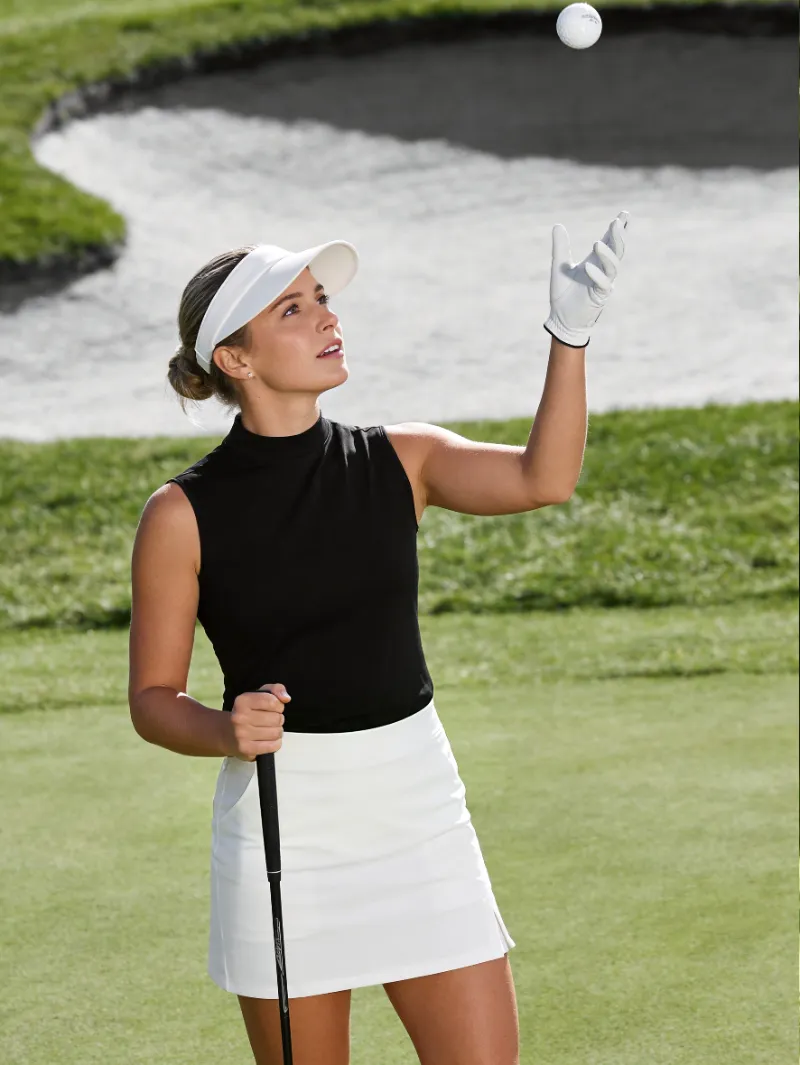
Womens golf clothes are cut with a shorter torso length, narrower shoulders, and contoured side seams that follow the waist and hips. Sleeve lengths are proportionally shorter, and necklines sit higher to prevent gaping.
Performance features remain the same—moisture wicking, stretch, and UV protection—but fit makes a dramatic difference in comfort. Women's-specific designs also include bust darts or princess seams for better shaping, and many styles use lighter-weight fabrics than men's versions to account for differences in body temperature regulation.
Best golf shirts for women often incorporate style details like color-blocking, mesh inserts, or textured fabrics that work on the course and off. The key is ensuring athletic fit doesn't mean tight; you should be able to raise your arms overhead without the hem lifting above your waistband.
How to Evaluate Quality and Longevity
Higher-quality performance shirts maintain their shape, color, and wicking properties through dozens of washes. Check for these indicators:
- Flatlock or bonded seams that lie flat and resist chafing
- Reinforced stress points at the shoulder and underarm
- Colorfastness (darker colors should have anti-fade treatments)
- Pilling resistance in the fabric finish
- Shape retention (the shirt shouldn't stretch out after wearing)
Avoid shirts with rough interior seams or loose threads, which indicate lower manufacturing standards. The best golf shirts brands invest in garment finishing that eliminates irritation points.
Price often correlates with durability. A $25 shirt may wick moisture initially but lose performance after a season, while a $60 to $80 option typically uses better fibers and construction that last multiple years. Check the latest pricing with our code to find performance options at various price points.
Care Tips to Preserve Performance Features
Wash performance fabrics inside-out in cold water to protect the exterior finish and reduce pilling. Skip fabric softener entirely—it coats fibers and blocks moisture-wicking channels. Use a sport-specific detergent or a small amount of regular liquid detergent.
Tumble dry on low or hang dry. High heat can break down elastane fibers and reduce stretch over time. If the shirt develops odor that persists after washing, soak it in a 1:4 vinegar-water solution for 30 minutes before laundering.
Store shirts folded or on hangers; avoid leaving them compressed in a gym bag where moisture and bacteria can set in. With proper care, a quality performance polo will maintain its technical properties for 100-plus wears.
Where to Find the Best Value on Performance Golf Apparel
We regularly test new releases from major brands and direct-to-consumer companies. Maelreg offers a curated selection of performance moisture wicking golf shorts and tops that balance technical features with everyday wearability. Their fabric blends prioritize quick-dry performance and stretch without the premium pricing of big-name golf brands.
Grab our code for 15 percent off your order, which makes their already competitive pricing even better. Look for seasonal clearances on colors being rotated out—the technical performance remains the same regardless of whether a shade is currently trending.
The difference between a basic cotton polo and a true performance shirt becomes obvious once you play a full round in summer heat or swing through a cool, windy morning. Investing in the right materials and features means you stay focused on your game instead of adjusting uncomfortable clothing.
Frequently asked questions
What fabric is best for performance golf shirts?
Polyester blends with 10 to 20 percent spandex or elastane offer the best combination of moisture-wicking, quick-drying, and four-way stretch. Merino wool is excellent for temperature regulation but costs more and requires careful washing.
Do collarless golf shirts meet dress codes?
Most courses now allow collarless performance shirts for casual play, but some still require collars for tournaments or weekend tee times. Check your club's specific rules before wearing a collarless style in competition.
How do I know if a golf polo has enough stretch?
Look for at least 10 percent elastane or spandex in the fabric blend and the term 'four-way stretch' on the label. When you try it on, you should be able to rotate your torso and raise your arms without feeling any restriction across the shoulders or back.
Can I put performance golf shirts in the dryer?
Yes, but use low heat only. High heat breaks down elastane fibers and reduces stretch over time. Hang drying or tumble drying on low preserves the fabric's technical properties longest.
What is UPF rating in golf apparel?
UPF (Ultraviolet Protection Factor) measures how much UV radiation a fabric blocks. UPF 30 blocks about 97 percent of rays, while UPF 50 blocks 98 percent. This protects your skin on areas covered by the shirt without needing sunscreen reapplication.
Are expensive golf shirts worth the cost?
Higher-priced performance shirts typically use better fabric blends, flatlock seams, and finishes that maintain wicking and stretch through many more washes than budget options. A quality shirt that lasts three seasons offers better value than replacing cheap ones annually.