
What Is a P38 Can Opener and How Do You Use One?

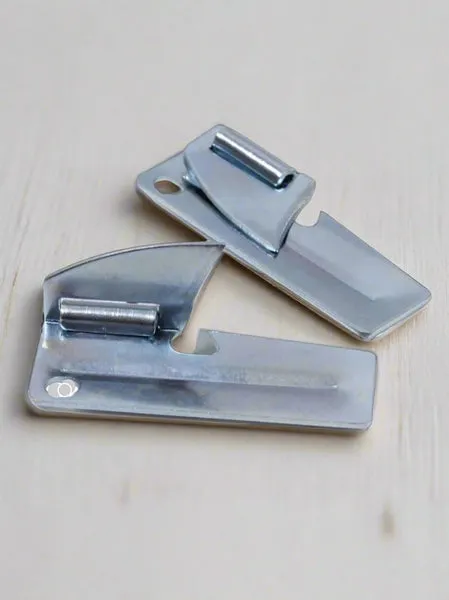
A p38 opener is a tiny, stamped-steel can opener about an inch and a half long that the U.S. military issued to troops from World War II onward, and you use it by hooking its cutting blade over a can's rim and rocking it up and down along the edge until the lid peels back. It has no handle, no gears, and no moving parts, yet it opened generations of ration cans and earned a permanent place in surplus culture. If you have ever seen a small metal trinket on a dog tag chain and wondered what it was, this is it.
What Is a P38 Opener, Exactly?
The P-38 can opener was developed during WWII as a way to open canned field rations without bulky equipment. It is a single piece of folded, sharpened steel with a hinged cutting blade and a hole at one end. Soldiers carried it on a dog tag chain or taped inside a mess kit, which is why so many veterans still keep theirs decades later. Some writers have called it one of the most perfectly designed devices in military history, and this veterans' account explains why the nickname stuck.
The name has nothing to do with the Lockheed P-38 Lightning fighter, though that confusion comes up constantly. The most common explanation is that the tool took 38 punches (or strokes) to open a ration can, though you will hear competing theories.
At our army and navy surplus store, the p38 opener and the larger p 38 can opener variant are still among the most searched items, right alongside classic gear like a watch cap or a navy peacoat. The tool costs next to nothing, never needs sharpening for casual use, and will outlive most kitchen gadgets.
P38 Opener vs P51 Can Opener
The most common comparison question is the p51 can opener vs p38. Both were military issue, and both work the same way, but they are built for different purposes.
| Feature | P38 | P51 |
|---|---|---|
| Size | About 1.5 inches, keychain-friendly | About 2 inches, too big for a dog tag chain |
| Intended use | Individual ration cans | Large institutional or group-size cans |
| Leverage | Lighter, needs more strokes | Heavier steel, opens big cans faster |
| Carry style | On a chain or in a mess kit | Field kitchens, mess halls |
If you want the authentic keychain experience, the original p38 can opener is the one you want. If you actually plan to open catering-size cans of tomatoes or beans, the P51's extra length gives you real leverage. Many people just buy both, and since you can find a p38 can opener for sale for pocket change, that is usually the sensible move.
How to Use a P38 Can Opener: Step by Step
This is the p38 can opener how to use section, and the technique is easier to do than to describe. Here is the sequence:
- Set the hinge. Flip the cutting blade up so the tool forms a right angle, like a tiny jackknife standing open.
- Hook the blade. Press the sharpened tip of the blade down onto the can's rim until it bites through the metal. The blade should pierce the lid just inside the rolled edge.
- Rock and advance. Lift the back of the tool up, then press the cutting edge down again, pushing the can forward slightly under the blade with each motion. Think of it as a rocking, see-saw motion rather than a slicing one.
- Work around the rim. Keep rocking and advancing your grip a little at a time so the blade walks its way around the full circumference.
- Peel the lid. Once you have gone all the way around, pry the lid up with the tip of the opener, angling the sharp edge away from your hand.
A few tips we have learned from testing dozens of these:
- Use your thumb to hold the tool flat against the can, or it will skip and skate.
- The first puncture is the hardest. Lean in.
- Drain the liquid first if the can is full, or you will be rocking around in a splash zone.
- Wipe the blade before you carry it. Surplus steel can have a light oil coating from the factory.
Expect the first can to take a couple of minutes and look a little ragged at the rim. By the third can you will be rocking around the rim in under a minute. The cut edge is sharp, so handle the opened lid with respect.
Why Veterans and Collectors Love the Original P38 Can Opener
The p-38 can opener history runs deep. The tool went into production during WWII and served through Korea and Vietnam, accompanying canned C-rations for decades. When MREs replaced canned rations, the P38 became a keepsake. Veterans pass them down, sew them into jacket linings, and trade stories about them at breakfast clubs. This history piece covers the wartime background well if you want the full story.
That story is part of why surplus gear in general sells so well. The same customers who pick up an original p38 can opener often grab a classic t shirt usmc or a heavy wool pea coat to complete the look. It is gear with a past, and the P38 is the pocket-size version of that feeling.
Everyday Uses Beyond Ration Cans
Do not dismiss the p38 opener as a novelty. In our testing it earns a spot in real kits:
- Bug-out and car kits. It weighs almost nothing and opens any standard can, no batteries required.
- Camping and fishing. Attach it to a lanyard, or clip it next to a coil of 550 paracord in your pack. The paracord's inner strands even make a decent fob so you stop dropping it.
- Sinkers and markers. The chain hole lets you hang it on a keyring with a monkey fist knot for a chunky, easy-to-find pull tab.
- The bathroom-drawer test. It opens a can of soup during a power outage, which is when cheap gadgets fail and honest steel does not.
The tool also makes a quiet little gift for the person who already owns everything. Pair it with a military-style hat or a reproduction flag from the same store and you have a themed gift for about the price of a coffee.
Where to Buy and How Much They Cost
A p38 can opener for sale through surplus dealers usually runs between one and five dollars, with multi-packs and P51 combos available. Prices shift with steel costs and stock, so rather than quote a number that may be stale, check the latest price on our coupon page. New orders can also grab the code there for 10% off, which on a tool this cheap basically makes it a rounding error.
What matters more than the price is buying a genuine stamped-steel version rather than a flimsy novelty copy. Look for:
- Stamped, not cast, construction
- A clean, sharp cutting edge on the inner blade
- The hole at the tail end for chain carry
Used originals from the 1940s through 1970s are common and perfectly functional, though the blade may need a light pass with fine steel wool before first use.
Bottom line: the p38 opener is one of the few pieces of surplus gear that is simultaneously a genuine tool, a piece of history, and a pocket-sized conversation starter. Learn the rocking technique once and you will never look at a can the same way.
Frequently asked questions
What is a p38 opener used for?
It is a small stamped-steel can opener issued to U.S. troops since WWII. You hinge its blade over a can's rim and rock it along the edge to cut the lid off. It has no moving parts and is carried on a dog tag chain.
What is the difference between the P38 and the P51 can opener?
The P51 is about two inches long with heavier steel and more leverage, built for large group-size cans. The P38 is smaller, keychain-portable, and was designed for individual ration cans.
Do I need to wash a new P38 opener before using it?
Commonly no, especially used originals, which may have a light protective oil or decades of pocket wear. A quick wipe or fine steel wool pass cleans the blade before first use.
Why is it called a P-38?
It is named for the legend that it took 38 strokes to open a ration can. Despite the shared name, it has no connection to the Lockheed P-38 Lightning aircraft.
Where can I find a p38 can opener for sale?
Surplus dealers sell them new for a few dollars, often in multi-packs with the larger P51. Check our coupon page for the current price and discount code before you order.
Is the P38 opener good for camping and emergency kits?
Yes. It is a popular addition to bug-out bags, camping kits, and fishing gear because it weighs almost nothing, never dulls quickly, and opens any standard can without power.