
How to Tie a Monkey Fist Knot With 550 Paracord

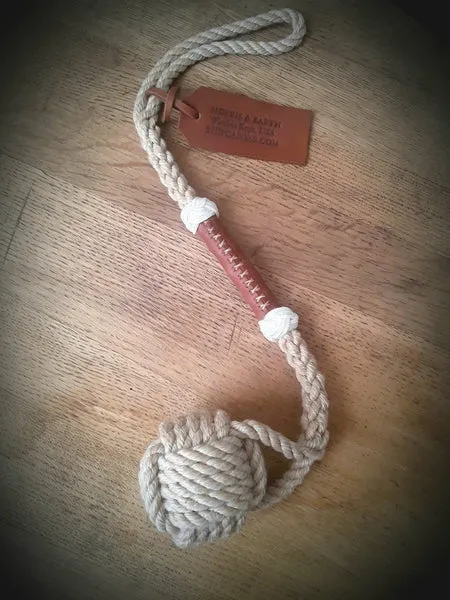
A monkey fist knot is a rounded stopper knot built from a series of woven wraps around a core, and tying one with 550 paracord takes about 10 minutes once you know the three-pass pattern. It is one of the most recognizable knots in the nautical world, and with quality 550 paracord it comes out tight, round, and durable enough for years of hard use.
Below we break down what the knot is for, what cord and core you need, and the exact step-by-step method we use when testing cord at our shop.
What Is a Monkey Fist Knot and What Is It Used For?
The monkey fist knot started life as a heaving line knot. Sailors tied a small weight, often a stone or musket ball, into the center so the line could be thrown from ship to dock without the line tangling in the wind. That origin is also where the monkey fist knot meaning comes from: the woven ball looks a bit like a clenched fist, and the knot was tied on the "monkey" of the rigging where lines were secured.
Today the knot shows up in a lot of practical places:
- Keychains and zipper pulls where the rounded knot gives you something solid to grab
- Heaving lines and docking lines on small boats, where a bit of weight helps a throw carry
- Stopper knots on lanyards and drawstrings, since the fist will not slip through a ring
- Decorative work, including knot boards, bell pulls, and nautical displays
- DIY toggles and drawstring weights on jackets and gear bags
If you would rather buy a finished one than tie your own, we stock a hand-tied monkey fist knot made from full-strength paracord, which is handy if you want the look without the practice time.
What You Need Before You Start
You do not need much, but the two choices that matter are the cord and the core.
Cord. 550 paracord is the sweet spot. It has seven inner strands, a smooth nylon sheath, and enough body to hold shape when you tighten the knot. Thinner cord can be used but the fist will look small and soft. Thicker rope works for large fists but is harder to dress tightly. We recommend real mil-spec or commercial grade 550 paracord rather than generic "paracord style" cord, because cheap substitutes flatten out and the weave never looks clean.
A core. A monkey fist knot with ball in the center holds a round shape and has real heft. Common cores include:
- 1 inch or 1.25 inch steel or brass balls
- Glass marbles (lighter, good for keychains)
- Wooden beads or round toggles
- A crumpled ball of foil if you just want practice
For cord length, budget roughly 4 to 5 feet of 550 paracord for a 3-pass fist around a 1 inch core. More passes means dramatically more cord, so practice small first.
How to Tie a Monkey Fist Knot, Step by Step
The classic method is three passes in each of three directions, making nine total wraps. Here is the sequence we teach:
- Set the core. Hold your ball in your non-dominant hand and leave a 6 inch tail of cord hanging from it.
- First direction. Wrap the cord vertically around the ball three times, keeping the wraps snug and side by side.
- Second direction. Pass the working end through the gap between the wraps and the core, then wrap horizontally three times so it interlocks with the first set. It should look like a lopsided cage at this point, which is normal.
- Third direction. Thread the end through and wrap three more times around the remaining axis, perpendicular to the first two. You now have a woven ball with the core trapped inside.
- Start tightening. Work around the fist pinching and pulling each wrap a little at a time. Go slowly. If you yank one loop tight, the whole knot locks up unevenly.
- Dress and finish. Feed out slack loop by loop until the knot is hard and round. Finish with your two ends either whipped together inside a final wrap or spliced and tucked, leaving a short tail as your lanyard.
If you are a visual learner, this animated monkey's fist tutorial shows the three-direction wrap clearly, and this step-by-step knot board walkthrough is excellent if you want to mount one on a display like the old-timers did. There is also a full video walkthrough if you want to follow along in real time.
Expect your first three or four attempts to look like a lumpy walnut. That is fine. The tension-and-dress stage is a skill of its own, and by the fifth attempt most people get a clean, round fist.
Monkey Fist Knot With Ball vs Without Ball
A common question is whether you need a core at all. You can tie a monkey fist knot without ball, using an empty center or a taped-up cord bundle, but the results are different enough that it is worth choosing deliberately.
| Feature | With a hard core (ball) | Without a core |
|---|---|---|
| Shape | Crisp, perfectly round | Softer, slightly oblong |
| Weight | Noticeable heft, good for throwing | Very light |
| Best for | Keychains, heaving lines, displays | Zipper pulls, flexible lanyards |
| Difficulty | Easier to keep even | Harder to dress tight |
Our take: use a core for anything you want to look good or actually throw, and go coreless only when you need the knot to flex.
Are Monkey Fist Knots Illegal? The Honest Answer
Because a weighted fist can concentrate force in a small area, some people search "monkey fist knot weapon" and worry about the law. The knot itself is not illegal anywhere we know of. What matters is how it is carried and what your local rules say about weighted impact tools, which some jurisdictions regulate. A monkey fist keychain hanging on a bag is treated very differently from a heavy steel-cored fist carried as a self-defense tool, and a few places have specifically restricted weighted keychains.
We are not lawyers, so the practical advice is simple: tie it, use it as a knot, and check your local rules before carrying anything with a heavy steel core in your pocket. A marble or wooden core keeps things firmly on the decorative side.
Care Tips and Good Companion Gear
Paracord monkey fists are low maintenance, but a few habits keep them looking new:
- Wash gently. Nylon 550 paracord handles mild soap and air drying well. Avoid high heat, which can shrink the sheath.
- Trim and melt ends. Singe cut cord ends with a lighter and press them flat to stop fraying.
- Re-dress if needed. After heavy use, work the wraps with your thumbs to restore the round shape.
If you are building out a nautical kit, the fist pairs naturally with a jolly roger flag for the boat rail or a classic watch cap for cold mornings on the water. For a larger knot to hang from a bell pull or display, or if you simply want one tied by someone who has done it ten thousand times, grab a finished monkey fist knot from our shop, and check the latest price because we run discounts on rope goods regularly.
Where to Get Good Paracord Without Overpaying
Genuine 550 paracord is inexpensive, but prices vary a lot between sellers, and the difference between real seven-strand cord and bargain substitutes shows up the first time you tighten a fist. We test and stock what we recommend, and you can grab the code for 10% off all orders, which stacks on rope, flags, and everything else in the shop. Tying a monkey fist knot well starts with cord that holds its shape, so it is worth getting the real thing.
Frequently asked questions
How much 550 paracord do I need for a monkey fist keychain?
For a standard 3-pass fist around a 1 inch core, plan on roughly 4 to 5 feet of 550 paracord. Leave a little extra for the finishing tail, and start smaller on your first attempts so mistakes cost less cord.
Can I tie a monkey fist knot without a ball in the center?
You can tie a monkey fist knot without ball, and it works fine for zipper pulls and flexible lanyards. A hard core just makes the knot rounder and heavier, which looks better and throws farther.
What size core should I use for a paracord monkey fist?
Marbles, wooden beads, and steel or brass balls are the most common cores. Match the core size to your cord diameter; a core around 1 inch works well with 550 paracord.
Are monkey fist keychains illegal to carry?
The knot itself is not illegal, but some jurisdictions regulate weighted impact tools, and heavy steel-cored keychains have drawn restrictions in a few places. Check your local rules before carrying one with a heavy core.
Why does my monkey fist look lumpy instead of round?
Start with only three wraps in each of the three directions and pinch each wrap snug as you go. Most sloppy first attempts come from over-tightening one loop early, which locks the whole knot unevenly.
Does 550 paracord work for all monkey fist projects?
Yes, as long as it is genuine seven-strand 550 paracord. Cheaper 'paracord style' cord flattens when tightened and never produces a clean, round fist.