
How to Choose Between an Offset Umbrella vs a Standard Patio Umbrella for Your Deck

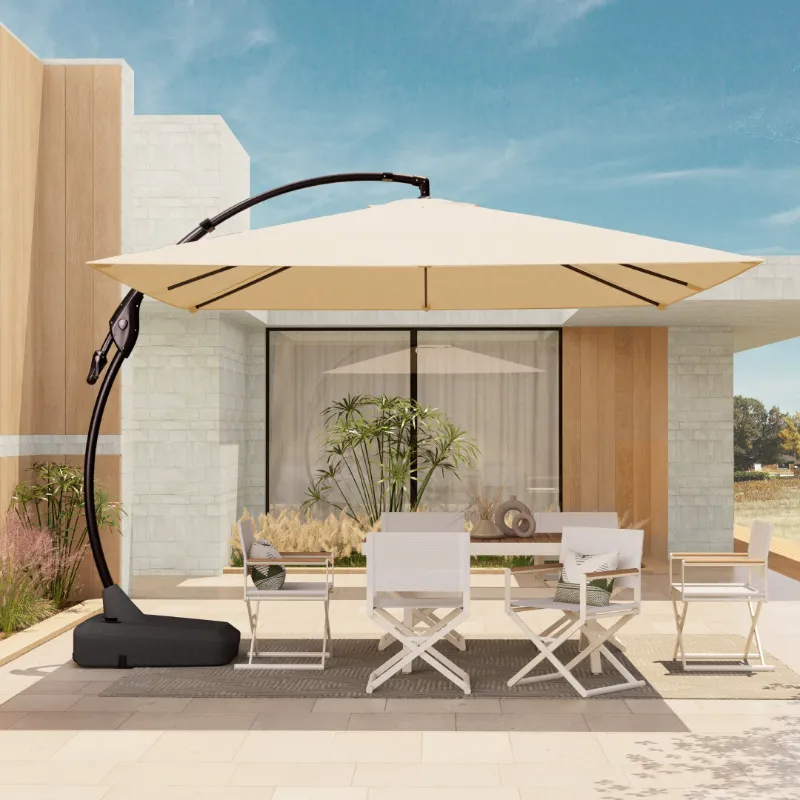
Offset vs Standard: Which Patio Umbrella Fits Your Deck Best
The right patio umbrella for your deck comes down to where you need shade and how your furniture is arranged. Standard center-pole umbrellas work best when you want shade directly over a patio dining set or garden table, while offset cantilever umbrellas give you flexible shade placement without a pole blocking your seating or table surface. We tested both styles across different deck layouts to help you pick the one that solves your specific shade problem.
What Makes Standard Patio Umbrellas the Go-To for Dining Tables
A standard patio umbrella features a center pole that runs straight through the middle of the canopy, and it is designed to slot into the hole found in most outdoor dining sets. This classic design keeps the shade centered directly over your table, which is ideal when your priority is covering everyone seated around a meal.
Advantages of standard umbrellas:
- Fit directly through table umbrella holes without extra hardware
- More stable in moderate wind because the pole anchors low and central
- Typically cost less than offset cantilever models
- Simpler tilt mechanisms for angling shade as the sun moves
Limitations to consider:
- The center pole takes up table space and can interfere with large serving platters
- Shade coverage is fixed to where the table sits
- You cannot reposition shade without moving the entire table and base
If your deck centers around a dining table and you want straightforward shade coverage for meals, check the latest Grand Patio pricing on standard models that match your table size. Most dining tables pair with 7 to 9 foot canopies.
When an Offset Cantilever Patio Umbrella Gives You More Flexibility
An offset or cantilever patio umbrella mounts the pole to one side, with the canopy hanging over your seating area on an arm. This design frees up floor and table space while letting you rotate and tilt shade exactly where you need it throughout the day.
Offset umbrella advantages:
- No pole in the middle of your lounge chairs, patio rocking chairs, or table
- Rotate the canopy 360 degrees to follow the sun without moving furniture
- Cover irregularly shaped seating zones like an outdoor swing plus side chairs
- Many models include built-in crank and tilt for easy adjustment
Trade-offs:
- Require a heavier weighted base (typically 75 to 150 pounds) for stability
- Higher upfront cost than comparable standard umbrellas
- Take up more footprint because the base sits off to the side
Offset umbrellas shine when your deck layout includes separate zones for lounging, conversation seating like a double papasan chair, or a mix of furniture that does not center around one table. Wirecutter's patio umbrella and stand testing confirms that cantilever models offer the best versatility for complex layouts.
How Deck Size and Furniture Layout Should Drive Your Choice
Your deck dimensions and the way you arrange furniture determine which umbrella type will actually work in your space.
Standard umbrellas fit best when:
- Your deck is organized around a single dining table
- You have limited square footage and need the umbrella base under the table
- The table already has a center hole for an umbrella pole
- Seating stays in one fixed arrangement
Offset umbrellas work better when:
- You have 10 by 12 feet or more of deck space to accommodate the side base
- Furniture layout changes seasonally or for gatherings
- You mix patio dining sets with separate lounge or porch chair zones
- You want to shade a lit patio area in the evening without a pole interrupting sight lines
Measure your deck and map where the umbrella base will sit. An offset base typically needs a 24 to 30 inch square footprint in a corner or along the rail, while a standard base tucks under your table and uses vertical rather than horizontal space.
Comparing Patio Umbrella Features Side by Side
| Feature | Standard Center-Pole | Offset Cantilever |
|---|---|---|
| Best for | Dining tables with umbrella holes | Flexible lounge and multi-zone layouts |
| Base weight needed | 30-50 lbs | 75-150 lbs |
| Shade adjustment | Tilt only, fixed position | 360° rotation plus tilt |
| Table space | Pole occupies center | Completely clear surface |
Both styles come with optional upgrades like a patio umbrella with lights for evening use or a patio umbrella with stand if your furniture lacks a built-in base option. Browse current Grand Patio options to compare canopy fabrics, UV ratings, and frame materials within each style.
Material and Maintenance Considerations for Both Umbrella Types
Regardless of which style you choose, canopy fabric and frame construction affect how long your investment lasts.
Canopy fabric:
- Solution-dyed acrylic resists fading and blocks 95 percent or more UV rays, ideal for year-round use
- Polyester costs less but fades faster and typically offers 85 to 90 percent UV protection
- Darker colors absorb more heat; lighter tones keep the space cooler but show stains
Frame materials:
- Aluminum frames stay rust-free and lightweight for easy opening, common in both standard and offset models
- Steel offers more wind resistance but requires powder coating to prevent corrosion
- Fiberglass ribs flex in wind gusts without snapping, worth the upgrade in coastal or high-wind areas
Both umbrella types need the same seasonal care. Close and secure the canopy in storms, remove it entirely for winter storage in freezing climates, and spot-clean the fabric monthly. Offset umbrellas have more moving parts in the rotation mechanism, so check and tighten pivot bolts each spring.
Making the Final Call: Match Umbrella Style to How You Use Your Deck
Choose a standard patio umbrella for table-centered dining when you want simple setup, lower cost, and shade that stays put. Pick an offset cantilever model when your deck serves multiple purposes, furniture moves around, or you want shade flexibility without a pole in the way.
If you are still deciding, consider how often you rearrange your space. Decks that host different activities throughout the week benefit most from the adjustability of an offset design, while decks dedicated to family meals get everything they need from a well-placed standard umbrella over the dining set.
For either style, investing in a quality base and UV-resistant canopy matters more than the umbrella type itself. Grab the current 8% discount code to save on bases, canopy replacements, and accessories that extend the life of whichever patio umbrella you choose. At Home's patio umbrella guide also covers additional shade solutions if you need coverage for larger deck areas beyond what a single umbrella provides.
Frequently asked questions
Can I use an offset patio umbrella with a dining table?
Yes, you can position an offset umbrella to shade your dining table from the side, which frees up the table surface completely. You will need space beside or behind the table for the base, and you may need to rotate the canopy as the sun moves.
How much wind can a standard patio umbrella handle compared to an offset model?
Standard umbrellas generally handle 15 to 20 mph winds better because the center pole sits lower and closer to the anchor point. Offset umbrellas need heavier bases (100+ pounds) to match that stability due to the cantilever arm creating more leverage in wind.
Do I need a patio umbrella with stand or can I use my table base?
If your table has a center hole and you choose a standard umbrella, the table base usually provides enough weight with an additional 30 to 50 pound weighted ring. Offset umbrellas always require a separate freestanding base because they do not insert through furniture.
What size canopy covers a 60 inch round dining table?
A 9 foot canopy provides comfortable shade for a 60 inch table and six chairs. Go up to 10 or 11 feet if you want shade extending beyond the chairs or if your table is rectangular and seats eight.
Are patio umbrellas with lights available in both standard and offset styles?
Yes, both umbrella types offer models with integrated LED lights or solar panels on the canopy ribs. Offset models often have more space on the pole hub for battery packs, while standard umbrellas route wiring down the center pole.
Can I move an offset cantilever umbrella easily once the base is in place?
Most offset umbrella bases include wheels or a dolly attachment so you can roll the entire unit to a new spot without disassembling it. Standard umbrellas are lighter overall but require lifting the base separately from the pole.