

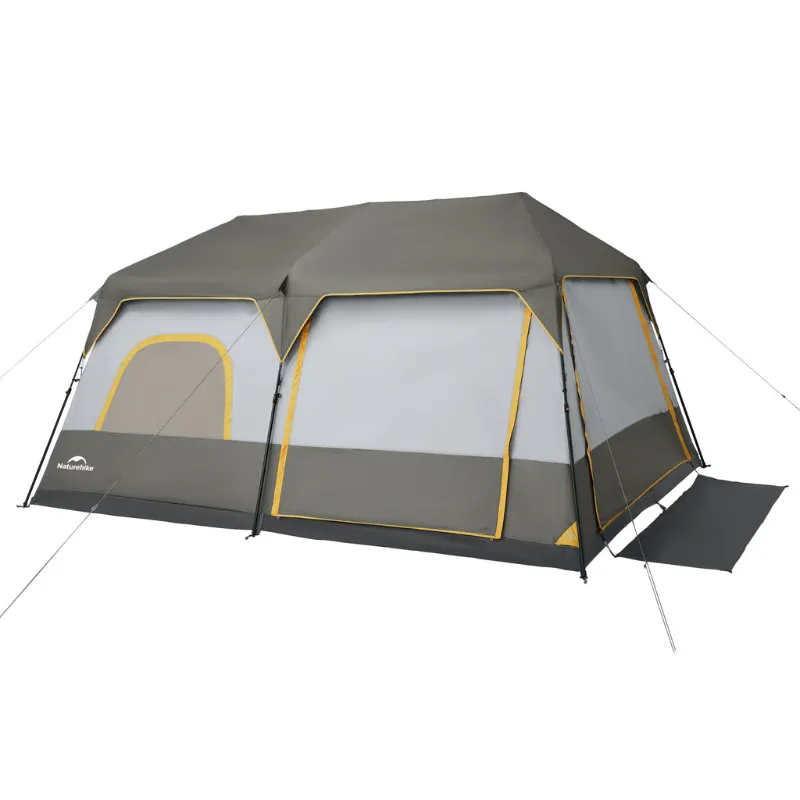
You set up a chapter 8 person instant tent by unstrapping the bag, standing the bundle on flat cleared ground, and letting the pre-built frame spring open before you pull a single hub or stake a single corner. The whole pitch takes a few minutes, and almost all the damage we see happens when someone fights a hub that is still folded or drags loaded fabric across gravel. Do it in the right order and this shelter will outlast several camping seasons.
What "without damage" actually means on an instant tent
An instant tent is not a pole-and-sleeve tent. The frame is pre-assembled, with elastic-corded legs and folding hubs permanently attached to the fly. That design is what makes the pitch fast, and it is also where the stress points live.
- Hubs: the plastic or alloy joints where legs meet. They fail when twisted sideways under load, not when pushed straight.
- Elastic cord: keeps the legs together during folding. It stretches and weakens if you yank a leg out of alignment.
- Corner webbing and floor tub: the first thing to tear when you drag a half-open tent across rocks or roots.
- Zippers: usually damaged by forcing a slider past fabric caught in the coil, not by rain.
Treat the frame as one continuous mechanism rather than eight separate legs and the rest follows.
Step by step: the pitch
- Clear the ground. Sweep aside sticks, pine cones and sharp stones over an area slightly bigger than the footprint. This single step prevents most floor punctures.
- Open the bag wide and unstrap. Lay the bundle flat with the hub side up. Do not pull the tent out by one leg.
- Open the door and any vents first. Air needs somewhere to go when the frame expands, otherwise fabric balloons and seams take the pressure.
- Stand the bundle and let it open. Hold the top hub and let gravity unfold the legs. If a leg sticks, walk around and straighten the fabric, then try again. Never force it.
- Pull every hub fully out. A hub that is 90 percent open is the number one cause of bent legs. Listen for the click or the flat seated feel.
- Stake the four corners diagonally. Opposite corners first, then the remaining two, keeping the floor tub relaxed rather than drum-tight.
- Guy out the long walls and the fly. Large cabins catch wind. Guylines are cheaper than a replacement leg.
- Walk the seams. Run a hand along each seam and zipper to confirm nothing is trapped or twisted.
| Check before you stake | Why it matters |
|---|---|
| All hubs fully seated | Prevents bent legs and twisted cord |
| Door open during expansion | Stops seam stress from trapped air |
| Ground cleared under the floor | Prevents punctures in the tub |
| Corners staked, not yanked | Keeps the floor tub square |
The mistakes that bend poles and tear fabric
- Pitching in wind without a helper. One person holding the frame while the other stakes corners saves more tents than any repair kit.
- Setting up on a slope. The frame opens square; a slope pulls it out of shape and stresses one side of the hubs.
- Leaving the tent half-open in the sun for hours. UV ages fabric faster than any single trip will.
- Pulling the tent out of the bag by a leg. The cord and the hub take the whole load.
- Over-tightening guylines. Tight enough to remove slack is the target, tight enough to bend the leg is damage.
- Zipping through a snag. Back off, free the fabric, then close it.
Packing down and drying it properly
Take-down is where most long-term damage accumulates. Reverse the pitch: unclip guylines, pull stakes, open the door, then collapse each hub by pressing straight in rather than folding sideways. Fold the fabric loosely and avoid creasing the same line every trip, because repeated creases are where coatings wear through first.
Never store the tent wet. If you pack up in rain, pitch it at home or drape it over a railing to dry fully, including the floor tub and the fly underside. Mildew is permanent. Store it loose in a dry room rather than compressed in the bag for months.
Gear that pairs well with a large instant tent
A cabin this size becomes basecamp, so what goes inside matters as much as the pitch. A proper air mattress makes the difference between a good night and a bad back, and it is worth inflating it at home once to check it fits between the leg hubs before you leave. For a second sleeping surface or a lounge corner, an air sofa packs down small and doubles as seating in the vestibule.
Outside, a folding camp table keeps cooking and coffee off the floor and gives you a stable spot for a stove, mugs and a camera. If you shoot your trips, the canon eos r5 is the kind of kit you want stored dry and off the ground, and a table plus a dry bag handles that.
For smaller or lighter trips, this shelter is the wrong tool. A tent ultralight backpacking is the right answer when you are carrying everything on your back rather than parking next to a pitch.
Sizing and who this shelter suits
An eight-person instant tent is a family and group shelter, not a solo one. As a working rule, plan for the stated capacity minus two once you add bags, chairs and a cooler, so treat eight as a comfortable five or six with gear, or eight sleeping pads only.
| Shelter type | Best for | Setup feel |
|---|---|---|
| Chapter 8 person instant tent | Families, car camping, basecamp | Pre-built frame, minutes |
| Backpacking tent | Hikers counting grams | Pole and sleeve, slower |
| Canvas cabin (springbar tent) | Long stays, heavy weather | Heaviest, most durable |
It suits anyone who drives to the site and wants the tent done before the kettle boils: families, festival goers, fishing weekends, and anyone who has wrestled a pole set in the rain and decided never again. If you want a canvas shelter for a season-long pitch, look at a springbar tent instead.
Where to buy, and how to save
Check the current offer on our Naturehike discount page before you order, since the sitewide 10% off code changes the maths on a shelter this size. The same page is where we track shipping times and delivery areas, and it is worth reading the returns and warranty basics before a first pitch so you know what is covered.
Buy the tent first, then the sleeping kit. Our advice is to grab the code, confirm the price at checkout, and add the air mattress in the same order rather than realizing on night one that you are sleeping on roots.
Pitch it once in the garden before your first trip. Ten minutes of practice on flat grass is the cheapest insurance you can buy against a bent hub on arrival at camp.
 Shopping at Naturehike? See today's verified Naturehike discount code
Frequently asked questions
Can I set up a chapter 8 person instant tent alone?
Yes in calm weather. Open the door first, let the frame spring open on cleared flat ground, then stake the corners. In wind, have a second person hold the frame while you stake opposite corners, because a gust on a half-open frame is what bends hubs.
Why is my instant tent hard to open?
Almost always because air is trapped inside with the doors closed, or because one leg is folded the wrong way. Open the door and vents, straighten the fabric around the stiff leg, and press the hub straight rather than twisting it.
What size air mattress fits in a large instant tent?
Measure the floor between the leg hubs before you buy. With eight people you are usually using pads side by side, so a queen air mattress works better for a family of four than trying to fill the whole floor.
How do I stop the floor from getting punctured?
Clear sticks and stones from an area slightly larger than the footprint before the frame opens, and use a footprint or tarp underneath. Most floor damage happens during the pitch, when a half-open tent gets dragged across debris.
Should I use a discount code before buying camping gear?
Check our Naturehike discount page first, since the sitewide offer applies to shelters and accessories alike. Ordering the tent and the air mattress together usually saves more than buying the tent alone.
Is an instant tent worth it compared to a springbar tent?
For weekend car camping, yes: the pre-built frame pitches in minutes. A springbar canvas tent is heavier and slower to set up but handles long stays and hard weather better, so the choice comes down to how often you move.