

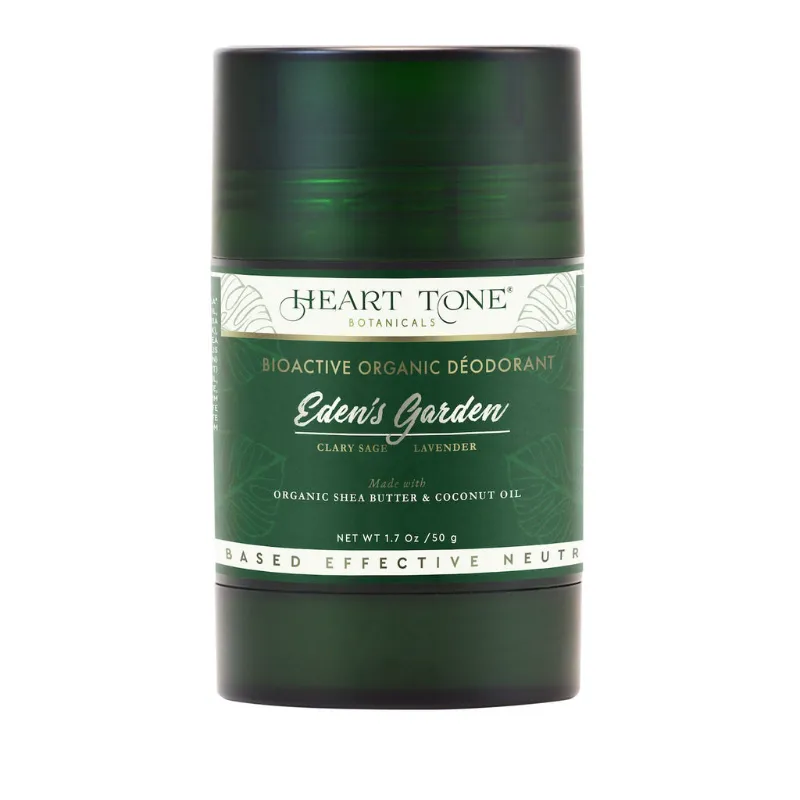
Choosing an organic antiperspirant deodorant comes down to understanding what is actually on the label. Most shoppers switch to natural options because they want to avoid synthetic chemicals, but not every "natural" or "organic" claim means the same thing. Here is a straightforward breakdown of the ingredients that matter, what they do, and how Heart Tone Botanicals' lineup holds up.
What Makes an Organic Antiperspirant Deodorant Different
Conventional deodorants and antiperspirants often rely on aluminium-based compounds to block sweat glands, paired with synthetic fragrances, parabens, and propylene glycol. Organic formulas replace those with plant-derived actives that neutralise odour without physically blocking your pores.
The key distinction:
- Deodorant neutralises or masks odour-causing bacteria
- Antiperspirant reduces sweat production, usually via aluminium salts
- Organic antiperspirant deodorant aims to do both using non-synthetic alternatives like baking soda, magnesium hydroxide, and botanical extracts
If aluminium is a concern for you, checking the full deodorant ingredients list before buying is the single most important step you can take.
Core Ingredients to Look For (and a Few to Avoid)
Understanding individual ingredients is the fastest way to judge organic deodorant effectiveness before it ever touches your skin.
Look for these:
- Baking soda (sodium bicarbonate) — raises skin pH to inhibit odour bacteria; effective but can irritate sensitive skin at high concentrations
- Magnesium hydroxide — a gentler alternative to baking soda; solid odour control without the pH spike
- Arrowroot powder or tapioca starch — absorbs surface moisture to keep you feeling dry
- Shea butter or coconut oil — acts as a skin-conditioning base; helps the formula glide on smoothly
- Essential oils (lavender, tea tree, eucalyptus) — provide natural fragrance and mild antimicrobial action
- Beeswax or candelilla wax — gives stick formulas structure without synthetic polymers
Approach with caution:
- "Fragrance" or "parfum" — catch-all terms that can hide synthetic chemicals even in otherwise organic products
- Triclosan — an antimicrobial agent flagged by regulators; not found in legitimate organic formulas
- Propylene glycol — a synthetic humectant that some people react to
Heart Tone Botanicals Organic Deodorant and Deodorant Powder
Heart Tone Botanicals keeps its formulas transparent, which is exactly what you want when evaluating deodorant ingredients on a product you will use daily.
Their organic deodorant is built around plant-based actives and skips aluminium entirely. It is a solid-stick format suited to daily wear, sensitive skin included.
If you prefer a lighter texture, the natural deodorant powder is worth a look. Powder formats are increasingly popular for a reason:
- No waxy residue on clothing
- Easy to control application amount
- Typically gentler on recently shaved skin
- Travel-friendly and zero-waste friendly
| Format | Texture | Best For | Sweat Control |
|---|---|---|---|
| Organic deodorant stick | Solid/waxy | Daily commuters, simplicity | Moderate |
| Natural deodorant powder | Loose/dry | Sensitive skin, travel, eco routines | Light to moderate |
Both formats work best when applied to clean, dry skin. If you are transitioning from an aluminium-based product, give your body two to four weeks to recalibrate before judging performance.
Building a Zero-Waste Bathroom Routine Around It
Switching to organic personal care rarely stops at deodorant. If you are already thinking about a sustainable, zero-waste bathroom, Heart Tone Botanicals offers a range of products that complement each other well.
Their natural soap bars are a logical first pairing. Cleansing with a good bar soap before applying deodorant removes the bacteria that cause odour in the first place, making your deodorant work harder. The coconut soap bar in particular is well-suited to sensitive skin, using coconut-derived cleansers rather than synthetic surfactants.
For oral care, the brand's bamboo toothbrush and organic mouthwash round out a plastic-free morning routine. The toothbrush uses sustainably sourced bamboo handles, and the mouthwash avoids alcohol and artificial dyes that conventional rinses typically contain.
How to Get the Best Results From Natural Deodorant
A few practical habits make a real difference in organic deodorant effectiveness:
- Apply to completely dry skin. Moisture dilutes the active ingredients and reduces staying power.
- Use less than you think you need. A thin, even layer outperforms a heavy application.
- Wash properly. Using natural soap bars rather than antibacterial body washes preserves your skin's microbiome, which actually helps keep odour bacteria in check long-term.
- Store away from heat. Natural waxes and butters can melt; a cool, dry cabinet beats a steamy bathroom shelf.
- Be patient during the transition. Your sweat glands need time to clear residual aluminium deposits from previous products.
Who Should Consider Switching
Organic antiperspirant deodorant is a strong fit for:
- People with sensitive or reactive skin who experience redness or rash from conventional formulas
- Anyone working toward a zero-waste bathroom or reducing single-use plastics
- Those with fragrance sensitivities who need clearly labelled botanical scents instead of hidden "parfum"
- Active people who want effective odour control from whole-ingredient formulas rather than pore-blocking chemistry
It is a less obvious fit if you require clinical-strength sweat suppression for a medical condition. In that case, speak to a dermatologist before ditching aluminium-based products entirely.
Where to Buy and How to Save
Heart Tone Botanicals stocks the full range including the organic deodorant and natural deodorant powder directly through their store. Rather than list a price that may change, check the latest price and grab the current 10% off code before you order. We keep that page updated whenever the offer changes, so it is the most reliable place to confirm what you will actually pay.
If you are building out a broader routine, bundling the deodorant with their soap bars or oral care products at checkout is a simple way to make the discount go further. See the Heart Tone Botanicals code and all eligible products here.
 Shopping at Heart Tone Botanicals? See today's verified Heart Tone Botanicals discount code
Frequently asked questions
Is organic antiperspirant deodorant as effective as conventional antiperspirant?
For most everyday activity, a well-formulated organic antiperspirant deodorant handles odour control reliably, though it works differently from aluminium-based products that physically block sweat glands. Expect a short adjustment period of two to four weeks when switching, during which your body clears residual aluminium deposits.
What deodorant ingredients should I avoid if I have sensitive skin?
High concentrations of baking soda are the most common irritant in natural formulas, so look for products that use magnesium hydroxide or arrowroot powder as the primary active instead. Also avoid any product listing 'fragrance' or 'parfum' without further detail, as these terms can cover synthetic compounds that trigger reactions.
How is a natural deodorant powder different from a deodorant stick?
A natural deodorant powder uses a loose or pressed dry formula that absorbs surface moisture without a waxy base, making it lighter on skin and easier to control the amount applied. It tends to suit sensitive or easily irritated skin and is a popular choice for zero-waste routines because it often comes in minimal packaging.
Can I use the Heart Tone Botanicals organic deodorant right after shaving?
It is best to wait at least 30 minutes after shaving before applying any deodorant, natural or otherwise, to avoid irritation on freshly opened follicles. Powder formats are generally gentler in this situation than stick formulas with high baking soda content.
Does Heart Tone Botanicals offer a discount code for their deodorant and soap products?
Yes, there is a current offer available through our coupon page. Check the Heart Tone Botanicals discount code page for the latest saving, as the exact terms can update periodically.
Are natural soap bars beneficial to use alongside organic deodorant?
Using natural soap bars to cleanse before applying deodorant removes odour-causing bacteria at the source, which makes the deodorant more effective throughout the day. Bar soaps without synthetic antibacterial agents also preserve your skin's natural microbiome, which plays a supporting role in keeping odour in check long-term.