

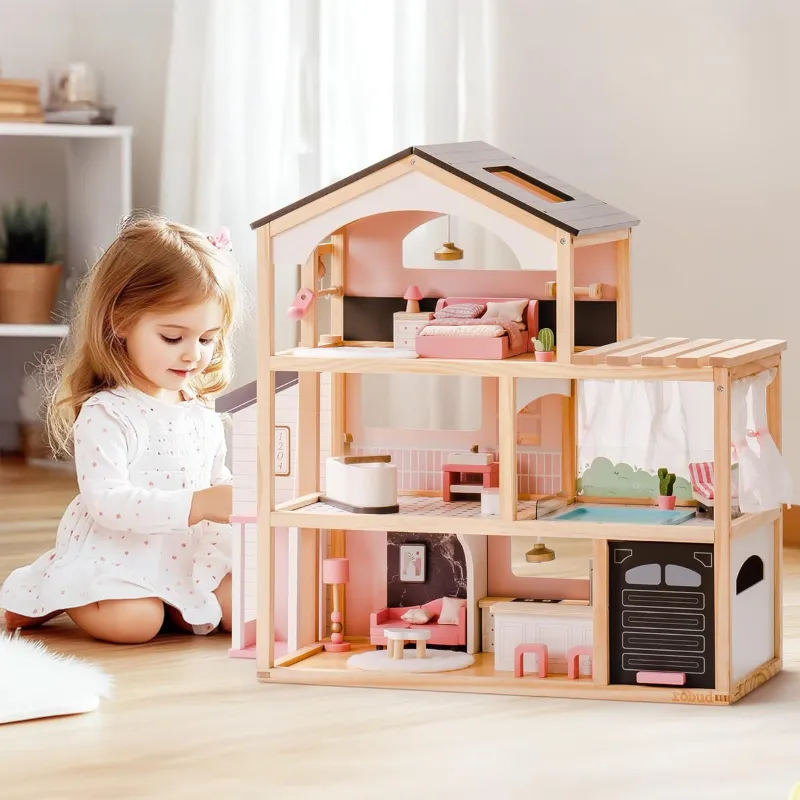
A wooden doll house is the better first project if you want rooms, furniture and something to display on a shelf, while a Rolife book nook kit is the better pick if you want a compact, atmospheric build that slots between books and takes a single weekend. Both come from Robotime, both are miniature builds, and both are genuinely beginner-friendly, so the real question is what you want at the end. We build and test these kits ourselves, so this guide is about what actually happens at the table: how long each takes, what tools you need, where mistakes happen, and who each one suits. If you are buying for someone else, the same logic applies, and our coupon page is where to check the current offer before you commit. ## Wooden doll house vs. Rolife book nook: the short answer The two products look related but reward different habits. A wood doll house rewards patience and repetition, because you are building furniture, wall panels and trim at a small scale over many sessions. A book nook rewards precision in one tight burst, because the whole scene lives in a narrow box that slots onto a bookshelf. Here is the honest side-by-side. | | Wooden doll house | Rolife book nook kit | |---|---|---| | Finished size | Larger footprint, sits on a desk or shelf | Narrow insert, fits between books | | Build rhythm | Many short sessions over days or weeks | Usually a weekend, often 2 to 4 sittings | | Main skills | Assembly order, glue control, patience | Fine placement, wiring lights, layering depth | | Display style | Open-front rooms you can peer into | Diorama seen through a front opening | | Best for | Room-decorating fans, kids with adult help | Readers, shelf-display fans, gift givers | If you want the finished object to be the star of a shelf, the rolife book nook wins. If you want to furnish and arrange rooms, the wooden doll house is the one. ## What you actually get in each box Both kits arrive as flat wooden sheets, printed parts and small hardware, plus illustrated instructions. Neither is a snap-together toy, and both expect glue, patience and a clean table. - Wooden doll house kits: laser-cut wood sheets, furniture components, window and door pieces, fabric or paper accents, and assembly instructions that run step by step. Some kits include lighting, so check the listing before you buy. - Rolife book nooks: a box-style frame, layered scene panels, printed details, LED strips on many models, and a wiring diagram. The rolife book nook kit range varies a lot by theme, so read the specific product page for what is included. - Shared extras: you will usually need craft glue, tweezers or fine pliers, a hobby knife, and something to protect the table. The flower house sits in the doll house family and is a good middle ground: fewer rooms than a full house, but more decorative detail than a book nook, so it teaches glue discipline without asking for weeks of your time. ## Assembly tools and materials you should have ready This is where most first builds go wrong. Not the kit, the workspace. 1. Craft glue with a fine nozzle. Gel or tacky craft glue, not superglue, which dries brittle and marks wood. 2. Tweezers. Small parts, and patience with them, matter more than any other tool. 3. A hobby knife and sanding stick. Laser-cut wood can leave tiny nubs; a light sand fixes fit issues. 4. A cutting mat or scrap cardboard. Protects the table from blade marks and glue. 5. Good light and a shallow tray. Lost parts are usually found fast if they stay in one tray. For both a mini house kit and a book nook, do a full parts inventory before step one. Missing pieces are rare, but discovering a part is still in its sheet is much easier at the start than at step forty. ## Which build suits which maker Matching the kit to the person is most of the decision. - Pick the wooden doll house if you like decorating and rearranging, you want something with a bigger presence, or you are buying for a child who will build with adult supervision. - Pick the book nook if you have limited shelf space, you like the look of a scene seen through a window, or you want a defined finish line in a weekend. - Pick the flower house or a mini house kit if you are unsure and want a compact starter with room for detail. - Pick neither, yet, if the recipient has no interest in glue and tiny parts. Go for the cuckoo clock or the pinball machine instead, which are mechanical builds rather than room builds. If you are choosing as a present, browse the unique presents collection and the cool gifts collection first, then narrow down by the person's habits: shelves, desks, or a bookcase. A nanci blind box is also a smart low-commitment add-on gift if you want a small extra with the main build. ## Care, display and realistic build times Do not rush the drying stages. Glue joints on wooden kits need time to cure before you handle the piece, and that is the single biggest cause of a wobbly wall or a crooked shelf. - Dust with a soft brush or a hairdryer on cool and low, never a wet cloth. - Keep both kits out of direct sun, which fades printed paper details. - Handle book nooks by the frame, not the front panels, since small parts can pop loose. - Store unfinished builds flat in a box with the parts tray, not stacked upright. - Check shipping and returns on the store page before ordering, especially for larger wooden kits, since packaging weight affects delivery options. For timing, be realistic: a book nook is generally a weekend project, while a full wooden doll house can run across several evenings. Anyone who claims either is a one-sitting job has not built one. ## Where to buy and how to use our code Both kits come from Robotime, and current pricing moves with stock and seasonal promotions, so we do not quote figures here. Head to the Robotime discount code page to see the live offer, currently 12% off all orders, and apply it at checkout. The same page is the quickest way to compare the wood doll house and book nook ranges side by side before deciding. If you are still torn, start small: buy the book nook first, finish it, and let the finished result tell you whether you want to move up to a room-scale build. Our own experience is that people who finish a book nook almost always come back for a doll house, not the other way around.
 Shopping at Robotime? See today's verified Robotime discount code
Frequently asked questions
Is a wooden doll house harder than a Rolife book nook?
Generally the doll house is longer rather than harder. Both use laser-cut wood and glue, but a house has more furniture and trim steps, so it takes more sessions. A book nook asks for finer placement and light wiring in a tighter space.
Do I need glue to build a Rolife book nook kit?
Yes. The kit is a model build, not a snap-together toy, so craft glue with a fine nozzle is essential. Check the specific product page for the tool list, as some kits bundle extras.
How much shelf space does a wooden doll house need?
More than a book nook. A doll house needs clearance above and in front of it for viewing, while a book nook is designed to slot between books with almost no depth. Measure your shelf before ordering.
Which is a better gift for a beginner, a mini house kit or a book nook?
A mini house kit or flower house is usually the gentler start, because it has fewer rooms than a full house and no wiring in most versions. A book nook is the better gift for someone who already loves reading and shelf displays.
Do Robotime kits include lighting and tools?
Some book nooks include LED lighting and a wiring diagram, and some kits bundle tools, but it varies by model. Read the individual listing rather than assuming, and check the coupon page for the current offer before you buy.
Can kids build a wooden doll house kit?
With adult help, yes, and it is a good joint project. Small parts and craft knives make it unsuitable for young children to build alone, and glue drying time means it works best spread over several sittings.