

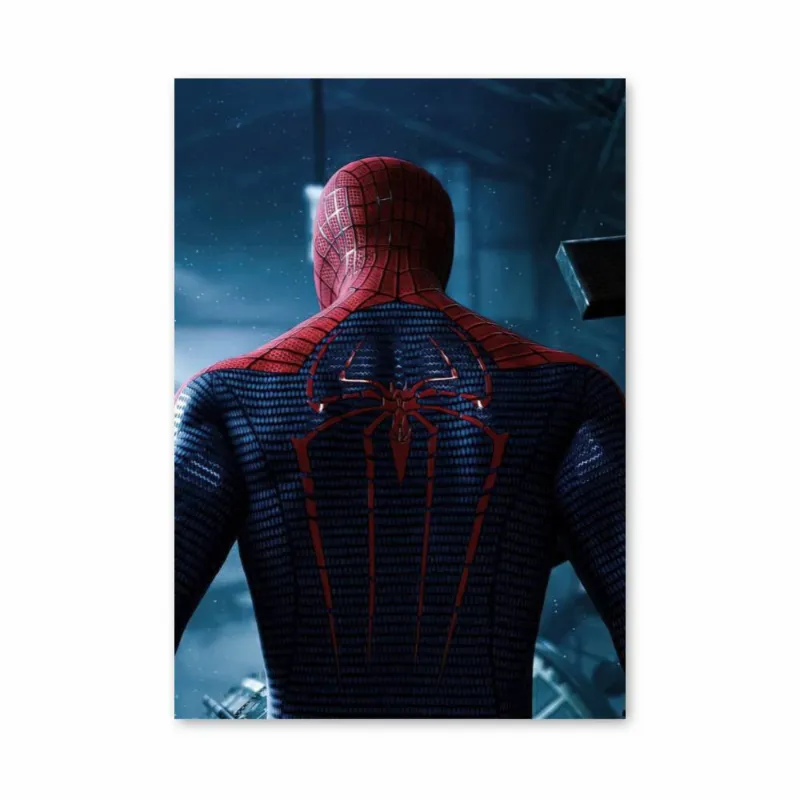
A spider man back poster curls because the paper absorbs moisture unevenly, so the printed side and the back expand at different rates and the edges lift toward the drier side of the room. It is not a printing fault and it is not permanent. In most cases a day or two of even weight, or a careful reverse roll, flattens it fully.
We have flattened a lot of posters in this office, from the spiderman back print to a gta 5 cover that spent a week rolled in a hot car. Here is what actually works, and what quietly ruins the print.
Why posters curl: paper, humidity and how it shipped
Posters are printed on coated paper stock. Coated paper has a clay-like surface layer on the printed side that absorbs and releases moisture at a different rate than the raw paper underneath. When the air in your room changes, one side swells before the other and the sheet bows.
The three usual triggers:
- Humidity swings. Kitchens, bathrooms and rooms with a radiator or a fan pointed at a wall are the worst. Edges curl toward the drier side.
- Rolled shipping memory. A poster that has been tight-rolled for days or weeks wants to stay rolled. That curve is mechanical, not a defect, and it relaxes with time and weight.
- Paper weight and print size. Thin stock curls faster than heavier stock, and large formats like an A2 or 24x36 sheet show the bow far more than a small A4. This is why poster paper quality and print sizes and framing decisions matter more than most buyers expect.
- UV and heat. Direct sun on one half of a poster dries and stresses that half first. It is also the fastest way to fade ink, so keep prints off sun-blasted walls.
If the poster arrived creased rather than curled, that is a different problem. Creases do not press out at home, and that is a damaged poster replacement conversation with the store, not a flattening job.
The safest ways to flatten a spider man back poster
Start with the gentlest method and work up. Give each one a full overnight before you decide it failed.
- Books and clean weight. Lay the poster print-side up on a clean, hard, dry surface. Cover it fully with a sheet of clean paper or a cotton pillowcase, then stack heavy, flat books evenly across it, corners included. Leave 24 to 48 hours. This is the method with the lowest risk of doing damage.
- Reverse roll, light tension. Roll the poster the opposite way from how it shipped, print side out, around a wide cardboard tube. Use a rubber band loose enough that it does not crush the roll, and leave it 12 to 24 hours. Wide tubes and low tension matter; a tight roll on a narrow tube can leave a permanent set.
- Iron on low, never touching the print. Only if the first two fail. Print side down on a clean cotton towel, iron on the lowest dry setting with no steam, and keep the iron moving. Steam and direct heat are what ruin coated paper.
- Frame it flat. The long-term fix. Mounting behind a mat and rigid backing board holds the sheet flat permanently. Frame with an even border so the poster is not squeezed at the edges.
Never pull a curled corner back by hand and never press a hot iron onto the printed face. Both leave marks you cannot undo.
Where the paper, size and packaging actually matter
| What to check | Why it matters | What to look for |
|---|---|---|
| Paper weight | Thicker stock resists humidity bowing | Stiffer sheet, less curl memory from the tube |
| Print size | Bigger formats bow more per millimetre of humidity change | Frame large sizes rather than tacking them |
| Packaging and protection | A crushed tube or damp corner is damage, not curl | Rigid tube, end caps, sealed inner wrap |
Buying thin paper to save money usually costs you more in flattening time and replacement frames. If you want the same stock we use for superhero and gaming prints, you can check the latest price on the store page before you commit to a size.
Hanging and care tips that stop it coming back
Flattening a poster and then hanging it badly just restarts the clock.
- Use rigid backing. Foam board or a solid backing sheet behind the print stops the paper from moving.
- Avoid tape on the print face. Tape pulls the coating and leaves a visible lift line when it releases. Frame clips and magnets on a metal strip are safer.
- Hang interiors only. Bathrooms and above-radiator walls are curl factories.
- Leave an air gap from the wall. A frame with a spacer keeps damp wall air off the back of the sheet.
- Rotate seasonal prints carefully. Store flat, not rolled, in a dry room. Rolled storage reinstalls the curl you just removed.
If you rotate between themes, treat the print as fragile flat stock. Our billie eilish aesthetic and minecraft posters prints both come back flat quickly when stored this way, and the same applies to a drake poster that lives in a frame most of the year.
If it is already damaged: replacement, returns and tracking
Curling is fixable at home. Damage is not, so know which one you are looking at.
- Curl: edges lift, sheet bows, no visible line across the image. Fix it yourself.
- Crease: a sharp line that catches light and will not press out. Request a replacement.
- Crush or water mark: dented or stained from shipping. Photograph it before you unroll further.
Keep the tube and the inner wrap until you have checked the print. Photograph the damage on a flat surface next to the packaging, then contact the store. Most return policy windows run from delivery, not from the day you open it, so do not leave a tube sitting unopened for weeks. Use order tracking to confirm the delivery date if you are close to that window, and check the store page for how claims are handled.
Before you order: sizes, code and checkout
Match the frame before you buy the print. Measure your frame's inner opening, not its outer edge, and allow a small border so the paper is not pinched. Standard sizes are easier and cheaper to frame than custom ones, and a mat hides any slight edge trim.
Our discount code redemption is straightforward: apply the code at secure checkout and the discount shows before you pay. Shipping and delivery times vary by destination, so build in a few days if the print is a gift. For the current offer, grab the code and confirm it has applied to the order total.
One last thing on shipping. If you are ordering several prints at once, they often arrive in one tube, which means more time rolled and a stronger memory curve. Flatten them together under books the day they arrive, before they go up on the wall. If you only take one idea from this guide, take that one: unroll, flatten, then hang. Never the other way round.
 Shopping at Aesthetic Posters? See today's verified Aesthetic Posters discount code
Frequently asked questions
How long does a spider man back poster take to flatten?
With books and even weight, expect 24 to 48 hours for the curl to relax. A reverse roll takes 12 to 24 hours. If the poster has been rolled tightly for weeks, give it a second round.
Can I iron a curled poster to flatten it?
Only as a last resort, print side down on a cotton towel, on the lowest dry setting with no steam. Steam and direct heat damage the coated surface, so try books and reverse rolling first.
Is a curled poster covered by the return policy?
Curl from shipping or humidity is usually not treated as damage, because it flattens at home. Creases, crush marks and water stains are damage, so photograph them on arrival and contact the store.
Does poster paper quality affect curling?
Yes. Thinner stock absorbs moisture faster and holds its rolled memory longer. Heavier paper resists bowing and frames better, especially in large print sizes.
Should I frame the spiderman back print or tape it up?
Frame it with rigid backing if you can. Frames stop the paper from moving and keep damp wall air off the back. Tape on the print face can pull the coating when it releases.
What size should I order if I want to frame it?
Measure your frame's inner opening first and pick the standard size that fits with a small border. Standard sizes cost less to frame than custom ones, and a mat covers slight edge trim.