
What to Wear Under Scrubs: Underscrub Long Sleeve Shirt Guide

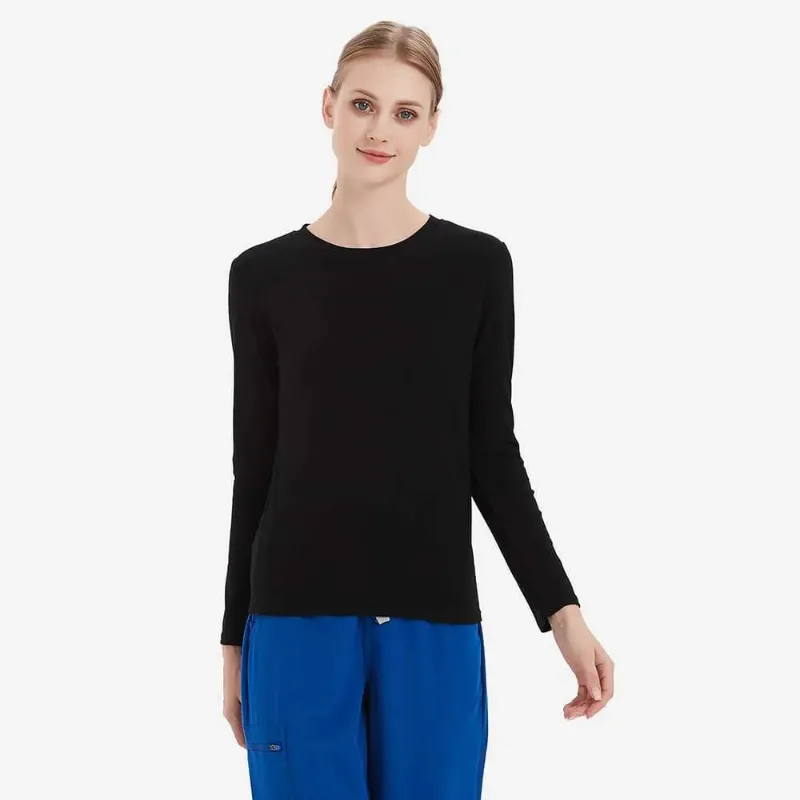
An underscrub long sleeve shirt gives healthcare workers extra warmth, arm coverage, and a professional layered look under medical scrubs without adding bulk or compromising mobility. Whether you work in a chilly operating room, need modesty coverage, or simply prefer long sleeves year-round, the right underscrub makes your shift more comfortable while staying invisible under your uniform.
We tested dozens of base layers with ladies scrub uniforms, male scrubs uniform, and nurses uniform styles to find which fabrics, cuts, and features actually work in real healthcare environments. This guide walks you through material choices, fit considerations, and styling tips so you can layer confidently under any scrub color or style.
Why Healthcare Workers Choose Underscrub Long Sleeve Shirts
Long sleeve underscrubs solve several common workplace challenges. Cold hospitals and clinics make short sleeves uncomfortable, especially in sterile procedure rooms where temperatures drop. A fitted base layer traps warmth close to your skin without the bulk of a scrub jacket, which you may need to remove frequently during patient care.
Arm coverage also matters for modesty, sun protection during outdoor patient transport, or covering tattoos in facilities with appearance policies. A quality underscrub stays in place through 12-hour shifts, won't ride up when you reach or bend, and remains invisible under black scrubs, caribbean blue scrubs, or any uniform color.
Many facilities also prefer the clean, layered appearance of a fitted underscrub over bulky outerwear that can harbor contaminants or interfere with patient care tasks.
Best Fabrics for Underscrub Long Sleeve Women's and Men's Styles
The fabric you choose determines comfort, durability, and how well the shirt performs under your uniform. We recommend these proven options:
Moisture-wicking synthetic blends (polyester-spandex or nylon-spandex) pull sweat away from skin during fast-paced shifts. These dry quickly between washes and resist odors better than cotton. Look for blends with at least 5% spandex for stretch and recovery.
Cotton-poly blends (60/40 or 50/50 ratios) balance breathability with durability. Pure cotton feels soft but loses shape after repeated washing and takes longer to dry. A poly blend maintains fit and resists pilling under premium medical scrubs.
Ribbed underscrub long sleeve fabrics offer texture that grips your skin lightly, preventing the shirt from twisting or bunching as you move. The vertical ribs also add visual interest without showing through medium to heavyweight scrub fabrics.
Bamboo and modal fabrics provide luxury softness and natural temperature regulation, though they cost more and may require delicate wash cycles. We find synthetic blends offer better value for most healthcare workers.
Avoid thick fleece or terry materials that add visible bulk, trap heat, and show seam lines through hunter green scrubs or other fitted uniform tops.
How to Choose the Right Fit Under Medical Scrubs
An underscrub should fit like a second skin without compression-wear tightness. Here's what works:
- Sleeve length: The cuff should sit at your wrist bone, not bunch at your forearm or extend past your palm. Too-long sleeves creep out from scrub cuffs and look unprofessional.
- Body length: The hem should reach your hip bone and stay tucked when you raise your arms. A too-short shirt rides up and creates an uncomfortable gap.
- Neckline: Crew necks stay hidden under V-neck scrub tops; mock necks add warmth but may peek out. Check your medical doctor scrubs neckline before choosing.
- Sleeve tightness: Fabric should skim your arm without pinching. Test by bending your elbow fully; if the fabric pulls or restricts movement, size up.
Women's underscrub long sleeve shirts typically feature a more contoured waist and narrower shoulders than unisex styles. Men's versions offer broader shoulders and longer torso lengths. Pregnant healthcare workers should look for maternity scrub uniforms with matching underscrubs that accommodate a growing belly without riding up.
We recommend trying underscrubs with your actual uniform to ensure the color doesn't show through and the layered thickness doesn't restrict your range of motion during patient care.
Underscrub Long Sleeve Pattern and Color Matching
The safest choice is always a neutral solid that disappears under your scrubs. White and light gray work under pale scrub colors but may show sweat. Black, navy, or charcoal hide moisture and stay invisible under most clothing medical scrubs except very light shades.
Some healthcare workers prefer matching their underscrub to their scrub color for a monochromatic look when the sleeve peeks out at the cuff. This works well with black scrubs paired with a black base layer, or navy underscrubs beneath royal blue uniforms.
Avoid bright colors, large logos, and busy underscrub long sleeve pattern prints. These show through lightweight scrub fabrics and distract from your professional appearance. If your facility allows it, subtle heathered or tonal patterns can add visual interest without standing out.
Check your uniform under bright exam lights to ensure your underscrub doesn't create visible lines or shadow through the fabric. Thin scrub materials may require a closer color match than heavyweight twill or ripstop blends.
Where to Find Underscrub Long Sleeve Near Me and Online
Most medical uniform retailers stock underscrubs year-round, though selection peaks in fall and winter. Specialty scrub shops offer the widest range of sizes, lengths, and technical fabrics designed specifically for healthcare workers.
Online shopping gives you access to reviews from other nurses, doctors, and technicians who've tested the shirts through real shifts. You can compare fabric weights, read about shrinkage after washing, and find extended sizes not available in local stores.
We recommend buying from retailers that specialize in medical apparel rather than generic athletic base layers. Scrub-specific underscrubs feature longer torsos, reinforced seams at stress points, and colors calibrated to match common uniform shades.
Grab the latest discount code before ordering to save on underscrubs and complete uniform sets. Stocking up on multiple shirts lets you rotate them through the week without daily laundry.
Caring for Your Underscrub Layers
Long sleeve underscrubs endure frequent washing, so proper care extends their lifespan:
- Wash in cold water to prevent shrinkage and color fading. Hot water breaks down elastic fibers faster.
- Skip fabric softener, which coats moisture-wicking fibers and reduces their performance. Use a sport detergent for technical fabrics.
- Tumble dry low or hang dry to maintain shape. High heat damages spandex and causes synthetic blends to pill.
- Separate colors for the first few washes to prevent dye transfer onto your uniforms lab coat or lighter scrubs.
Replace underscrubs when the fabric stretches out, seams fray, or the shirt no longer stays tucked during your shift. Most quality base layers last 6 to 12 months with weekly wear and washing.
Pairing Underscrubs with Your Complete Uniform
A long sleeve base layer works as part of a complete uniform system. Pair it with your primary scrub top and pants, then add a scrub jacket for extra warmth in air-conditioned environments. Remove the jacket for patient contact while keeping the fitted underscrub in place.
The base layer should never replace proper outerwear in sterile environments. Follow your facility's dress code regarding visible layers, sleeve cuffs, and infection control protocols. Some operating rooms prohibit any fabric extending past scrub cuffs.
For maximum versatility, choose underscrubs that also work under premium medical scrubs for professional settings and standard-weight uniforms for everyday shifts. Neutral colors let you mix and match with your entire scrub wardrobe without buying separate underscrubs for each uniform color.
Check current pricing and available sizes to build a complete layering system that keeps you comfortable through every shift and season.
Frequently asked questions
What fabric works best for underscrub long sleeve shirts?
Moisture-wicking polyester-spandex blends work best because they pull sweat away from skin, dry quickly, and maintain their shape through repeated washing. Look for blends with at least 5% spandex for stretch and recovery during long shifts.
Should I size up or down for underscrubs under medical scrubs?
Choose your regular size for a fitted but not tight feel. The shirt should skim your skin without compression-wear tightness, and sleeves should reach your wrist bone without bunching. If between sizes, size up for comfort during 12-hour shifts.
Can you wear black underscrubs under any color scrubs?
Black underscrubs work well under dark and medium scrub colors like navy, hunter green, black, and caribbean blue. Avoid wearing black under very light scrubs like white or pale pink, as the dark color may show through thin fabric.
How many underscrub shirts do I need for a work week?
Most healthcare workers need three to five underscrub long sleeve shirts to rotate through a typical work week without daily laundry. This allows time for washing, drying, and ensures you always have a clean layer ready.
Do ribbed underscrubs bunch up under scrub tops?
Ribbed underscrubs actually prevent bunching because the vertical texture grips your skin lightly and stays in place as you move. The ribs also add minimal bulk that won't show through medium to heavyweight scrub fabrics.
Can men and women wear the same underscrub long sleeve styles?
Unisex styles work for both, but women's underscrubs typically feature a more contoured waist and narrower shoulders for a better fit, while men's versions offer broader shoulders and longer torso lengths. Choose based on your body shape and comfort preference.