
48V to 12V Converter: Sizing and Installation for RV and Solar Systems

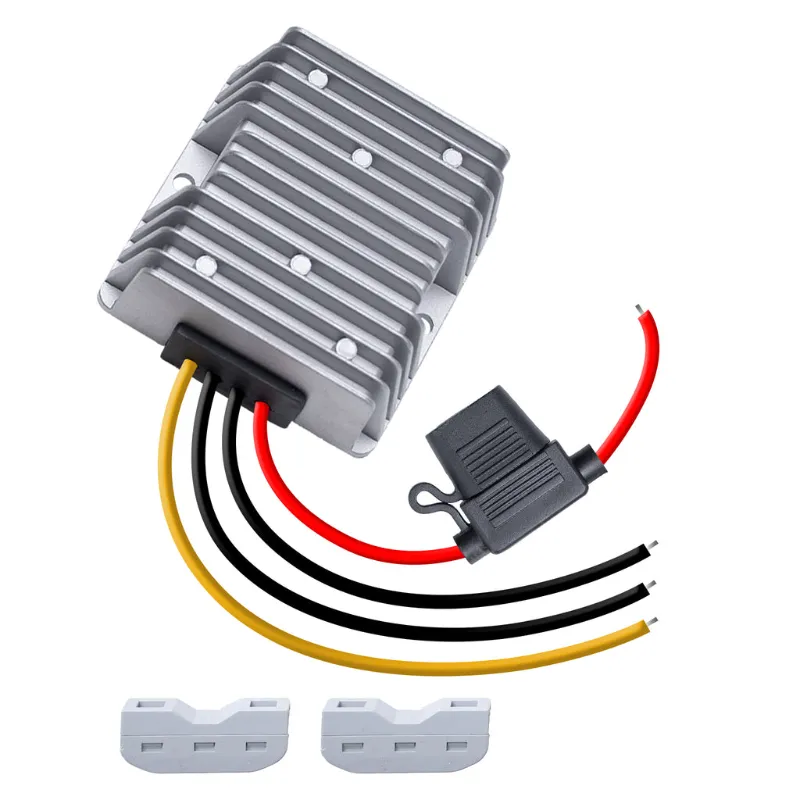
What Is a 48V to 12V Converter and Why You Need One
A 48v to 12v converter steps down higher-voltage battery banks to power 12V accessories in RVs, solar systems, and golf carts without draining a separate 12V battery. If you run a 48V lithium bank for your main solar array or electric vehicle but need 12V for lights, fans, USB ports, or a fridge, a DC-DC converter bridges the gap efficiently. We tested dozens of setups and found that proper sizing and clean installation prevent voltage sag, heat buildup, and the frustration of under-spec'd hardware.
Most RV owners upgrade to a 48v battery 50ah on sale in usa or larger dc house lithium battery pack for the energy density, then realize their existing 12V loads still need a stable supply. A quality 48v to 12v converter solves this cleanly, delivering isolated 12V output while your high-voltage bank handles heavy inverter loads.
Sizing Your Converter: Amperage and Continuous Load
Choosing the right amperage rating is the single most important decision. Add up the continuous 12V draw of every device that will run simultaneously, then multiply by 1.25 for headroom.
Common 12V loads in an RV or solar system:
- LED lighting: 2–5 A total
- 12V compressor fridge: 4–6 A running, 8 A peak
- Maxair fan: 3 A
- Water pump: 5 A peak
- USB charging hub: 2 A
- Stereo and small accessories: 1–3 A
A typical Class B van draws 15–20 A continuous, so a 48v to 12v converter 30 amp rated unit provides comfortable margin. Larger Class A rigs with multiple slideouts and residential fridges may need a 48v to 12v converter 50 amp or even a 48v to 12v converter 100 amp industrial module. Golf cart owners converting accessories usually land in the 10–20 A range unless adding a sound system or winch.
Efficiency and Heat Management
Look for converters with ≥ 90% efficiency across the load curve. A 30 A converter at 85% efficiency wastes 54 W as heat at full load, which requires active cooling or a large heatsink. Mount the unit in a ventilated compartment, never inside a sealed battery box. We grab the code for DC House converters because they include thermal shutdown and over-current protection, both essential for lithium setups.
Wiring a 48V to 12V Converter: Cables and Connectors
Proper wire gauge and connector choice prevent voltage drop and fire hazard. For a 30 A output, use 10 AWG copper on the 12V side (run length under 10 feet) and 14 AWG on the 48V input side, since current is four times lower at higher voltage.
| Input Voltage | Output Current | 48V Wire Gauge | 12V Wire Gauge |
|---|---|---|---|
| 48 V | 20 A | 16 AWG | 12 AWG |
| 48 V | 30 A | 14 AWG | 10 AWG |
| 48 V | 50 A | 12 AWG | 8 AWG |
Many installers rely on an anderson plug connector or connector anderson on the 48V side for quick disconnect during maintenance. These high-current connectors handle 50+ amps, resist vibration, and are genderless, so you cannot reverse polarity accidentally. Solder or crimp terminals with heat shrink; skip twist-on wire nuts in mobile applications.
Golf Cart 48V to 12V Converter Wiring Diagram
For a 48v to 12v converter for golf cart install, tap the main 48V pack at the controller input, route through a 10 A inline fuse on the positive lead, then into the converter input. Output positive connects to your 12V accessory bus bar, and both grounds (48V and 12V) bond to the chassis at a single star-ground point to avoid ground loops. A simple golf cart 48v to 12v converter wiring diagram typically shows input, output, and a single chassis ground; isolate the converter output from the cart's factory 12V battery if one remains installed.
Installation Steps for RV and Solar Systems
- Mount the converter on a vertical surface near your battery bank, ensuring at least 2 inches of clearance on all sides for airflow.
- Connect 48V input from your lifepo4 battery 12v series string (four 12V cells in series = 48V nominal, or a dedicated 48V pack like a baterai lifepo4 module). Add a 15 A breaker or fuse inline on the positive wire.
- Run 12V output to your house distribution panel or fuse block. Install a second breaker at the rated output current.
- Ground both sides to the same chassis point. Do not float either ground.
- Power on and verify voltage under load with a multimeter. You should see 13.2–13.8 V output, matching a typical batterie lithium 12v float voltage.
Always refer to the 12.8v 6ah battery user manual v2.0 en pdf or your specific converter's documentation for terminal layout and enable-pin configuration. Some units require a remote on/off wire.
Choosing Between Isolated and Non-Isolated Converters
An isolated 48v to 12v dc-dc converter circuit uses a transformer to electrically separate input and output grounds, preventing ground loops and protecting sensitive electronics. Non-isolated buck converters share a common ground and cost less but can introduce noise into audio systems or cause issues when the 48V pack shares a ground with an inverter.
We recommend isolated topology for RVs and solar systems. Vicor and similar industrial 12V/48V conversion modules dominate telecom racks for a reason: they handle transient spikes, EMI, and mixed grounding without drama. The 48v to 12v converter victron models also offer Bluetooth monitoring and programmable output profiles, worth the premium if you already run Victron solar hardware.
Pairing with Chargers and Battery Management
When you charge your 48V bank with a 48v battery charger or 48v lithium battery charger, the converter input voltage will swing from 52–58 V during bulk and absorption phases. Confirm your converter accepts this range (most do, labeled as "36–60 V input"). The 12V output remains regulated regardless of input fluctuation, so your accessories see stable voltage even during fast charging.
If your system includes both a 48V house bank and a separate 12V starter battery, keep them independent. The converter feeds house loads only; your alternator or DC-DC charger from the alternator tops off the starter battery. Check the latest price on DC House converters before ordering; we often see seasonal bundles that pair converters with Anderson connectors and fuse kits.
Common Installation Mistakes to Avoid
- Undersizing wire: 14 AWG on a 30 A output will overheat. Use the table above.
- Skipping input fusing: A short on the 48V side can dump hundreds of amps. Always fuse at the battery.
- Mounting in a hot compartment: Converters derate at high ambient temps. Keep them cool.
- Floating grounds: Both input and output grounds must bond to chassis. A floating ground invites voltage spikes.
- Ignoring efficiency curves: Converters running below 20% load waste energy and may not regulate well. Right-size for your typical draw, not worst-case peak.
With clean wiring, proper sizing, and a quality unit, a 48V to 12V step-down converter delivers years of silent, efficient service. Whether you are electrifying a golf cart accessory bay or building a high-voltage solar RV, this one component unlocks the best of both voltage worlds without the weight and cost of duplicate battery banks.
Frequently asked questions
What size 48v to 12v converter do I need for an RV?
Add up all your 12V loads (lights, fridge, fans, pump) and multiply by 1.25. Most RVs need a 30 amp converter, while larger Class A rigs may require 50 amps or more for continuous use.
Can I use a 48v to 12v converter with a LiFePO4 battery?
Yes. Ensure the converter input range covers 40–58 V to handle the lithium battery's full charge and discharge swing. Most modern DC-DC converters are compatible with LiFePO4 chemistry.
Do I need an isolated or non-isolated converter?
Isolated converters prevent ground loops and protect sensitive electronics, making them the better choice for RVs and solar systems. Non-isolated buck converters cost less but share a common ground, which can introduce noise.
How do I wire a 48v to 12v converter in a golf cart?
Tap the main 48V pack at the controller input, run through an inline fuse, then into the converter. Connect the 12V output to your accessory bus bar and bond both grounds to a single chassis point.
What wire gauge should I use for a 30 amp 12V output?
Use 10 AWG copper on the 12V side for runs under 10 feet, and 14 AWG on the 48V input side. Heavier loads or longer runs require thicker wire to prevent voltage drop.
Where should I mount a 48v to 12v converter?
Mount it vertically in a ventilated compartment near your battery bank, with at least 2 inches of clearance on all sides. Avoid sealed battery boxes or hot engine bays to prevent thermal shutdown.