
Charging 36V and 48V Lithium Batteries: Charger Compatibility Explained

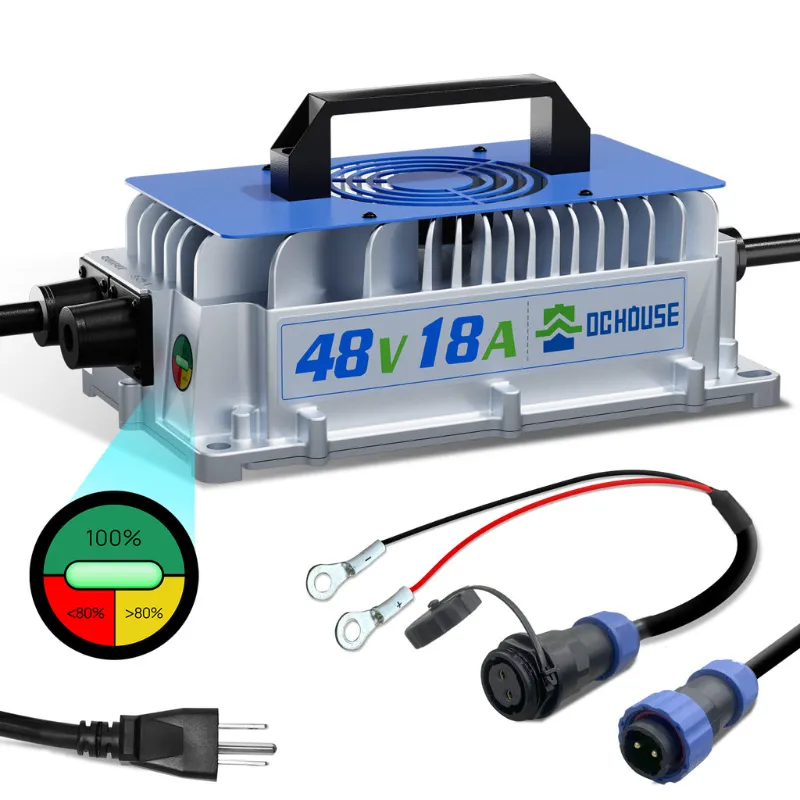
Can You Use a 48V Lithium Battery Charger on a 36V Battery?
No, a 48v lithium battery charger cannot safely charge a 36V lithium battery. The voltage mismatch will overcharge the 36V pack, risk thermal runaway, and void your warranty. Each lithium battery chemistry requires a charger matched to its nominal voltage and cell configuration. We tested charger compatibility across DC House lithium systems to show you exactly which chargers work with which batteries, how to identify the right specs, and what connectors matter most.
Whether you're upgrading an electric bike, building a solar system, or replacing a worn charger, understanding voltage and chemistry compatibility prevents expensive mistakes. Our 48v lithium battery charger is purpose-built for 48V LiFePO4 packs, and we'll show you how to match any charger to your battery's requirements.
Voltage Compatibility: Why 48V and 36V Chargers Are Not Interchangeable
Lithium battery chargers deliver a specific charge voltage based on the battery's cell count and chemistry. A 48V LiFePO4 battery typically consists of 15 cells in series (15S), with a full charge voltage of 54.75V. A 36V pack uses 10 to 12 cells, with a corresponding charge voltage of 42V (for lithium-ion) or 43.8V (for LiFePO4).
Plugging a 48v battery charger into a 36V battery forces excess voltage into fewer cells. This creates:
- Overcharge damage to individual cells, reducing capacity and lifespan
- BMS shutdown or failure as the battery management system tries to protect the pack
- Fire or swelling risk if the BMS is bypassed or fails under stress
- Warranty void because manufacturers explicitly prohibit mismatched chargers
The reverse scenario (using a 36V charger on a 48V battery) simply won't fully charge the pack. The charger stops at 42V to 44V, leaving your 48v battery 50ah on sale in usa at partial capacity. Neither direction is safe or effective.
Our DC House chargers include output labels and connector keying to prevent accidental mismatch. Always verify the charger's output voltage matches your battery's nominal voltage before connecting.
Choosing the Best 48V Lithium Battery Charger for LiFePO4 Systems
LiFePO4 (lithium iron phosphate) chemistry dominates 48V systems because of its thermal stability, cycle life, and safety. A proper 48v battery charger lifepo4 must deliver 54.75V to 58.4V output (depending on cell count) and include a CC/CV (constant current / constant voltage) charge profile.
Key Specifications to Match
| Spec | What to Look For | Why It Matters |
|---|---|---|
| Output Voltage | 54.75V (15S) or 58.4V (16S) | Matches your pack's full charge voltage |
| Current Rating | 10A to 30A typical | Higher amps = faster charge; match BMS limit |
| Chemistry Profile | LiFePO4 or LFP mode | Prevents overcharge; lithium-ion profiles won't work |
| Connector Type | Anderson, XT60, or barrel | Must physically mate with your battery |
We stock the dc house lithium battery line with matching chargers that include automatic shutoff, temperature monitoring, and reverse-polarity protection. For larger packs (100Ah and up), a 20A to 30A charger reduces charge time from overnight to 3 to 5 hours.
If you're building a custom system, check the 12.8v 6ah battery user manual v2.0 en pdf for charge voltage and current limits. Most BMS units will disconnect at the upper voltage threshold, but relying on the BMS as a primary shutoff mechanism wears it out faster. Use a charger with its own CV stage cutoff.
For current pricing on high-amp LiFePO4 chargers, check the latest offer with our exclusive discount code.
Connector Types and Wiring: Anderson Plugs and Compatibility
Charger connectors vary widely, and physical compatibility does not guarantee electrical safety. The most common connector for 48V systems is the Anderson Powerpole, which handles 15A to 45A depending on contact size.
Common 48V Charging Connectors
- Anderson plug connector – Genderless, high-current, used in solar and RV systems; red/black keying prevents reverse polarity
- XT60 / XT90 – Compact bullet connectors; XT90 handles up to 90A continuous
- GX16 aviation plug – Sealed circular connector with 2 to 8 pins; popular in e-bike packs
- Barrel jack (5.5mm or custom) – Low-current option for small packs under 10A
Our connector anderson adapters let you bridge between charger and battery connector styles without splicing wires. If you need to adapt a 48V charger to a battery with a different plug, verify the wire gauge supports the charger's current. Use 10 AWG or thicker for 20A to 30A charging.
Never assume plug compatibility means voltage compatibility. We've seen users connect a 48V charger to a 12V lifepo4 battery 12v because both used Anderson connectors, destroying the 12V BMS instantly. Label every charger and battery with its voltage, or color-code connectors by system voltage.
Electric Bike and Solar System Use Cases
Electric bikes are the most common 48V lithium application, and the 48v lithium battery charger for electric bike category includes fast chargers (5A to 8A) and slow chargers (2A to 3A). Fast chargers fill a 15Ah e-bike battery in 2 to 3 hours but generate more heat. Slow chargers extend cell life by reducing charge stress.
For solar off-grid setups, pair your 48v battery 50ah on sale in usa with a charge controller that outputs the correct LiFePO4 profile. MPPT controllers with lithium presets work well, but always verify the absorption voltage setting matches 54.75V for 15S packs. Some controllers allow custom voltage programming; consult your battery's datasheet before configuring.
If you run a mixed-voltage system (12V accessories and 48V battery bank), add a 48v to 12v converter instead of trying to charge 12V and 48V packs from the same source. This isolated approach prevents ground loop issues and simplifies troubleshooting.
When building or upgrading your system, grab the code for 2% off DC House power components and accessories.
Maintenance Tips and Safety Checks
Even a perfectly matched charger can fail if the battery or wiring degrades. We recommend these checks every 3 to 6 months:
- Inspect connectors for corrosion, melted plastic, or loose pins (replace any anderson plug connector that shows heat damage)
- Verify charge voltage with a multimeter at the charger output terminals; it should match the label within 0.2V
- Monitor charge time – a sudden increase suggests cell imbalance or BMS issues
- Check charger fan operation – blocked or failed fans cause thermal shutdown and shorter charger life
- Confirm BMS cutoff by watching the charger indicator; it should switch from red (charging) to green (complete) when the pack reaches full voltage
Store chargers in dry, ventilated locations. Heat and humidity degrade internal capacitors, especially in 220v 48v battery charger models with high-voltage AC input. If you notice the charger running hot or making buzzing sounds, replace it immediately. A failing charger can damage your expensive baterai lifepo4 pack in a single charge cycle.
For detailed safety and troubleshooting steps, the I Tested the Best 48V Lithium Battery Charger guide offers real-world performance comparisons and thermal testing data.
Upgrading or Replacing Your Charger
When your original charger fails or you want faster charging, match these three parameters: output voltage, current rating, and connector. If you upgrade from a 5A to a 10A charger, confirm your battery's BMS supports the higher charge current. Most 48V LiFePO4 packs accept 0.5C charge rates (a 50Ah battery can take 25A), but older or budget packs may limit to 0.2C or 0.3C.
Avoid universal or adjustable-voltage chargers unless you have experience setting charge profiles. A misadjusted potentiometer can output 60V instead of 54.75V, destroying your pack. Fixed-output chargers eliminate this risk and cost less.
Our 48v lithium battery charger comes preconfigured for DC House LiFePO4 batteries and includes an Anderson connector, LED status indicator, and aluminum cooling case. It pairs perfectly with the batterie lithium 12v line when you need a drop-in replacement.
If you're shopping for a charger and want to compare current deals, visit our DC House discount code page for the latest pricing and bundles.
Frequently asked questions
Can I use a 48V lithium battery charger on a 36V battery?
No, a 48V charger will overcharge a 36V battery, damage cells, and potentially cause thermal runaway. Always match charger output voltage to your battery's nominal voltage and chemistry.
What output voltage should a LiFePO4 48V charger have?
A 15S LiFePO4 48V battery requires a charger with 54.75V output. Some 16S packs use 58.4V. Check your battery's datasheet or label for the exact full charge voltage.
How do I know if my Anderson connector charger is compatible?
Physical connector compatibility does not guarantee electrical safety. Verify the charger's output voltage and current rating match your battery's specs, then confirm the connector pins and polarity align before connecting.
What is the best amp rating for a 48V e-bike charger?
Most 48V e-bike batteries use 5A to 8A chargers for a balance of speed and cell longevity. Larger packs (30Ah and up) can accept 10A to 15A if the BMS supports it.
Why does my 48V charger stop at 54V instead of fully charging?
Your charger may be set for a lower cell count or a different chemistry profile. Verify it outputs 54.75V for 15S LiFePO4 or replace it with a charger matched to your battery's specifications.
Can I leave my 48V lithium battery on the charger overnight?
Yes, if your charger has automatic shutoff and your battery has a functional BMS. Quality chargers stop delivering current once the battery reaches full voltage, preventing overcharge.