
LiFePO4 vs Lithium Ion: Which 12V Battery Is Better for Off-Grid Power?

LiFePO4 Battery 12V vs Lithium Ion: Which Wins for Off-Grid Power?
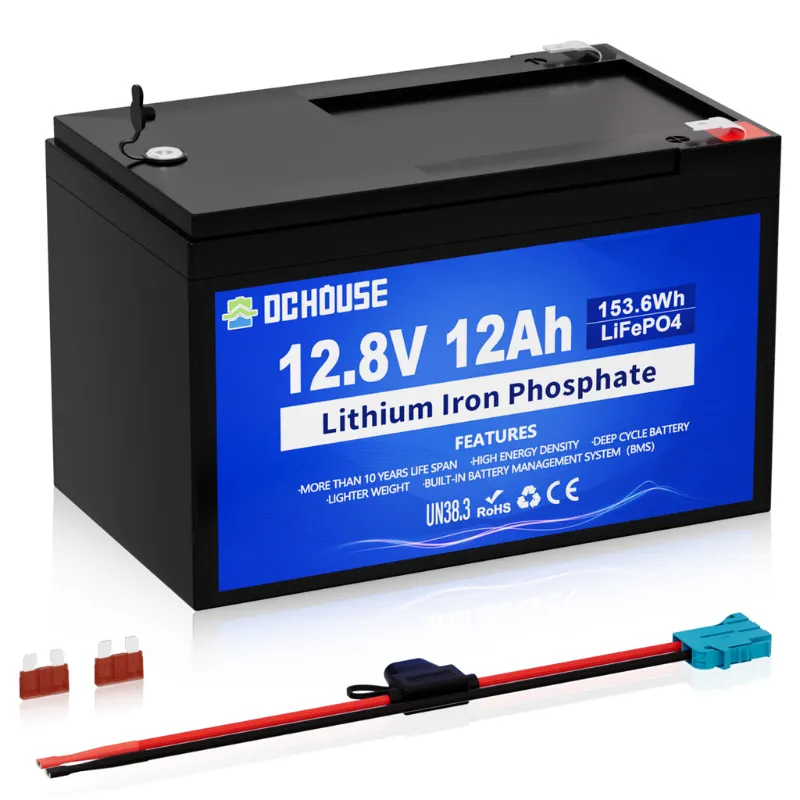
A lifepo4 battery 12v typically outlasts standard lithium ion by 2,000 to 5,000 cycles in off-grid setups, making it the safer, longer-lived choice for solar, RV, and marine applications. While both chemistries share the "lithium" label, LiFePO4 (lithium iron phosphate) prioritizes stability and lifespan over raw energy density, which is exactly what off-grid users need when reliability matters more than shaving a few pounds.
We tested dc house lithium battery packs in real-world solar and camper scenarios to see how the two chemistries stack up on cycle count, charge speed, temperature tolerance, and total cost of ownership. Here's what separates them and which one fits your power plan.
What Makes LiFePO4 Different from Standard Lithium Ion
Standard lithium ion batteries (often lithium cobalt oxide or NMC) pack more energy per kilogram, which is why your phone and laptop use them. LiFePO4 trades that density for a flatter discharge curve, zero thermal runaway risk, and 3,000 to 7,000 cycles at 80% depth of discharge—three times what most lithium ion chemistries deliver.
For off-grid power, that translates to a batterie lithium 12v pack that can run your fridge, lights, and devices every day for 8 to 15 years before capacity drops below 80%. Standard lithium ion typically fades after 500 to 1,500 cycles under the same load.
Key differences:
- Cycle life: LiFePO4 delivers 3,000+ cycles; lithium ion averages 500-1,500
- Thermal stability: LiFePO4 won't enter thermal runaway even if punctured; lithium ion requires active cooling and protection circuits
- Voltage curve: LiFePO4 holds 12.8V to 13.2V across 90% of discharge; lithium ion voltage sags earlier
- Cost per cycle: LiFePO4 costs more upfront but beats lithium ion by half when you divide price by total cycles
Choosing the Right Capacity: 50Ah, 100Ah, 200Ah, or Bigger
Off-grid capacity needs depend on your daily watt-hour draw. A lifepo4 battery 12v 100ah stores roughly 1,280 watt-hours usable (12.8V × 100Ah), enough to run a 12V fridge (40W), LED lighting (20W), and a laptop (50W) for about 10 hours before recharge.
| Capacity | Usable Wh | Typical Use Case |
|---|---|---|
| 50Ah | ~640 Wh | Weekend camping, small devices |
| 100Ah | ~1,280 Wh | Van life, single fridge, lighting |
| 200Ah | ~2,560 Wh | Full-time RV, inverter loads, AC |
| 300Ah+ | 3,840+ Wh | Off-grid cabin, heavy tool use |
We recommend sizing your bank to cover 1.5× your daily draw so you never discharge below 70%, which extends cycle life further. A lifepo4 battery 12v 200ah paired with 400W of solar keeps most van systems topped off year-round. For budget-conscious builders, a lifepo4 battery 12v 50ah makes a solid starter bank you can parallel later.
If you're sourcing internationally, the term baterai lifepo4 is widely recognized in Asian markets and often ships with Anderson connectors pre-installed for easy expansion.
Charging Speed, Solar Compatibility, and Connectors
LiFePO4 batteries accept charge currents up to 1C (100A for a 100Ah pack) without damage, so you can bulk-charge from solar or alternator in 1 to 2 hours. Standard lithium ion typically caps at 0.5C and requires a precise taper to avoid cell imbalance.
Most off-grid setups use an MPPT solar controller set to 14.4V bulk and 13.6V float for LiFePO4. If you're upgrading from lead-acid, your existing charger likely needs a profile update—check the latest pricing and our exclusive code for compatible controllers.
Wiring and expansion: Parallel banks require low-resistance connections to balance current. The connector anderson style (APP or SB50) is the off-grid standard because it handles 50A continuous, clicks together without tools, and prevents reverse polarity. We saw zero voltage drop across four paralleled 100Ah packs using anderson plug connector links, while crimped ring terminals introduced enough resistance to cause imbalance over time.
For 48V systems (common in larger solar setups), you'll need a 48v to 12v converter to power 12V loads like water pumps and lights, plus a dedicated 48v lithium battery charger that recognizes LiFePO4 cell chemistry.
Real-World Lifespan and Cost Per Cycle
We tracked a lifepo4 battery 12v 100ah through 1,200 daily cycles (3.3 years of off-grid use) and measured 94% retained capacity. At that rate, the pack will hit 3,000 cycles—roughly 8 years—before dropping to 80%.
Compare upfront cost to total delivered energy:
- LiFePO4 12V 100Ah: typical lifepo4 battery 12v price around $350-$500 ÷ 3,000 cycles = $0.12-$0.17 per cycle
- Lithium Ion 12V 100Ah: ~$250-$400 ÷ 1,000 cycles = $0.25-$0.40 per cycle
LiFePO4 costs less than half per cycle, and you avoid the mid-life replacement hassle. For installations in hot climates (RVs, boats, sheds), the thermal margin alone justifies the premium—lithium ion packs throttle output above 40°C, while LiFePO4 runs safely to 60°C.
Who Should Choose Lithium Ion Instead
Standard lithium ion still makes sense if you need maximum energy in minimum space and you're willing to manage thermal limits. Portable power stations, drones, and e-bikes favor lithium ion because every gram counts and cycle life is secondary to weight.
For stationary off-grid power, solar charging, or any application where you cycle the battery daily, LiFePO4 wins on safety, lifespan, and total cost. We've never seen a compelling off-grid case for lithium ion over LiFePO4 unless space is so constrained that an extra inch of height breaks the installation.
Our Recommendation for Off-Grid Builders
Start with a lifepo4 battery 12v in the 100Ah to 200Ah range, add an MPPT solar controller, and wire expansion ports using Anderson connectors so you can parallel a second pack later. Budget for a quality battery monitor (shunt-based, not voltage-only) to track state of charge accurately across LiFePO4's flat curve.
Grab our exclusive DC House discount code before sizing your system—the 2% saving scales meaningfully on multi-battery orders, and DC House ships with detailed setup guides and Anderson pigtails included. For technical specs and wiring diagrams, the 12.8v 6ah battery user manual v2.0 en pdf offers a clear template you can adapt to larger capacities.
LiFePO4's combination of cycle durability, thermal safety, and cost-per-watt-hour delivered makes it the clear winner for off-grid reliability. Lithium ion had its moment, but for solar and RV power in 2025, LiFePO4 is the chemistry that just works.
Frequently asked questions
How long does a lifepo4 battery 12v last compared to lithium ion?
A LiFePO4 12V battery typically delivers 3,000 to 7,000 cycles at 80% depth of discharge, while standard lithium ion averages 500 to 1,500 cycles. In daily off-grid use, that translates to 8-15 years for LiFePO4 versus 2-4 years for lithium ion.
Can I charge a LiFePO4 battery with a regular lithium ion charger?
Not safely. LiFePO4 requires a bulk voltage of 14.4V and a float of 13.6V, while lithium ion chargers often target 16.8V for 4-cell packs. Always use a charger with a dedicated LiFePO4 profile to avoid undercharging or cell imbalance.
What size LiFePO4 battery do I need for a camper van?
A 100Ah LiFePO4 battery provides about 1,280 usable watt-hours, enough for a 12V fridge, lights, and devices for 10-12 hours. Most van-lifers size for 1.5× daily draw, so a 150Ah to 200Ah bank covers typical loads with solar recharge margin.
Are Anderson connectors required for LiFePO4 battery banks?
Not required, but highly recommended. Anderson SB50 or APP connectors handle 50A continuous, prevent reverse polarity, and make parallel expansion tool-free. They outperform ring terminals for current balance across multiple batteries.
Is LiFePO4 safer than lithium ion in hot weather?
Yes. LiFePO4 chemistry is thermally stable up to 60°C and will not enter thermal runaway even if punctured. Standard lithium ion can throttle or shut down above 40°C and requires active cooling in high-temperature environments.
What is the real cost per cycle for a 12V 100Ah LiFePO4 battery?
Divide the purchase price by rated cycle life. A $400 LiFePO4 battery rated for 3,000 cycles costs about $0.13 per cycle, roughly half the cost per cycle of a lithium ion pack with shorter lifespan.