

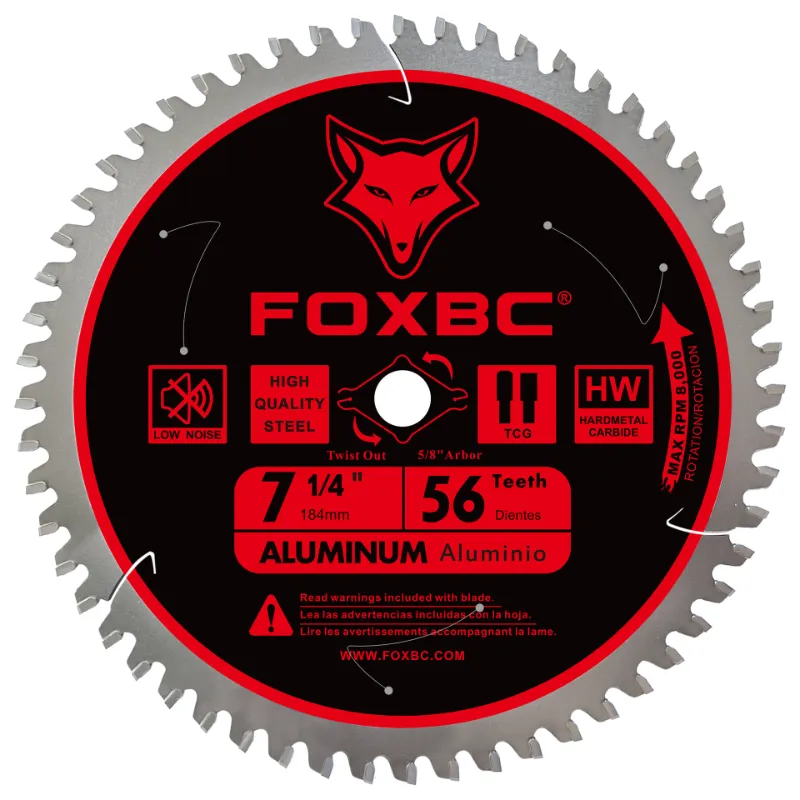
A 7 1/4 circular saw blade for metal is not a wood blade with a different label. Metal cutting band saw blades, metal-cutting circular blades and abrasive discs all trade speed for heat control in different ways, and tooth pitch, carbide grade and rated RPM change with the material. If you have burned through a wood blade on a piece of angle iron, the blade was wrong, not your technique.
How Metal Cutting Band Saw Blades Differ From Wood Blades
Four things do the work: tooth pitch, rake angle, carbide grade and heat management.
- Tooth pitch. Metal blades carry finer, more closely spaced teeth so each tooth takes a small chip. Wood blades take big bites because wood clears easily.
- Rake angle. Metal teeth stand closer to vertical so they scrape rather than dig, which stops the blade grabbing and stalling in the kerf.
- Carbide grade. Ferrous metal needs a harder, more heat-resistant carbide. Wood carbide is tough but glazes and dulls quickly on steel.
- Heat. Cutting metal is a heat problem before it is a power problem. Excess RPM glazes the teeth, then they chip.
That is why a 7 1/4 circular saw blade for metal is usually sold as a ferrous or metal-cutting blade with a fine tooth count and a shallow hook angle. It is happiest in sheet, conduit, thin-wall tube and light angle stock. Solid bar and thick plate fight back, and that is where a band saw earns its place.
Band Saw vs Circular Saw: Which Cut Fits the Job
Short answer: for solid stock, thick-wall tube and repeat cuts, metal cutting band saw blades win on finish and blade life. A circular saw wins on speed and portability in thin material.
| Option | Best at | Trade-offs |
|---|---|---|
| Metal cutting band saw blades | Solid bar, pipe, thick tube, stacked and repeat cuts | Needs a band saw, slower feed rate, blade tracking matters |
| 7 1/4 circular saw blade for metal | Sheet, conduit, thin angle, quick site cuts | Heat builds fast, shallow depth of cut |
| Abrasive disc on a 4 1/2 disc grinder | Rough cuts, rebar, rusted bolts, awkward spots | Burnt edges, sparks, no accuracy |
A band saw cuts on a continuous loop at slow speed, so the teeth stay cool and the cut stays square. A circular saw spins fast and relies on you to keep the blade moving. Both work. They just fail differently.
If you run a portable band saw, the two numbers that matter are length and width. The 44 7/8 bandsaw blade is a common compact-frame length, and checking the dewalt dcs371 blade size against your saw's spec is the easiest way to confirm compatibility before you order. For band saw blade selection, match tooth pitch to wall thickness rather than to the material name: thin tube wants fine teeth, solid stock wants a coarser tooth with a deeper gullet.
Saw Blade Compatibility: Match the Blade to the Tool
Blade shopping goes wrong when the blade suits the material but not the machine.
| Tool | Blade to look for | Notes |
|---|---|---|
| Miter saw | 10 inch miter saw blade | Negative hook for metal, positive for wood; read up on miter saw blade basics first |
| Table saw | 8 1 4 table saw blade | Never run a ferrous blade faster than its rating |
| Jigsaw | Dewalt jigsaw blades | Check jigsaw blade fit, T-shank versus U-shank |
| Compact saw | 3 in saw | Tight spaces, pipe, overhead work |
| Portable band saw | 44 7/8 bandsaw blade | Confirm length and width against the saw |
| Angle grinder | 4 1/2 disc grinder | Cutting disc for metal, grinding disc for cleanup, never swap roles |
| Hand frame | Coping saw blades, hand scroll saw | Fine detail in thin sheet, trim and plastic |
Two more that come up often. A glass cutting wheel is for scoring flat glass, not metal, and it belongs with glass cutting tools rather than in a metal kit. A fixed base router is a woodworking tool, but it earns its keep cutting shop jigs and templates you clamp around metal parts, so a router buying guide is worth ten minutes before you buy.
Choosing Pitch and Tooth Count by Material
- Thin sheet and conduit. Fine teeth, high tooth count, light feed pressure.
- Thin-wall tube and angle. Fine to medium pitch. Chatter usually means you are feeding too hard.
- Solid bar and thick plate. Coarser pitch with deeper gullets so chips clear.
- Aluminium and non-ferrous. Fewer, larger teeth plus lubricant. Keep them off your steel blade.
- Stainless. Sharp blade, slow speed, steady feed. Stainless work-hardens if you dawdle.
Cutting Safely and Making Blades Last
- Clamp the work. Hand-held metal rarely stays where you put it.
- Let the blade cut. Push harder and you glaze teeth and burn the cut.
- Break in a new band saw blade on a few light cuts so the teeth seat evenly.
- Match speed to the material, then leave the setting alone.
- Wear eye and hearing protection. Metal chips and abrasive dust both travel.
- Store band saw blades coiled at the right diameter, not hanging on a nail.
Buying Blades Without Guesswork
Start from the machine, not the material. Note the blade length, width and arbor or shank, then buy to that spec. The Fox Bc store overview is the quickest way to see the current blade range alongside the sitewide offer, and the same page covers shipping and delivery info plus returns and exchanges if a blade turns up in the wrong spec.
Buy two of the blade you use most. A dull blade costs more in burnt cuts, wasted stock and time than the spare ever will.
 Shopping at Fox Bc? See today's verified Fox Bc discount code
Frequently asked questions
Are metal cutting band saw blades the same as a circular saw blade for metal?
No. A band saw blade is a continuous loop that runs at slow speed and keeps the teeth cool, which suits solid stock and thick tube. A 7 1/4 circular saw blade for metal is a fast-spinning disc built for sheet, conduit and thin angle where heat builds quickly.
Can I run a 7 1/4 circular saw blade for metal in my wood-cutting saw?
Only if the blade's maximum rated RPM is at or above your saw's no-load speed. A metal-cutting blade run too fast will glaze and chip, and an overloaded saw is a safety risk. Check the rating printed on the blade and in your saw manual before fitting it.
How do I know if a 44 7/8 bandsaw blade fits my portable band saw?
Measure your saw's existing blade length and width, or look them up in the manual, and compare against the blade listing. Length and width both have to match, and the dewalt dcs371 blade size reference is a useful cross-check for compact frames.
What tooth count suits thin-wall tube?
Finer pitch than you would use on solid bar, so several teeth are in the cut at once and the thin wall does not snag. If the blade chatters or grabs, the pitch is too coarse for the wall thickness or you are feeding too hard.
What is jigsaw blade fit and why does it matter?
Jigsaws take either a T-shank or a U-shank blade, and the two are not interchangeable. Measure the shank on your current blade or check the tool's manual before ordering Dewalt jigsaw blades.
Can I return a blade if it is the wrong size, and how does shipping work?
Yes, the Fox Bc coupon page links to the store's shipping and delivery info and its returns and exchanges policy, so you can confirm timings and conditions before you order. Do that check before cutting, since opened or fitted blades may fall outside the return window.