

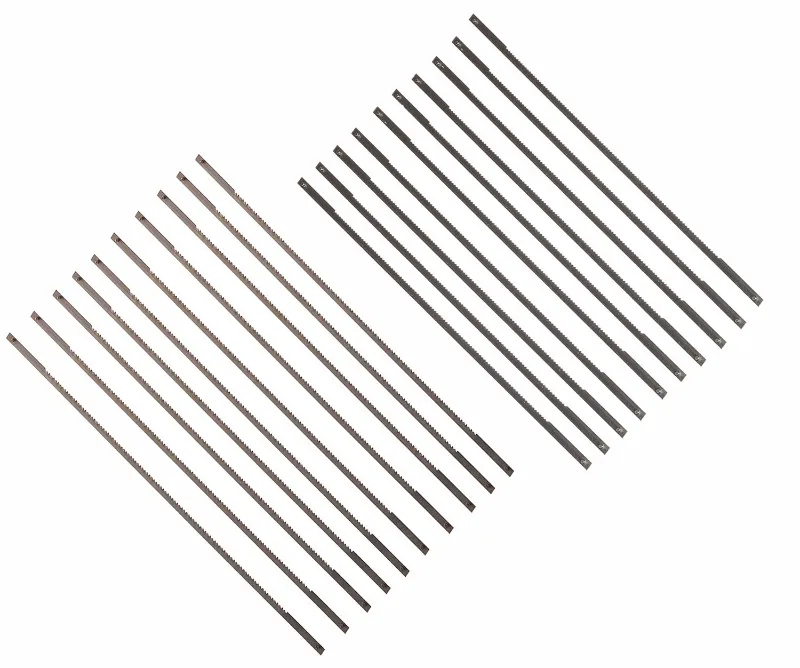
The right blade for a cut depends on the material, how thick it is, and whether the cut is straight or curved, and coping saw blades are the ones to reach for when you need a fine, steerable cut in thin stock. This guide walks through the blade types we stock at Fox Bc, how to match each one to a real job, and what to check before you order so the blade actually fits your tool. Most blade mistakes are fit mistakes, not sharpness mistakes: the wrong length, shank, or tooth pitch will fight you no matter what the saw cost.
Start With the Cut, Not the Tool
Before you open a product page, answer three questions:
- What material? Wood, plastic, non-ferrous metal, steel, glass, and tile want different tooth geometry, or a different cutting method entirely.
- How thick is the stock? Thin stock rewards fine teeth and light pressure. Thick stock needs gullet capacity to clear chips.
- Straight or curved? A blade that tracks a curve willingly will not cut a clean straight line, and the reverse is true.
Blade body stiffness follows the same logic. A thin, narrow blade steers; a wide, heavy blade runs like a rail. That is why a coping blade feels lively in the hand and a table saw blade feels fixed.
Coping Saw Blades Cover the Curves Other Blades Cannot
A coping saw is the cheapest way to cut a tight internal curve, and the blade does the work. coping saw blades are thin and narrow with fine teeth, so you can turn inside a small radius without blowing out the workpiece.
- Use them on thin stock: moulding, dowel, plywood offcuts, plastic sheet, thin aluminium.
- Tension the blade until it rings slightly. A slack blade wanders and snaps.
- Turn the frame as you cut, not just your wrist, so the blade stays square to the face.
- Match tooth count to material: finer teeth for clean edges in thin stock, coarser teeth to clear waste in thicker wood.
For long decorative curves or repeated interior cuts, a hand scroll saw holds a similar fine blade in a much deeper frame, so you can work further from the edge. If you are cutting a lot of them, it is the better tool. For a handful of curves, the coping saw wins on cost and speed. Check the latest price on both before you decide.
Jigsaw Blades: Shank Fit and Tooth Type
Jigsaw blade fit is the number one reason people buy the wrong pack. Two shank standards dominate: the T-shank, which slots in without tools, and the U-shank, which needs the collar seated properly. Check your saw's clamp before ordering.
dewalt jigsaw blades cover the common wood, laminate, and metal jobs, and the pack labelling tells you the material rating and tooth pitch. A few habits that keep cuts clean:
- Use the shortest blade that clears the workpiece, since longer blades flex more.
- Run a fine-tooth blade on laminate and veneered board to avoid tear-out.
- Cut from the face side that matters, or score the line first.
- Let the blade cut at its own pace. Pushing slows the cut and burns the edge.
A 3 in saw is handy for flush cuts and tight spots where a full jigsaw will not fit. It takes a different blade class, so keep the two sets separate in the toolbox.
Band Saw Blades: Length, Width, and Tooth Pitch
Band saw blade selection comes down to three numbers: length, width, and teeth per inch. Length has to match the machine exactly, width sets the minimum radius you can cut, and pitch sets the material.
- Length: measure the old blade or check the manual. A 44 7/8 bandsaw blade is a common compact size, and being a fraction off means it will not tension properly.
- Width: narrow for curves, wider for resawing and straight work.
- Pitch: fine teeth for metal and hard plastics, coarser teeth for thick or green wood.
For metal, use metal cutting band saw blades rather than wood blades. They are built for slower speeds and the higher heat of steel and aluminium work, and the tooth geometry clears chips instead of packing them. If you are hunting a dewalt dcs371 blade size replacement, confirm the exact length and width on the listing before you buy, because that model uses a compact blade and a mismatched length will not reach the tensioner.
Miter and Table Saw Blades for Straight, Clean Cuts
Once the cut is straight and the stock is thick, you want a stiff blade with a heavy body. A 10 inch miter saw blade handles crosscuts, trim miters, and framing work, and tooth count sets the finish: more teeth for clean trim, fewer teeth for faster rough cutting.
An 8 1 4 table saw blade is the compact table saw size, and fit there is about arbor bore and kerf as much as diameter. Saw blade compatibility is never just diameter. Arbor bore, kerf width, and the saw's rated speed all have to agree, and a blade rated for a slower machine should never go on a faster one. Measure the arbor before you order and keep a thin-kerf blade separate from a standard one so your fence scale stays honest. See current pricing when you are ready to compare.
| Blade | Best for | Check before you buy |
|---|---|---|
| Coping saw blades | Thin stock, tight curves, trim | Pin-end or plain-end, blade length |
| Jigsaw blades | Sheet goods, curves, plunge cuts | Shank type, material rating |
| Band saw blades | Resawing, metal cutting, long straight cuts | Length, width, tooth pitch |
| Miter and table saw blades | Crosscuts, rips, miters | Arbor bore, kerf, tooth count |
When an Abrasive Beats a Tooth
Not every cut wants teeth. A 4 1/2 disc grinder with the right disc grinds welds, deburrs, and shapes metal far faster than any toothed blade, and grinder disc choices matter as much as the tool: a cutting disc and a grinding disc do different jobs and should not be swapped casually. Match the disc to the material and to the speed rating on the tool.
Glass is its own category. A glass cutting wheel scores a line rather than removing material, and the break follows the score. Glass cutting tools reward a steady hand, a clean line, and light, consistent pressure instead of force.
If a project needs a profiled edge after all that cutting, a fixed base router is the tool that follows the blade work, and our router buying guide covers what to look for.
Compatibility, Care, and Buying With Our Code
- Match length, bore, shank, and kerf before you order. Wrong fit is not a sharpness problem.
- Keep blades clean. Pitch build-up on band saw and table saw blades causes drift and burning.
- Store coping and jigsaw blades in their sleeve. One chipped tooth changes the cut.
- Retire a blade when it needs pressure to cut. Forced cuts are how blades and fingers get hurt.
Fox Bc keeps the range in one place, so you can match a blade to a saw without a trip across town. Grab the code for the current sitewide offer, check shipping and delivery info before a deadline job, and read the returns and exchanges policy if you are ordering a fit-critical blade such as a band saw length.
 Shopping at Fox Bc? See today's verified Fox Bc discount code
Frequently asked questions
What is the difference between coping saw blades and jigsaw blades?
Coping saw blades are thinner and narrower, so they steer through tight curves in thin stock by hand. Jigsaw blades are thicker, fit a powered saw, and cut faster in sheet goods, but they cannot turn nearly as small a radius.
Will DeWalt jigsaw blades fit a non-DeWalt saw?
They fit any saw that accepts the same shank type, which for most of the range is the tool-free T-shank. Check your saw's clamp or manual before ordering, and remember U-shank saws need a different blade.
How do I confirm a 44 7/8 bandsaw blade will fit my saw?
Measure the old blade along its length, or check the blade length listed in your manual. Band saw blades have to match exactly, since a blade that is slightly long or short will not tension correctly.
Can I put a 10 inch miter saw blade on a table saw?
No, and not just because of diameter. Arbor bore and the saw's rated speed have to match the blade, and a blade rated for a slower machine should not run on a faster one. Use the size your saw specifies.
When should I replace coping saw blades?
When the blade needs pressure to cut, wanders off your line, or shows dull or chipped teeth. A sharp coping blade should pull itself through thin stock with light pressure.
How do I use the Fox Bc discount code?
Apply it at checkout on the Fox Bc store page, where the current sitewide offer is shown. Confirm the code has applied before you pay and check the returns window on fit-critical items like band saw blades.