

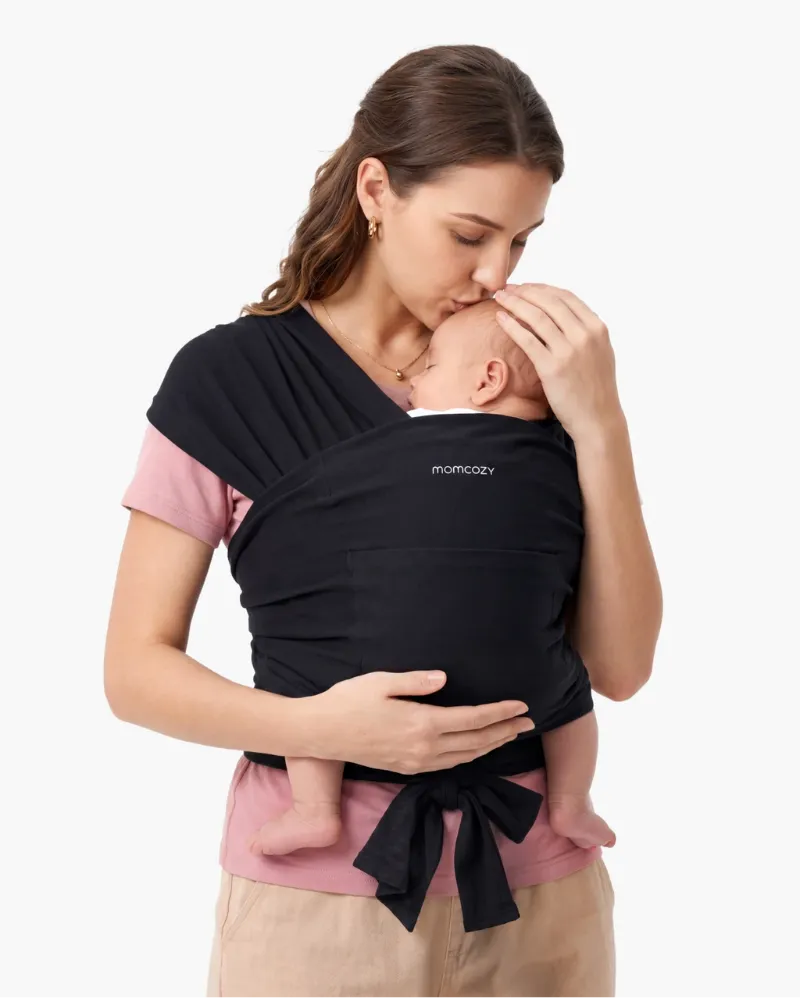
Adjusting the momcozy baby carrier for a newborn comes down to three moves: narrow the seat so the legs sit in a supported M shape, raise and clip the head support, and set the waistband high and snug. For a toddler you reverse all three, widening the seat, folding the head support away, and dropping the waistband so the panel still reaches the back of the neck. Do it in that order, top to bottom, and check the fit before you leave the house rather than halfway down the street.
What changes between newborn mode and toddler mode on the momcozy baby carrier
The carrier itself does not change. The panel does. Almost every adjustment you make for a newborn gets reversed once your child can sit upright without help.
| Setting | Newborn (no head control yet) | Toddler (sitting independently) |
|---|---|---|
| Seat width | Narrow, base gathered so legs stay inside the panel | Widened to knee-to-knee support |
| Head support | Up, clipped, panel rolled or zipped tall | Folded down and out of the way |
| Waistband | High on the ribs, snug | Lower on the hips, firm but not tight |
| Carry position | Front, facing you | Front, hip, or back |
Newborn setup: narrow seat, head support up, waistband high
Work through these in order and you will not have to redo them.
- Loosen everything first. Slack off the shoulder straps and waistband before you put the carrier on. Fitting a tightened carrier to a newborn is a wrestling match you will lose.
- Narrow the seat. Gather or snap the seat base to its narrowest setting so the panel supports thigh to thigh without pushing the legs wide. A newborn's hips should sit in a rounded M, knees slightly higher than the bottom.
- Bring the head support up. Clip or fold up the neck support so it cradles the back of the head without covering the face. You should always be able to see the nose and mouth.
- Set the waistband high. On a newborn the waistband rides near the ribs, which keeps the panel tall enough to support the whole spine.
- Load, tuck, then tighten. Settle baby in, tuck the pelvis forward into the panel (a pelvic tuck stops the slumped, chin-to-chest position), then tighten the shoulder straps last.
- Check the airway. Two fingers of space under the chin, face clear, head turned to one side when asleep.
If your momcozy baby carrier came with a matching infant insert, use it only while your baby is small enough to need the extra lift, and follow the manual's guidance on when to remove it.
Toddler setup: wider seat, lower waistband, room to move
Toddlers do not want to be swaddled. They want to look around and get down.
- Widen the seat so the fabric runs from knee to knee. A narrow seat on a big child digs into the thighs.
- Fold the head support down. A tall panel on a toddler pushes the head forward and blocks their view.
- Drop the waistband to your hips. The top of the panel should still sit at the back of the neck, not below the shoulder blades.
- Shorten the shoulder straps progressively as they grow, and loosen the panel slightly so they can sit upright rather than curled against you.
- For back carry, drop the waistband, load on your hip, and swing the whole carrier around before tightening. It is much easier than fighting a strap over your head.
Fit checks that apply in every mode
Run these every time you adjust the carrier, not just on day one.
- Kissable: you can tip your head and kiss the top of their head without straining.
- Chin clear: never chin to chest, always a finger's width of breathing room.
- Knees: above the hips for a newborn, at hip height or higher for a toddler.
- Panel height: to the back of the neck, no higher.
- Waistband: flat against your body, not riding up or digging in, with two fingers of give.
- Straps: flat and untwisted, with the buckles sitting away from your armpits.
Front, hip, and back carry: when to switch
- Front, facing you: from the first weeks. Best for naps and for feeding in a sling-free position.
- Front, facing out: only after solid head and neck control, and in short stretches, since it gives less head support and more stimulation.
- Hip carry: once your baby can sit unaided.
- Back carry: once they sit independently and can be trusted not to arch backwards.
Time in a carrier counts as container time, so balance it with floor play. If you keep a baby swing in the rotation, follow the baby swing safety basics: no added blankets, never on a raised surface, and no sleeping unsupervised in the seat.
Cleaning, spare parts, and keeping the fit honest
A carrier gets chewed, spilled on, and washed often, so check the manual before you machine wash it. Most panels tolerate a cold, gentle cycle and air drying, and the buckles last longer if you fasten them before washing so they do not catch on the drum.
- Spot clean the panel between washes and keep a spare drool pad on hand.
- Check the webbing and buckles monthly for fraying or hairline cracks, especially around the leg openings.
- Recheck the fit every few weeks, not every few months. Growth spurts move fast, and a seat that was perfect in month two will be too narrow by month five.
- When you do need a replacement part, order from the store rather than a third-party listing so the warranty and returns process stays intact. You can check the latest price and offer before you buy.
Setting up the rest of your kit as you size up
A carrier is one piece of a bigger setup, and the fit changes around it. Once the momcozy baby carrier is dialled in, these are the pieces that make the rest of the day easier. Our store discount runs 10% off all orders, so grab the code before you fill a cart.
- A baby lounger gives you a safe place to set baby down while you get the carrier on and off.
- A sound machine makes the transfer from carrier to cot far less dramatic.
- The momcozy Wearable Breast Pump means you can pump hands-free while carrying, which is the whole point of a wearable.
- For registry and gifting, list the carrier alongside the pump and the lounger so the items people buy you actually work together.
If you are choosing between a full kit and buying one piece at a time, read the discount code terms on the store page first, because sale and clearance items sometimes sit outside the offer. Shipping and delivery timelines are listed there too.
When to refit, not replace
Most parents jump to a second carrier earlier than they need to. Recheck the seat width, panel height, and strap length first, and refit before you assume the carrier is outgrown. The momcozy baby carrier covers newborn support and toddler back carry in one shell, which is exactly why the settings matter so much. Get them right and one carrier takes you from the first week to the first year of walking.
 Shopping at Momcozy? See today's verified Momcozy discount code
Frequently asked questions
How do I know when to switch my momcozy baby carrier to toddler mode?
Switch once your baby sits independently, usually well after they have head and neck control. At that point, widen the seat to knee-to-knee, fold the head support down, and lower the waistband so the panel still reaches the back of the neck.
Can I use the carrier with a newborn facing outward?
No. A newborn needs to face you for head support and airway monitoring. Outward facing is only appropriate after solid head and neck control, and in short stretches.
How tight should the waistband be?
Snug enough that the panel stays against your body with no sagging, but loose enough to slide two fingers underneath. On a newborn, the waistband sits high near the ribs; on a toddler, it drops to your hips.
Why does my baby's head keep slumping forward in the carrier?
Usually the pelvis was not tucked forward, or the waistband is too low, so the panel sits too shallow. Tuck the pelvis into the panel and raise the waistband. If the chin still drops to the chest, refit before continuing.
How often should I wash the carrier and check the buckles?
Wash as needed following the manual, usually a cold gentle cycle, and check webbing and buckles for fraying or cracks about once a month. Recheck the fit every few weeks during growth spurts.
Does the store discount apply to carrier accessories and spare parts?
The current offer is 10% off all orders, but sale and clearance items are sometimes excluded. Read the discount code terms on the store coupon page before you check out.