

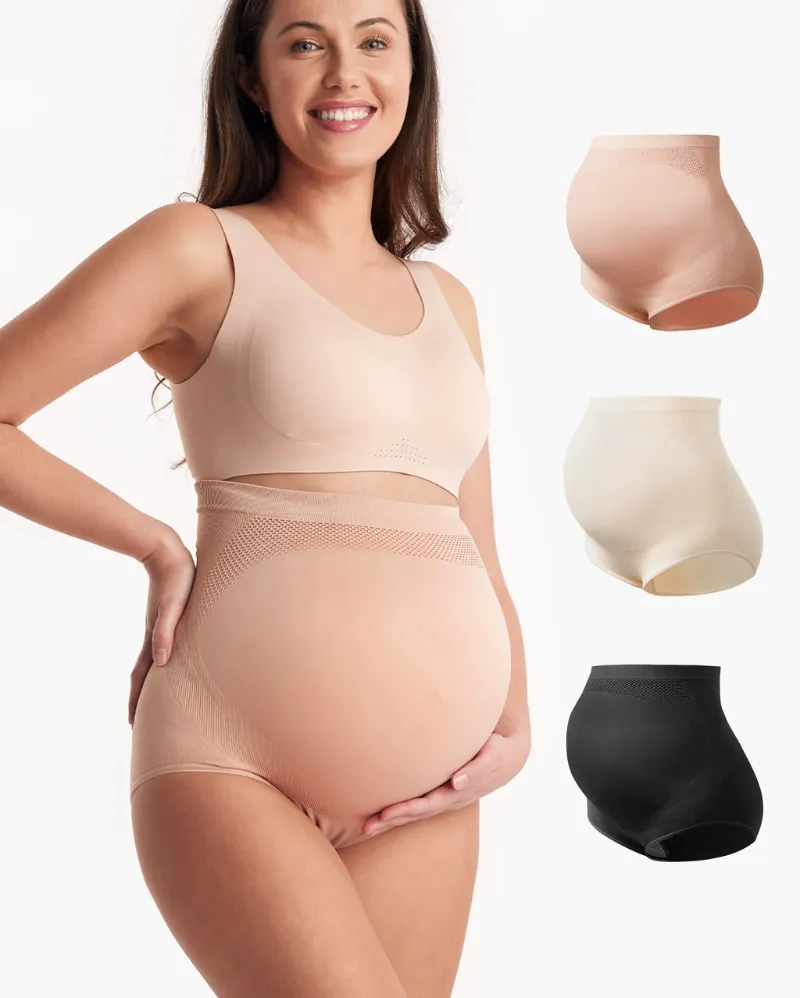
Wash maternity underwear in cold water on a gentle cycle with a mild liquid detergent, skip the dryer completely, and you will get months more wear out of every pair. In our testing, heat and wringing do far more damage than frequent washing. Below is the exact routine we use, plus how to keep the rest of the postpartum laundry pile, from pump parts to compression socks, from wrecking the load.
Why maternity underwear loses its stretch
Most pairs are a soft cotton, bamboo or modal knit blended with elastane, and that elastic core is what gives up first. It is almost never the fabric that fails, it is the way we wash it.
- Heat is the main killer. Warm and hot washes relax elastic fibres, and a tumble dryer finishes the job.
- Fabric softener and dryer sheets coat the fibres, which cuts both stretch and breathability.
- Wringing and a high spin cycle distort a wet, heavy support panel.
- Hanging a wet pair by the waistband pulls the elastic out of shape under its own weight.
- Chlorine bleach breaks down elastane far faster than detergent does.
How to wash maternity underwear: the cold-water routine
This works for cotton, bamboo blends and most over-bump and postpartum styles.
- Wash pairs as their own small load, away from towels, jeans and anything with zips or hook-and-loop fastenings.
- Turn each pair inside out and put it in a mesh laundry bag to stop the drum from stretching it.
- Choose cold water, a delicate or hand-wash cycle and the lowest spin setting.
- Use a mild liquid detergent and roughly half your usual dose. Rinse aids and softeners are not needed.
- Skip fabric softener, bleach and dryer sheets entirely.
- Run an extra rinse if your skin is sensitive or you have had thrush treatment in the wash.
- Reshape each pair by hand and lay it flat to dry.
If you would rather hand wash, a clean five gallon pail makes a practical soak bucket: a capful of mild detergent and cool water, ten minutes, then rinse until the water runs clear. Never wring. Press the water out between two towels instead.
Hand washing vs machine washing
Both work. The decision comes down to how many pairs you own and how much support panel they have.
| Method | Best for | Main risk |
|---|---|---|
| Cold delicate machine cycle | Everyday cotton and bamboo pairs, larger loads | High spin and an overloaded drum |
| Hand wash in a pail | Support panels, lace trim, modal and bamboo blends | Wringing out the elastic |
| Machine plus mesh bag | Small postpartum sizes and frequent small loads | Cramming too many pairs into one bag |
Whichever route you choose, keep the temperature cold and the agitation low. That single rule protects more pairs than any detergent upgrade.
Drying and storing so they bounce back
- Lay flat on a towel rack or line dry in the shade. Direct sun fades colour and weakens elastic over time.
- Never hang a wet pair by its waistband. Fold it over the rack instead.
- Keep them out of the tumble dryer, including "low heat" settings. It is the single fastest way to lose stretch.
- Once dry, fold pairs flat. Stretching them over a hanger or the edge of a drawer does the same damage as hanging them wet.
- Rotate five to seven pairs so each one has days to recover between wears.
What should not go in the maternity underwear load
The postpartum laundry pile fills up fast, and a few items genuinely deserve their own cycle.
- Pump parts. The momcozy Wearable Breast Pump cups and valves need hand cleaning with warm soapy water, not a laundry cycle. Treat cleaning and spare parts as their own job.
- Compression socks. circulation socks for pregnancy wash cold but go in separately, because the denser knit and any hook-and-loop tabs can snag soft underwear.
- Pillow covers. The cover of a momcozy pregnancy pillow is a pregnancy sleep support essential with its own care label. Wash it on its own cycle rather than stuffing it in with smalls.
- Towels, jeans and anything with zips. All three abrade fine knits and add weight that stretches them in the drum.
Sizing, fit checks and when to replace
Washing is only half the story. A pair that is already the wrong size will roll, dig in or sag no matter how carefully you launder it.
- Do an elastic recovery test: stretch the waistband gently, let go, and see whether it snaps back flat. If it stays wavy, the pair is done.
- Band marks and a waistband that rolls down usually mean you need to size up, which is normal as pregnancy progresses and again in the first weeks postpartum.
- Buy a couple of sizes at once. Sizing shifts quickly, and a second size protects you from over-washing your favourite pairs.
- Expect regular wear and cold washing to give you several months per pair. Once the stretch goes flat, it does not come back.
Where to buy too: check the latest price before you restock, because bundle and clearance timing changes the maths on buying five pairs instead of two.
Buying pairs and timing it with a sale
Maternity underwear is not glamorous, which is exactly why it belongs on a registry and gifting list alongside the bigger gear. Guests like buying something practical, and you need enough pairs to rotate properly.
- Aim for five to seven everyday pairs plus two or three heavier support pairs for the first weeks postpartum.
- Watch sale and clearance windows before a due date rather than after, since shipping and delivery timelines matter more when you are close to term.
- Read the discount code terms before you stack anything. Grab the code and check what it applies to first, so a delivery charge does not cancel out the saving.
- If you are already ordering from the same store, our current Momcozy offer covers all orders and pairs well with a restock of postpartum essentials.
Cold water, no dryer, gentle detergent and a bit of sorting. That is the whole method, and it will keep your maternity underwear soft, supportive and stretchy for as long as you need it.
 Shopping at Momcozy? See today's verified Momcozy discount code
Frequently asked questions
Can I wash maternity underwear in hot water?
No. Hot water relaxes the elastane that gives the fabric its stretch, and repeated hot washes leave the waistband wavy and loose. Cold water with a mild detergent cleans just as well for everyday wear.
How do I stop maternity underwear from shrinking in the wash?
Wash cold on a delicate cycle with low spin, then lay the pairs flat to dry instead of tumble drying. Heat from the dryer, not the wash itself, is what causes most shrinkage and loss of shape.
Should compression socks go in the same load as maternity underwear?
We would keep them separate. Circulation socks for pregnancy have a denser knit and often hook-and-loop tabs that can snag soft underwear, so give them their own cold cycle.
Can I machine wash the momcozy pregnancy pillow cover with my underwear?
Wash the cover on its own and follow the care label, since the fabric and filling differ from underwear knits. Keeping it separate also stops the larger cover from crowding the drum and stretching small items.
Can I use fabric softener on maternity underwear?
Skip it. Softener and dryer sheets leave a coating on the fibres that reduces stretch and breathability, and it builds up with every wash. A mild liquid detergent is all you need.
How many pairs of maternity underwear do I need?
Five to seven everyday pairs plus a couple of support pairs is a practical rotation, because it gives the elastic a day or two to recover between wears and means you are never forced into an emergency hot wash.