
How to Choose Between the Elegoo Saturn 2 and Anycubic Photon M3 Max for Large Resin Prints

How to Choose Between the Elegoo Saturn 2 and Anycubic Photon M3 Max for Large Resin Prints
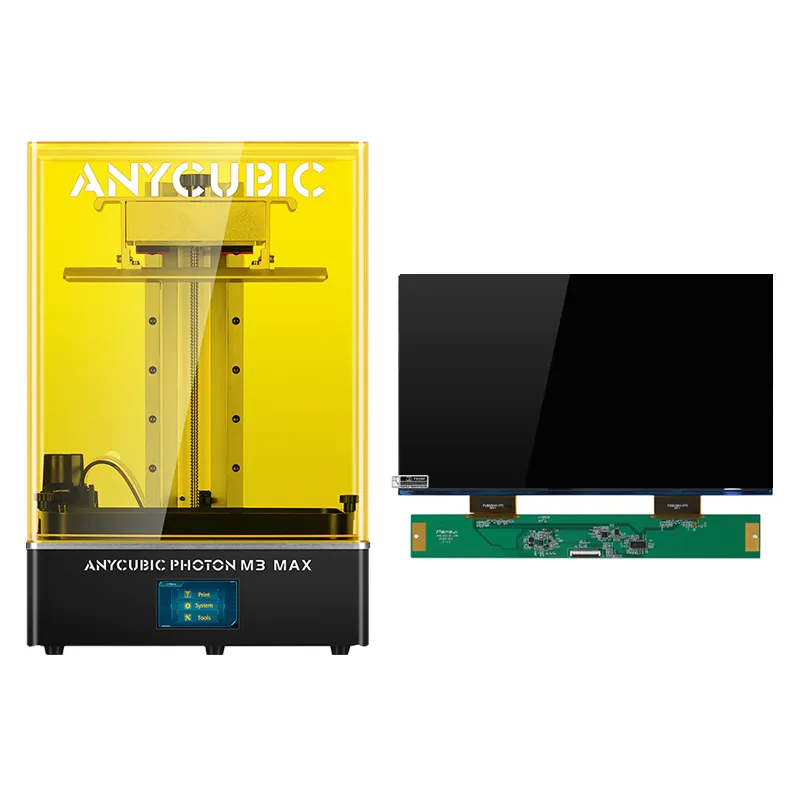
The anycubic photon m3 max and elegoo saturn 2 both deliver impressive large-format resin prints, but they differ in build volume, screen technology, and price point. We tested both machines to help you decide which printer suits your project scale, budget, and workflow best.
Build Volume and Print Size Comparison
Build volume separates these two printers more than any other spec. The anycubic photon m3 max offers a massive 298 × 165 × 300 mm build area, while the elegoo saturn 2 provides 219 × 123 × 250 mm. That difference matters if you print helmets, architectural models, or multi-part assemblies in one go.
| Printer | Build Volume (mm) | Z-Axis Height |
|---|---|---|
| Anycubic Photon M3 Max | 298 × 165 × 300 | 300 mm |
| Elegoo Saturn 2 | 219 × 123 × 250 | 250 mm |
The M3 Max's footprint does demand more desk space and uses significantly more resin per print. If you work with smaller miniatures or jewelry prototypes, the Saturn 2's build area still handles most projects while keeping resin costs lower. For tabletop terrain, cosplay armor, or full-scale busts, the M3 Max reduces the need to slice models into multiple parts.
Screen Technology and Print Quality
Both printers use monochrome LCD screens that cure faster than older RGB panels, but resolution density differs. The elegoo saturn 2 features an 8K mono screen with 29 µm XY resolution, delivering sharper detail on smaller features. The anycubic photon m3 max uses a 7K screen with 34 µm resolution, which still produces excellent results but shows slight stepping on very fine edges.
We printed identical miniatures on both machines using the same resin and exposure settings. The Saturn 2 captured finer texture detail on cloth folds and facial features, while the M3 Max matched quality on larger surfaces and mechanical parts. For most practical applications, the difference only becomes visible under magnification.
Layer consistency and screen uniformity proved excellent on both printers across dozens of test prints. Neither machine showed edge fading or center hot-spots that plague cheaper models. If you need absolute detail for jewelry casting or dental models, the Saturn 2's higher pixel density edges ahead. For props, miniatures, and functional parts, both deliver professional results.
Workflow, Speed, and Reliability
Print speed depends on resin type and layer height, but both printers cure layers in 2 to 3 seconds with standard resins. The anycubic photon m3 max takes longer per print simply because each layer covers more area, but it eliminates assembly time when you print large objects in one piece rather than splitting them across multiple builds on a smaller printer.
Leveling and setup differ slightly between models. The Saturn 2 uses a four-point manual leveling system that we found intuitive and reliable after the initial setup. The M3 Max includes a similar manual system with a larger 3d printer build surface that requires careful attention to get perfectly level. Both printers maintained bed adhesion across our test prints once properly calibrated.
The vat and FEP film replacement process matters for long-term ownership. Both machines use standard FEP sheets, but the M3 Max's larger vat means replacement films cost more and take longer to stretch evenly. We recommend checking the anycubic photon m3 max vat periodically for cloudiness or scratches that affect print quality.
Firmware updates and slicer support work smoothly on both printers. Anycubic's Photon Workshop and Elegoo's Chitubox both handle model preparation well, with pre-configured profiles for each machine. You can grab the latest firmware directly from Anycubic's official wiki if you run into any issues.
Anycubic Photon M3 Max: Who It Suits Best
The anycubic photon m3 max makes sense for makers who regularly print helmets, full-scale props, large terrain sections, or need fewer seams in finished pieces. The build volume eliminates multi-part printing workflows that add assembly and finishing time. We found it particularly valuable for cosplay builders and tabletop game enthusiasts creating dungeon setups.
Reviews from experienced users consistently highlight the printer's stability and consistent results across the full build plate. The machine does consume more resin per failed print, so dialing in settings matters more than with smaller formats. Budget for additional resin and factor in the larger footprint before committing.
Replacement parts like the printer screen are readily available, and the anycubic photon m3 max specs include a robust metal frame that reduces vibration during long prints. For current pricing and to see if there's a discount code available, check our store page before purchasing.
Elegoo Saturn 2: When Smaller Makes Sense
The elegoo saturn 2 hits the sweet spot for hobbyists and small studios printing miniatures, jewelry masters, dental models, or medium-sized functional parts. The 8K screen delivers exceptional detail, and the more compact footprint fits standard workbenches without dominating the space.
Lower resin consumption per print reduces material costs, especially during the learning phase when you're dialing in exposure times and support settings. The saturn 2 also works well as a secondary printer in production environments where you run multiple builds simultaneously. All3DP's detailed analysis of both machines confirms the Saturn 2's efficiency for batch printing smaller objects.
If you occasionally need larger prints, you can split models and assemble them post-print. Modern slicers make this process straightforward with alignment keys and snap-fit joints. The Saturn 2's faster individual layer times also mean quicker turnaround on smaller projects.
Price and Long-Term Costs
The elegoo saturn 2 typically costs less upfront than the anycubic photon m3 max, though exact pricing fluctuates. Check our Chitu Systems discount code page for current offers on both printers.
Long-term costs favor the Saturn 2 for most users. Replacement FEP film, resin consumption per print, and even the lcd screen for saturn 4 (compatible with Saturn 2 in many cases) run cheaper than M3 Max equivalents. The M3 Max makes economic sense only if you regularly use its full build volume. Printing small objects on a large printer wastes resin in the vat and increases screen wear.
Making Your Decision
Choose the anycubic photon m3 max if you print helmets, large terrain, architectural models, or want to minimize part splitting and assembly work. Choose the elegoo saturn 2 if you focus on miniatures, jewelry, dental work, or prefer lower material costs with excellent detail.
Both printers deliver reliable results and strong community support. Your project scale and budget matter more than minor spec differences. For smaller studios considering multiple printers, starting with a Saturn 2 and adding an M3 Max later gives you flexibility across project types without duplicating capabilities.
Check current pricing and compare both machines to smaller options like the elegoo mars 2 or newer models such as the anycubic photon mono m5s to ensure you're selecting the right tool for your specific workflow.
Frequently asked questions
What is the main difference between the Anycubic Photon M3 Max and Elegoo Saturn 2?
The M3 Max offers a significantly larger build volume (298 × 165 × 300 mm) compared to the Saturn 2 (219 × 123 × 250 mm), while the Saturn 2 features a higher resolution 8K screen versus the M3 Max's 7K panel.
Which printer is better for miniatures and small detailed prints?
The Elegoo Saturn 2 excels at miniatures thanks to its 8K screen and 29 µm XY resolution, which captures finer details on small features. It also uses less resin per print, reducing material costs during testing and production.
Can the Anycubic Photon M3 Max print a full-size helmet in one piece?
Yes, the M3 Max's 300 mm Z-axis height and large build area can accommodate most full-size helmets in a single print, eliminating the need to split models and assemble parts later.
Are replacement parts like FEP film more expensive for larger resin printers?
Yes, the M3 Max requires larger FEP sheets that cost more than those for the Saturn 2. The larger vat also holds more resin, which increases material costs per print and waste if prints fail.
How do I know which build volume I actually need?
Review your typical project sizes over the past few months. If you regularly print objects larger than 200 mm in any dimension or want to reduce assembly work on props and terrain, the M3 Max justifies its size. For miniatures, jewelry, and parts under 200 mm, the Saturn 2 offers better value.
Do both printers work with the same resin types?
Yes, both the M3 Max and Saturn 2 work with standard 405 nm resins including standard, ABS-like, flexible, and specialty formulations. Exposure times will differ based on screen specifications, so always run calibration tests when switching resins.