
Do Baofeng Radios Work as Police Scanners? What You Need to Know

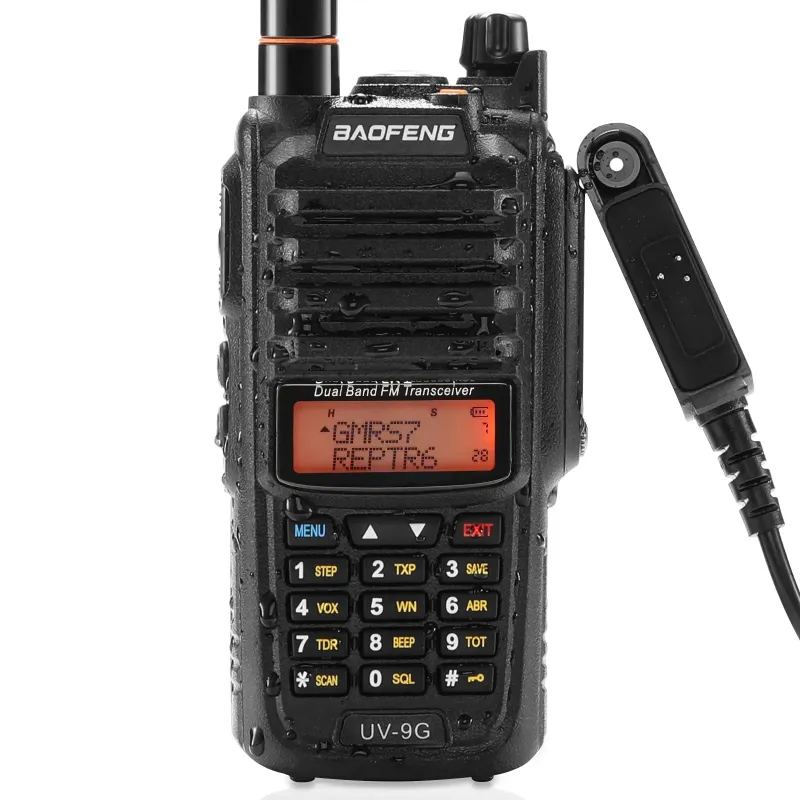
A baofeng police scanner can receive many public safety frequencies, but its effectiveness depends on your local agencies' transmission systems and encryption policies. Models like the baofeng uv-5r and uv5r radio cover VHF and UHF bands where police, fire, and EMS often transmit, though digital trunking and encryption increasingly limit what you can monitor.
We tested multiple Baofeng models to understand their scanning capabilities, legal boundaries, and real-world limitations. Here's what works, what doesn't, and how to set up your radio if monitoring is legal in your area.
What Frequencies Can Baofeng Radios Receive?
Most Baofeng two-way radios cover 136–174 MHz (VHF) and 400–520 MHz (UHF), which include common public safety bands. The baofeng uv-5r receives these ranges in FM mode, letting you tune into analog transmissions from police, fire departments, weather broadcasts, and amateur radio operators.
Key frequency ranges:
- VHF 150–174 MHz – many police and fire departments in rural areas
- UHF 450–470 MHz – urban police, EMS, and business bands
- NOAA weather – 162.400–162.550 MHz (seven channels)
- Amateur bands – 144–148 MHz (2m) and 420–450 MHz (70cm)
Baofeng radios are not wideband scanners. They lack the continuous sweep function found in dedicated police scanners and cannot receive 800 MHz trunked systems, P25 Phase II digital, or encrypted transmissions. You must manually program each frequency or step through saved channels.
Baofeng Police Scanner Setup: Programming Your Radio
To use a Baofeng as a police scanner, you need to identify active frequencies in your area and program them into memory channels. Manual entry via the keypad works for a few frequencies, but baofeng software like CHIRP simplifies bulk programming.
Basic baofeng uv-5r police scanner setup manual steps:
- Find local frequencies on RadioReference.org (search by county)
- Download CHIRP software (free, open-source) and install the USB driver
- Connect your radio with a programming cable
- Import or manually enter frequencies, labels, and tone codes
- Upload the channel list to your radio
- Scan by pressing the SCAN button (orange key)
The baofeng uv-5r mini and uv10 follow the same process. If you hear static or garbled audio, the agency may use CTCSS/DCS privacy tones (you can program these in CHIRP) or digital modes your radio cannot decode.
Community forums like Two Way Radio Forum document real-world scanning experiences and troubleshooting tips.
Why Some Police Frequencies Are Blocked
Even with the correct baofeng police scanner frequencies, you may not hear anything. Modern public safety agencies increasingly adopt digital trunking systems and encryption:
- Analog vs. digital – Baofeng radios receive only analog FM. If your local PD uses P25, DMR, or NXDN digital modes, you'll hear noise or silence. The baofeng dm32 supports DMR Tier I/II, which helps in some cases, but it still cannot decrypt encrypted channels.
- Trunking systems – 800 MHz trunked networks require specialized scanners that track control channels. Baofeng handhelds cannot follow these frequency-hopping systems.
- Encryption – Agencies using AES or DES encryption transmit scrambled audio. No consumer scanner (Baofeng or otherwise) can decode encrypted traffic legally.
Before investing time in baofeng police scanner setup, check RadioReference.org to confirm your local agencies broadcast in analog and in the clear. Many urban departments have moved to encrypted digital, rendering traditional scanning obsolete.
Legal Considerations and Best Practices
Receiving public safety transmissions is legal in most U.S. states as long as you do not act on the information to commit a crime or interfere with operations. However, transmitting on police frequencies is a federal offense under FCC rules.
Stay legal:
- Listen only; never transmit on public safety channels
- Do not use scanner intelligence to evade police or aid criminal activity
- Respect encryption as an agency's choice to protect officer safety and victim privacy
- Verify your state's laws (a few states restrict mobile scanner use)
Baofeng radios are dual-purpose devices. While you can monitor authorized frequencies, they are primarily designed for licensed amateur radio use (requires a Technician license or higher) and business band communication. If you plan to transmit, ensure you operate within your license privileges or on license-free services like FRS (though Baofeng models generally exceed FRS power limits and are not type-accepted for that service).
For deeper context on setup and legality, this guide walks through practical examples, and RadioReference forums address common questions.
Baofeng Models Compared for Scanning
Not all Baofeng radios offer the same scanning experience. We compared popular models to help you choose:
| Model | Frequency Range | Scan Speed | Best For |
|---|---|---|---|
| Baofeng UV-5R | 136–174 / 400–520 MHz | ~5 ch/sec | Budget analog scanning |
| Baofeng UV-5R Mini | 136–174 / 400–520 MHz | ~5 ch/sec | Compact portability |
| Baofeng DM32 | 136–174 / 400–520 MHz + DMR | ~4 ch/sec | Mixed analog/DMR systems |
| UV10 | 136–174 / 400–520 MHz | ~6 ch/sec | Improved audio clarity |
The baofeng bf-888s covers only UHF and lacks a display, making it impractical for scanning. The Baofeng 9g and ar-5rm offer similar performance to the UV-5R but with enhanced build quality.
Check the latest pricing and apply our discount code for 12% off your order.
Who Should Use a Baofeng as a Scanner
A Baofeng makes sense if you:
- Live in an area with active analog public safety traffic
- Want a low-cost introduction to radio monitoring
- Already hold an amateur radio license and want dual-purpose functionality
- Enjoy the technical challenge of manual programming
It's not ideal if you:
- Expect plug-and-play operation (dedicated scanners auto-program via zip code)
- Need to monitor digital trunked or encrypted systems
- Want continuous frequency sweeps or close-call detection
For casual listening to fire, EMS, weather, and ham repeaters, the baofeng uv-5r delivers solid value. For serious public safety monitoring in digital markets, invest in a dedicated scanner like a Uniden or Whistler model instead.
If you decide to move forward, grab the code before ordering to save on any model in the Baofeng lineup.
Final Thoughts
Baofeng radios work as basic police scanners in regions still using analog VHF/UHF transmission, but they cannot decode digital modes or encrypted channels. The baofeng uv-5r remains our top pick for budget scanning thanks to wide frequency coverage and strong community support. Pair it with CHIRP software, research your local frequencies, and understand the legal boundaries before you start listening.
We continue testing new models and tracking encryption rollouts. Visit our Baofeng discount page for updated pricing and exclusive coupon codes on the full range of two-way radios.
Frequently asked questions
Can the Baofeng UV-5R receive encrypted police channels?
No. The Baofeng UV-5R and other consumer radios cannot decode encrypted transmissions. If your local police use AES or DES encryption, you will hear only silence or noise on those channels.
Do I need a license to listen to police frequencies on a Baofeng?
In most U.S. states, no license is required to receive public safety transmissions. However, you must never transmit on those frequencies without proper authorization, and a few states restrict mobile scanner use.
Why can't I hear anything when I tune to police frequencies?
Your local agency may use digital modes (P25, DMR, NXDN), 800 MHz trunking, or encryption that Baofeng radios cannot decode. Check RadioReference.org to confirm analog transmissions are active in your area.
How do I program scanner frequencies into my Baofeng radio?
Use CHIRP software with a programming cable to import frequencies from RadioReference.org. You can also manually enter channels via the keypad, though bulk programming is much faster and less error-prone.
Which Baofeng model is best for scanning police frequencies?
The Baofeng UV-5R offers the widest community support and covers VHF/UHF analog bands used by many public safety agencies. For areas with DMR digital, consider the Baofeng DM32 instead.
Is it legal to use a Baofeng as a police scanner while driving?
Federal law permits receiving public safety broadcasts, but a handful of states restrict mobile scanner use or possession during the commission of a crime. Check your state's specific statutes before mobile operation.