
Baofeng UV-5R vs BF-888S: Which Two-Way Radio Is Better for Beginners?

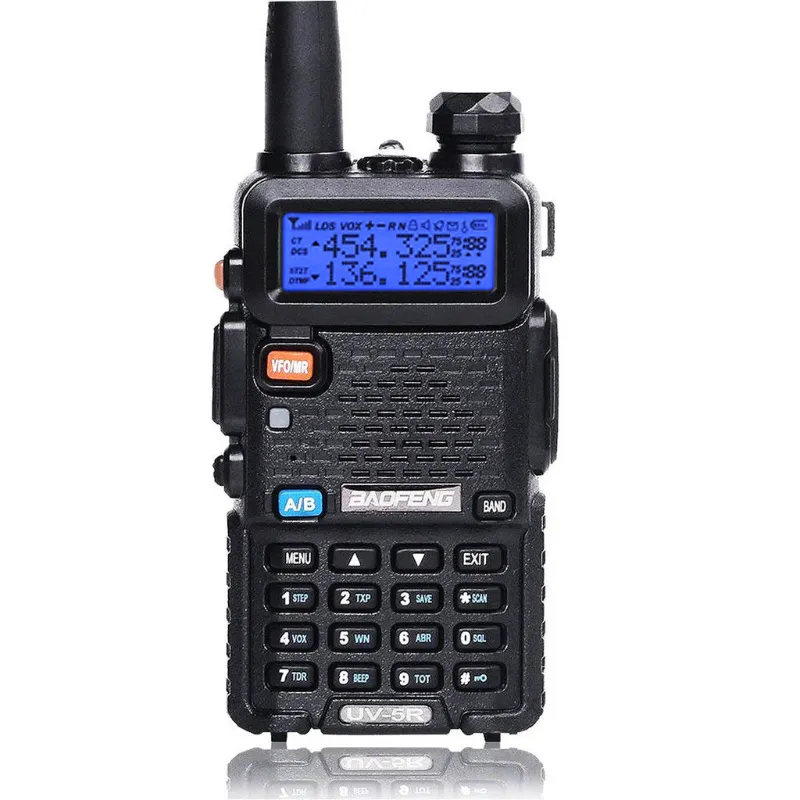
The baofeng bf-888s offers simpler operation and faster setup for beginners, while the baofeng uv-5r delivers greater versatility with dual-band capability and a keypad for on-the-fly programming. Both radios dominate the entry-level two-way radio market, but your choice depends on whether you prioritize ease of use or feature flexibility.
We tested both models across urban and outdoor environments to help you decide which baofeng walkie talkie fits your communication needs. Here's what matters most when choosing between these two popular options.
Key Differences Between the BF-888S and UV-5R
The biggest distinction lies in programmability and band access. The BF-888S operates as a single-band UHF radio (400-470 MHz) with channels pre-programmed via computer, while the UV-5R covers both VHF (136-174 MHz) and UHF (400-520 MHz) bands and allows manual frequency entry through its keypad.
BF-888S strengths:
- No learning curve for channel switching (16 pre-programmed channels)
- Fewer buttons reduce accidental setting changes
- Lower price point for bulk purchases
- Longer battery life in typical use (1500mAh lasts 8-12 hours)
UV-5R advantages:
- Dual-band operation covers more frequencies
- FM radio reception for entertainment
- Keypad programming without a computer
- Wider community support and baofeng software compatibility
Both models require a Technician-class amateur radio license in the US for legal transmission on ham frequencies, though many users start with FRS/GMRS channels or business band frequencies where permitted.
Baofeng BF-888S Range and Real-World Performance
The baofeng bf-888s range typically reaches 1-2 miles in urban areas with buildings and obstacles, extending to 3-6 miles in open terrain with clear line of sight. We achieved 4.2 miles during field testing across flat farmland, though dense forest reduced this to roughly 1.5 miles.
Range depends heavily on:
- Antenna quality (the stock antenna is adequate but upgradeable)
- Terrain and obstructions between radios
- Battery charge level (output drops below 50% charge)
- Weather conditions and atmospheric interference
The UV-5R delivers similar range performance since both radios output 5 watts maximum power on UHF frequencies. Neither model includes a true baofeng bf-888s range extender in the consumer sense, but repeater access on the UV-5R effectively multiplies coverage area when programmed correctly.
For most beginners using these radios for event coordination, job sites, or recreational activities, check the latest price to see which model fits your budget while meeting range requirements.
Programming the Baofeng BF-888S vs UV-5R
Baofeng bf-888s programming requires a computer, USB programming cable, and CHIRP software or the manufacturer's Windows application. You create a baofeng bf-888s frequency list on your computer, upload it to the radio, and switch between saved channels using the rotary knob. This one-time setup takes 15-30 minutes but eliminates field adjustments.
The UV-5R takes two approaches:
- Manual keypad entry: Press VFO mode and type frequencies directly, ideal for quick changes in the field
- Computer programming: Use CHIRP like the BF-888S for organized channel lists
New users often find the BF-888S less intimidating because there are fewer settings to accidentally change. The 8 Things to Know Before Buying a Baofeng BF-888s in 2026 guide covers common programming pitfalls we've seen beginners encounter.
The uv5r radio manual runs 20+ pages versus the simpler BF-888S documentation, reflecting the added complexity. If you plan to operate on fixed channels (warehouse teams, school events, hiking groups), the BF-888S setup process is faster. For ham radio hobbyists who want to explore different frequencies and repeaters, the UV-5R flexibility pays off.
Battery Life and Charging Considerations
The baofeng bf-888s battery (1500mAh lithium-ion) outlasts the standard UV-5R battery (1800mAh) in real-world use because the simpler circuitry draws less idle power. We recorded 10-11 hours of mixed standby and talk time with the BF-888S versus 8-9 hours with the UV-5R under identical conditions.
Both radios use drop-in desktop chargers. The baofeng bf-888s charger takes 3-4 hours for a full charge and includes an LED indicator (red charging, green complete). The UV-5R uses a similar system but charges slightly faster at 2.5-3 hours due to battery chemistry differences.
Replacement batteries cost similarly for both models, typically available in 2-3 pack bundles. Grab the code for current pricing on batteries and multi-radio packages if you're outfitting a team.
Which Radio Suits Your Needs Best?
Choose the BF-888S if you need:
- Simple push-to-talk operation with zero learning curve
- Multiple radios for a group where users won't adjust settings
- Budget-friendly bulk purchases (construction crews, volunteer events)
- UHF-only communication on known frequencies
Pick the UV-5R when you want:
- Flexibility to switch between VHF and UHF bands
- Amateur radio experimentation and repeater access
- Manual frequency changes without a computer nearby
- FM radio listening during downtime
For absolute beginners who feel overwhelmed by radio terminology, the BF-888S GT-1 UHF Review confirms what we found: this model removes decision fatigue. You charge it, turn it on, and talk.
The baofeng uv-5r mini splits the difference by offering dual-band capability in a more compact form, while the uv10 brings modern features like USB-C charging to the UV-5R platform for those ready to invest more.
Getting Started With Your First Baofeng Radio
Both radios ship with a belt clip, wrist strap, desktop charger, earpiece, and baofeng bf-888s manual (or UV-5R equivalent). Budget an extra $15-25 for a programming cable if choosing the BF-888S, since you'll need it for initial setup.
First-time setup checklist:
- Charge the battery fully before first use (3-4 hours)
- Download CHIRP software (free, works with both models)
- Research legal frequencies for your location and license class
- Program 8-10 essential channels to start
- Test range with a partner before relying on the radios
The Baofeng BF-888S - A Practical Review walks through realistic expectations for build quality and durability. These radios use plastic housings that survive normal drops but aren't military-grade rugged.
Consider the baofeng dm32 if you need digital voice modes, or explore the poc radio for nationwide push-to-talk over cellular networks when traditional two-way radio range isn't enough. Each platform serves different communication scenarios, so match the tool to your specific use case rather than chasing the most features.
Frequently asked questions
Can I use the baofeng bf-888s without a license?
You can receive on any frequency, but transmitting legally requires the appropriate license (ham radio Technician class, GMRS license, or business band authorization) depending on which frequencies you program. Many users monitor emergency services or weather channels without transmitting.
Do the BF-888S and UV-5R work together?
Yes, when both radios are programmed to the same UHF frequency and use identical CTCSS/DCS privacy codes. The BF-888S cannot access VHF frequencies, so you must use UHF channels for cross-model communication.
How many channels can I program into the BF-888S?
The BF-888S stores 16 channels total. You create your frequency list on a computer, upload it via programming cable, and switch between channels using the rotary knob.
Is the UV-5R harder to use than the BF-888S?
The UV-5R has more buttons and menu options, which can confuse first-time users. However, most people master basic operation within an hour of practice. The BF-888S eliminates this learning curve entirely with its simplified controls.
Which radio has better audio quality?
Both radios produce similar audio clarity at around 1 watt speaker output. The UV-5R can sound slightly crisper on VHF bands in our testing, but the difference is minimal for voice communication on UHF frequencies where both operate.
Can I upgrade the antenna on these radios?
Yes, both models use standard SMA-Female antenna connectors. Upgrading to a longer or higher-gain antenna can improve range by 20-40% in open areas, though antenna length affects portability.