
Bivy Tent vs Bivy Sack: Which Is Right for Bike Touring?

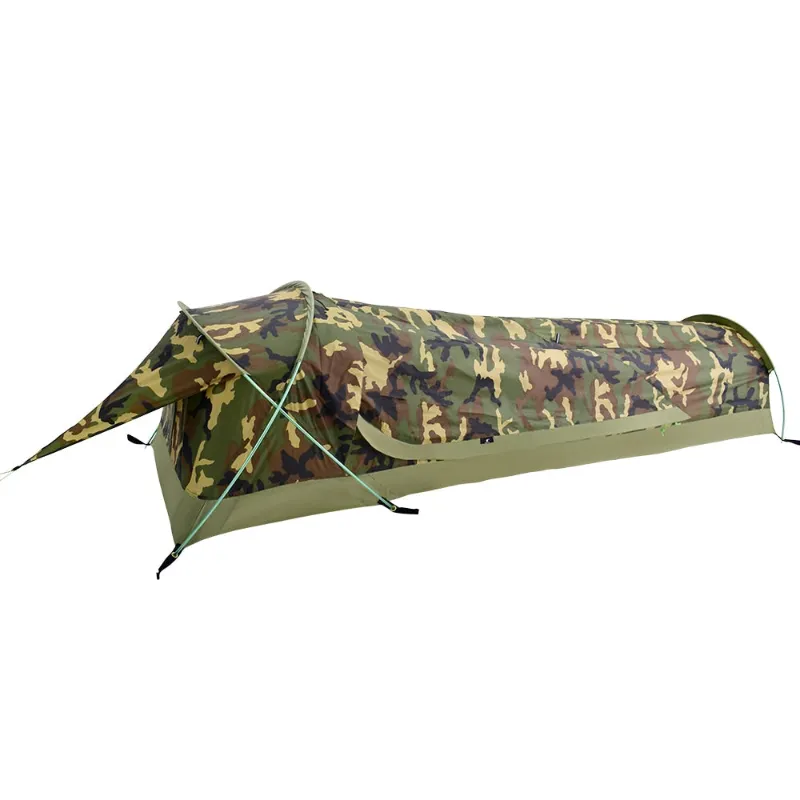
A bivy sack tent delivers weather protection and packability that traditional tents cannot match for bike tourers counting every gram. We have tested both full bivy tents with poles and minimalist bivy bags on multi-day tours, and the right choice hinges on your typical camping conditions, how much ventilation you need, and whether you value speed over interior space.
What Is a Bivy Sack Tent and How Does It Differ From a Standard Tent?
A bivy shelter sits somewhere between a waterproof sleeping bag cover and a one-person tent. The simplest bivy bag wraps your sleeping bag in a breathable-waterproof shell with no structure, while a bivy tent adds a small pole or hoop to lift fabric off your face and create minimal headroom.
Standard tents offer vestibules for gear, multiple entry points, and room to sit up. A bivy sack tent trades those luxuries for weight savings of 500 to 1,200 grams and a pack-down size that fits in a frame bag or pannier corner. When you are carrying everything on axiom racks across mountain passes, that difference is tangible every climb.
Bivy shelters excel in predictable weather, alpine starts, and fast-and-light touring where you pitch late and break camp early. They struggle in extended rain, buggy environments without netting, and any scenario where you need to cook, change clothes, or wait out weather under cover.
Bivy Tent vs Bivy Sack: Material and Weather Protection
The waterproof bivy sack uses a laminate or coated fabric floor (typically 70D nylon with polyurethane or silicone) and a breathable upper (eVent, Gore-Tex, or proprietary membranes). Models like the Outdoor Research Helium Bivy balance a 20,000 mm waterproof floor with a breathable canopy to manage condensation, though you will still wake to moisture on the interior in humid or cold conditions.
A bivy tent 1 person adds a pole sleeve and often a bug-mesh panel. This lifts the canopy away from your face, improves air circulation, and gives you space to store a stuff sack or read without fabric brushing your nose. The trade-off is 150 to 300 grams of extra weight and a slightly longer pitch time.
Key material considerations for cycle touring:
- Floor denier: 70D minimum for gravel and tarmac camping; 100D if you frequently camp on rough ground
- Seam taping: fully taped seams prevent wicking in prolonged rain
- Breathability rating: look for 15,000+ g/m²/24h to reduce condensation when you are sealed inside
- Pole material: DAC or anodized aluminum for a bivy tent; avoid fiberglass, which snaps under tension
We have pushed waterproof bivy sacks through Scottish Highlands downpours and Norwegian coastal fog. A quality laminate floor keeps you dry from below, but condensation from your breath and body will collect on the canopy by morning unless you crack the opening for ventilation.
Setup Speed and Packability for Bike Touring
Bivy shelters shine when you roll into camp at dusk and need shelter in under two minutes. A bivy bag unfolds, you slide in, and you are done. A bivy tent 2 person model (rare but available) or a single-pole bivy tent requires threading one shock-corded pole, staking two corners, and guying one or two points. Total time: three to five minutes even in wind.
Compare that to a freestanding tent with fly, which demands a flat spot, eight or more stakes, and careful fly tensioning. For credit-card touring where you are hopping between campsites, hostels, and wild spots, the bivy sack tent lets you adapt to any sliver of flat ground, a bus shelter overhang, or a hut porch without negotiating poles and guy lines.
Packed dimensions we measured:
| Shelter Type | Weight | Packed Length | Packed Diameter |
|---|---|---|---|
| Bivy bag | 340–510 g | 25–30 cm | 8–10 cm |
| Single-hoop bivy tent | 680–950 g | 35–40 cm | 10–12 cm |
| 1P freestanding tent | 1,100–1,600 g | 40–45 cm | 13–16 cm |
A bivy sleeping bag setup (bivy plus quilt or bag) tucks into a single pannier or straps under a saddle. You can split the load with your Cycle igpsport and tools without playing Tetris, and the low bulk leaves room for extra layers or food for remote stretches.
Check the latest price and grab our discount code to see current stock and the 15% offer on these ultra-light shelters.
Who Should Choose a Bivy Sack Tent Over a Traditional Tent?
A bivy shelter suits you if:
- You camp in fair-weather windows: summer tours in the Pyrenees, shoulder-season California coast, or high-pressure spells in Scandinavia
- You prioritize weight and speed: racing formats, unsupported long-distance events, or alpine passes where every 100 grams counts
- You sleep outside the bag when possible: warm nights or you enjoy cowboy camping and want a backup for surprise showers
- You move camp daily: bivy sack tents thrive on pack-pitch-sleep-pack routines, not rest days
Skip the bivy and choose a tent if:
- You tour in unpredictable climates: Scotland, Pacific Northwest, monsoon regions where you may spend hours inside
- You need vestibule space: cooking under cover, drying wet gear, or storing panniers off the ground
- You share shelter or travel with a partner: even a bivy tent 2 person model offers minimal shared space; a true two-person tent is more livable
- Insects are a constant: a full-coverage bug net is essential in Nordic summer, Canadian boreal, or tropical lowlands
We have toured with both. The bivy excels on fast alpine crossings and desert routes where you pitch late, sleep hard, and go. The tent wins on Scotland's West Highland Way, where you may spend an afternoon reading in the vestibule while rain hammers the fly.
Caring for Your Bivy Sack Tent: Breathability and Longevity
Breathable-waterproof laminates lose performance when body oils, sunscreen, and dirt clog the membrane. After every tour, sponge the interior with lukewarm water and mild soap (never detergent), rinse thoroughly, and air-dry away from direct sun. Store the bivy loose in a mesh sack, not stuffed, to preserve loft and membrane integrity.
Reapply DWR (durable water repellent) to the outer shell once water stops beading and starts soaking in. Nikwax, Granger's, and gear-brand treatments restore shedding without heat activation. For laminate fabrics like Gore-Tex, tumble on low heat for 20 minutes after treatment to reactivate the original DWR.
Check seam tape annually. Peeling tape lets water wick through stitching. Seam-seal products like Gear Aid Seam Grip or Sil Net (for silicone-coated fabrics) re-seal small gaps. Replace any bivy sack tent that shows delamination (milky patches or flaking) on high-wear zones like the footbox or entry, as laminate failure accelerates once it starts.
Poles on bivy tents rarely break, but shock cord stretches over time. Re-cord every 50 to 70 nights or when segments no longer hold snug tension. Carry 30 cm of spare cord and a tent-pole sleeve on tours longer than a week.
For current stock and to see our discount code, visit the store page before your next tour.
Real-World Bivy Shelter Performance on Bike Tours
We ran a bivy tent 1 person model down Iceland's Ring Road in June, camping on lava fields and coastal grass. The single-hoop design gave us enough room to change base layers inside and kept the sleeping bag dry through three nights of drizzle. Condensation was manageable with the head vent cracked, though mornings required wiping the canopy before packing.
On a Dolomites traverse, we switched to a minimal bivy bag to save 400 grams for the Sella Ronda and Passo Giau climbs. Clear skies and rifugio options meant we only pitched twice, both times on dry ground under stars. The bivy packed into a fork-mounted Anything Cage, freeing pannier space for camera gear.
A bivy sack tent with partial bug netting proved ideal for Spain's Via Verde routes in May. We pitched in olive groves and municipal parks, appreciated the insect barrier at dusk, and broke camp before 7 a.m. without disturbing neighbors. Weight stayed under our 12 kg total load, even with a week of food and a repair kit.
The bivy sack vs tent debate has no universal winner. Test both formats on weekend overnights before committing to a month-long tour, and match your shelter to your route's weather data, not aspirational minimalism.
Frequently asked questions
Can I use a bivy sack tent in heavy rain?
Yes, a quality waterproof bivy sack with taped seams and a 15,000+ mm floor will keep you dry in heavy rain. Condensation from your breath is the bigger challenge; crack the opening or vent for airflow, and expect to wipe moisture from the interior by morning.
How much lighter is a bivy bag compared to a one-person tent?
A bivy bag typically weighs 340 to 510 grams, while a bivy tent with a pole ranges from 680 to 950 grams. A freestanding one-person tent usually weighs 1,100 to 1,600 grams, so you save 600 to 1,200 grams by choosing a bivy shelter.
Do I need a groundsheet under my bivy sack?
A groundsheet extends the life of your bivy floor and adds puncture protection on rough ground. Use a cut-down Tyvek sheet or polycryo footprint that matches your bivy's length. On smooth tarmac, grass, or sand, you can skip it to save weight.
Can a bivy tent fit two people?
Bivy tent 2 person models exist but offer very tight quarters with minimal headroom and no space for gear. Most cycle tourers find separate bivy bags or a true two-person tent more practical for comfort and storage.
What is the Outdoor Research Helium Bivy best for?
The Outdoor Research Helium Bivy is a lightweight, breathable option ideal for fair-weather bike touring and alpine starts. It balances waterproof protection with condensation management but lacks the headroom and bug netting of a full bivy tent.
How do I reduce condensation inside a bivy sleeping bag setup?
Leave the head opening partially unzipped for ventilation, pitch with the opening away from wind-driven rain, and wipe the canopy before packing in the morning. Choose a bivy with a breathable upper panel rated above 15,000 g/m²/24h to minimize moisture buildup.