

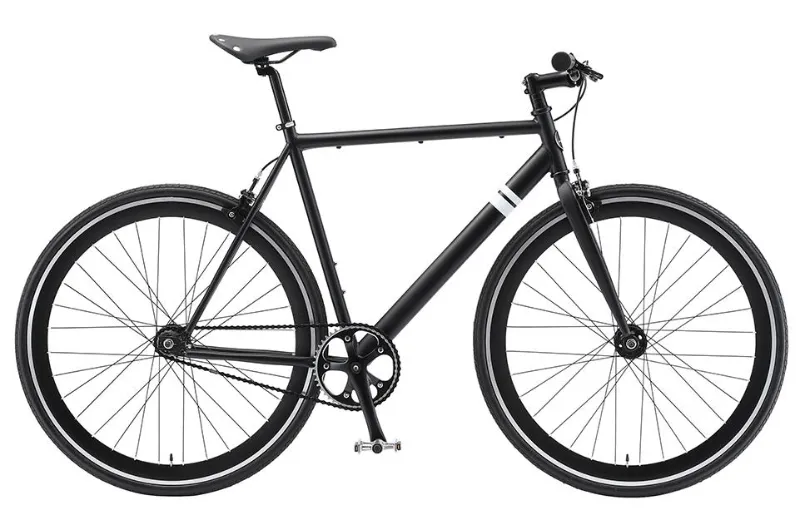
If you've been shopping for a simple, low-maintenance bike lately, you've probably run into two terms that sound almost interchangeable: fixed gear and single speed. They look similar, they're both stripped-down machines, and they're both loved by urban riders for their simplicity. But they are absolutely not the same bike — and choosing the wrong one can turn a fun purchase into a frustrating one.
In this guide, we'll break down exactly how these two styles differ, who each one is best for, and how to pick the right setup for the way you actually ride. And if you decide a minimalist bike is right for you, don't forget to check the latest 15% OFF All Orders deal on our Sole Bicycle discount code page before you buy.
Fixed Gear vs. Single Speed: The Core Difference
Let's clear up the confusion first, because it comes down to one component: the freewheel.
A single speed bike has one gear — but it freewheels. That means when you stop pedaling, the rear wheel keeps spinning and the pedals stay still. You can coast, exactly like on a regular multi-speed bike. If that sounds appealing, a quality one gear bike delivers all the simplicity of a single drivetrain without forcing you to pedal nonstop.
A fixed gear bike (a "fixie") has the cog locked directly to the rear wheel. If the wheel is turning, the pedals are turning. You cannot coast — ever. When you stop pedaling, you slow down. Many riders even learn to slow the bike using leg resistance. A dedicated fixed gear cycle is built specifically for this direct-drive feel, with stiffer frames and components designed around constant pedal engagement.
Everything else — comfort, weight, maintenance, style — flows from that one mechanical difference.
Why Riders Choose a Fixed Gear
Fixed gear riding is a skill, and that's exactly the point. Here's what draws people to it:
- Total drivetrain connection. You feel every bit of the road through your legs. It's the closest a bike gets to being an extension of your body.
- Efficiency. With no freewheel or derailleur drag, power transfer is direct and immediate.
- Simplicity. Fewer moving parts means fewer things to adjust, lube, or break.
- Control. Skilled riders can slow down, track stands at lights, and modulate speed with their legs alone.
- Style. Let's be honest — fixies have an unmistakable look. Upgrading parts like a lightweight fixed gear wheelset, smooth fixie rims, or a stiff fixie crankset lets you build a bike that's both fast and beautiful.
The trade-offs? You're always pedaling, your knees take the brunt of downhills, and braking with your legs (or a front brake only) takes real practice. On long descents, a fixed gear can genuinely wear you out.
Why Riders Choose a Single Speed
A single speed keeps the minimalist philosophy but adds one crucial feature: the ability to coast. That single difference makes it dramatically more practical for most everyday riders:
- Commuting comfort. Coast through intersections, rest your legs on descents, and cruise at traffic speed without spinning constantly.
- Easier learning curve. If you've never ridden fixed, a single speed feels natural from day one.
- Same low maintenance. One chain, one cog, no derailleurs to tune. A good one gear bike is about as fuss-free as cycling gets.
- City-friendly. Hopping curbs, dodging pedestrians, and rolling over potholes is simply easier when you can stop pedaling on command.
If you want one bike that does groceries, commuting, and weekend rides without asking anything of you, single speed is the safer bet.
Quick Comparison
| Factor | Fixed Gear | Single Speed |
|---|---|---|
| Coasting | No — pedals always turn | Yes |
| Learning curve | Steep | Gentle |
| Knee impact | Higher (no rest on descents) | Lower |
| Braking | Leg resistance + front brake | Standard brakes |
| Maintenance | Minimal | Minimal |
| Best for | Enthusiasts, track-style riding, fitness | Commuters, casual riders, errands |
How to Choose: Five Questions to Ask Yourself
1. Do you want to coast? This is the whole decision. If yes, buy a single speed. If the idea of never coasting excites you, get a fixed gear. Don't let aesthetics make this call — ride feel matters far more over hundreds of kilometers.
2. What's your terrain like? Hilly city? A single speed (or a bike with lower gearing) will save your knees. Flat urban grid? A fixed gear's constant pedal rhythm feels fantastic. If your routes include serious elevation and you'd rather not sweat the climbing, consider a motor assist — a nimble 24 electric bike gives you simplicity plus a boost when the road tilts upward.
3. Do you want to customize? Fixie culture is heavily about building and personalizing. Swapping a fixed gear wheelset, choosing lightweight fixie rims, or upgrading to a stiffer fixie crankset are classic first moves. Single speeds are customizable too, but the fixed gear scene is where the build culture lives.
4. How do you actually ride day to day? Be honest. If most of your riding is relaxed and practical, a laid-back cruiser bicycle or a classic men's beach cruiser might serve you better than either a fixie or a single speed. If you're hitting trails on weekends, a proper mountain bike like the bicycles Terrain 26" is built for exactly that. The right category beats the trendy one every time.
5. What will you need to maintain it? Both bike types are refreshingly simple to care for, but you'll still want the basics on hand: a reliable joe blow cycle pump to keep your tires at correct pressure (the single cheapest performance upgrade there is), and a solid lock with a spare kryptonite key so a lost key never strands you. Toss on a 5 panel cap for sun protection on longer rides and you're set.
Our Recommendation
- Choose a fixed gear if you ride for the feeling, you ride on mostly flat terrain, and you want the purest connection between your legs and the road. Start with a front brake installed, learn to control speed gradually, and invest early in quality contact points — wheels, cranks, and rims make the biggest difference.
- Choose a single speed if you want simplicity and reliability without the commitment of constant pedaling. It's the practical urban bike that 80% of riders are actually looking for.
- Choose neither if your riding is mixed-terrain, hilly, or leisurely — a cruiser or a mountain bike will fit your life better than a trendy drivetrain choice.
Before You Buy
Whichever style you land on, sizing matters more than components. Get the frame size right first, then upgrade. And remember: current Sole Bicycle orders get 15% OFF All Orders — grab the code at our Sole Bicycle discount page before checking out.
A single gear is all many riders ever need. The only real question is whether that gear turns with you when you stop — and now you know exactly how to answer it.
 Shopping at Sole Bicycle? See today's verified Sole Bicycle discount code
Frequently asked questions
Is a fixed gear bike harder to ride than a single speed?
Not always. A single speed has a freewheel, so you can coast and rest your legs. A fixed gear forces you to pedal whenever the bike moves, which is more tiring on hills and long descents but offers unmatched road feel and efficiency.
Is a fixed gear bad for your knees?
It can be. Fixed gear bikes usually rely on a front brake plus leg resistance for slowing, so your knees and legs work harder — especially downhill. Single speed bikes have standard brakes and let you coast, which is easier on your body.
Can I ride a fixie with no brakes?
Yes, but we recommend starting with a front brake installed. Learn to slow with leg resistance gradually and use the brake as your primary stopping method until your leg control develops.
Which is better for commuting?
A single speed is the better commuter bike for most people. Coasting through intersections, resting on descents, and handling stop-and-go traffic is far more practical without constant pedaling.
How much maintenance do these bikes need?
Very little. Both have one chain, one cog, and no derailleurs to tune. Keep tires inflated with a good floor pump, keep the chain lubed, and carry a spare lock key so you're never stranded.