

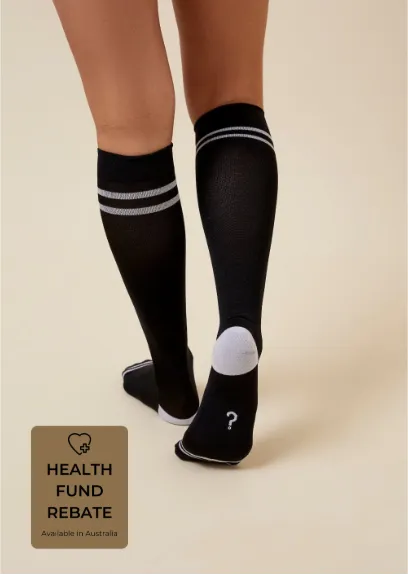
Choosing maternity compression socks that actually fit in the third trimester comes down to three things: measuring late, matching compression level to your day, and picking a style you can get on without a wrestling match. Your calves and ankles change shape fastest in the last ten weeks, so the pair that fit at 28 weeks is not always the pair that fits at 38. Below is how we size, compare and care for maternity compression socks and the rest of a pregnancy support wardrobe, based on what actually gets worn day after day.
Why Third Trimester Fit Changes So Fast
Swelling, weight gain and relaxin all reshape your legs. A sock that felt snug in the second trimester can dig in at the ankle by week 36, and a sock bought a size up too early can slide down all day. The fix is timing, not luck.
- Measure in the third trimester, not before. Take your calf and ankle measurements when you order, and recheck if you are more than six weeks out from delivery.
- Fit the widest point of the calf. Compression socks that fit the calf but pinch the ankle are the most common complaint we hear.
- Expect a snug top band, not a tourniquet. A graduated sock is tightest at the ankle and loosest at the top. If the cuff leaves a deep mark after 20 minutes, go up a size.
- Buy two pairs, not five. Sizes shift. Two pairs let you rotate and wash while you confirm the fit is right.
If you want the sizing chart for a specific product, check the store page rather than guessing from a generic guide.
How to Measure for Maternity Compression Socks
You need a soft tape measure and two numbers: ankle circumference just above the ankle bone, and calf circumference at its widest point. Stand if you can, and measure both legs, because swelling is rarely symmetrical.
| Measurement | Where to measure | What it decides |
|---|---|---|
| Ankle circumference | Narrowest point above the ankle bone | Ankle band comfort |
| Calf circumference | Widest part of the calf | Overall size band |
| Calf length | Behind the knee to the floor | Knee-high vs. full length |
Two practical notes from our testing:
- Measure in the morning. Legs are at their smallest before you have been upright all day, which is the baseline most sizing charts use.
- Round to the larger size. For pregnancy compression socks, sizing up rarely causes sagging, while sizing down reliably causes pinching.
Compression Levels Explained
Compression level is the other half of fit. Higher is not automatically better; it is simply more support for longer periods of standing, travel, or swelling your midwife has flagged.
- Light support works for everyday wear, desk days and early postpartum. Easy to put on, comfortable for hours.
- Moderate support suits long shifts, third trimester swelling and flights. Expect a firmer feel putting them on in the morning.
- Firm support tends to be for specific medical advice. Ask your midwife or GP before going up a level.
One rule we follow: buy the lowest level that keeps your legs comfortable at the end of the day. Anything stronger gets taken off and forgotten.
Maternity Tights, Shorts and Postpartum Compression Wear
Socks are not the only shape that helps. Which one you need depends on where you carry discomfort and how you plan to dress.
| Style | Best for | Notes |
|---|---|---|
| maternity tights | Under dresses and skirts, office days | Bump panel sits over the belly, not across it |
| maternity compression shorts | Pelvic and lower back support | Worn under clothing, easy to pull on |
| postpartum shorts | Post-birth abdominal support | Softer pressure, designed for recovery |
For after delivery, postpartum compression wear and postpartum compression shorts are built with a gentler gradient than a pregnancy sock, so they support the abdomen and pelvis without compressing the belly the way antenatal shapes do. If you are also managing pelvic heaviness, ask your physio whether compression shorts or dedicated prolapse support options suit your situation best. Compression is a support tool, not a treatment.
Travel Sock Features: trtl Bamboo Compression Socks
Long car journeys and flights in the third trimester are their own category. You want a sock that stays up, does not trap heat, and can be worn with shoes you can kick off.
trtl travel bamboo compression socks and the shorter trtl compression socks are the options we reach for on travel days, and the bamboo fabric versions (trtl bamboo compression socks) are the ones to look at if your feet tend to overheat. When comparing travel pairs, check:
- Graduated compression, tightest at the ankle, loosest at the cuff.
- A wide, flat cuff that stays put without folding.
- Breathable fabric, which matters more in pregnancy than most people expect.
- Reinforced heel and toe, the two spots that wear through first.
Travel days also call for ankle circles and a walk every hour. Socks help, but movement keeps circulation moving.
Wrist Splints and Braces for Carpal Tunnel in Pregnancy
Fluid retention does not stop at your ankles. Pregnancy carpal tunnel is common in the third trimester, and night-time wrist support is often what makes sleep possible again.
- A wrist splint for pregnancy holds the wrist in a neutral position, which is what reduces night-time tingling.
- A wrist brace for carpal tunnel pregnancy gives firmer, more adjustable support for daytime typing or lifting.
- Wear the splint at night first. If tingling continues during the day, that is a conversation with your GP, not a reason to strap harder.
Fabric and Care Instructions
Compression garments lose their stretch faster than ordinary socks, and that stretch is the whole point. Wash them the way the label says, and treat heat as the enemy.
- Wash cool on a gentle cycle, or by hand, after every one or two wears.
- Skip fabric softener, which coats the fibres and reduces elasticity.
- Air dry flat, away from radiators and direct sun.
- Put them on before you get out of bed, when swelling is lowest.
- Replace them once the cuff stops staying up or the ankle band leaves marks that take minutes to fade.
Shipping, Returns and Buying With a Code
Fit is the one thing you cannot judge from a product photo, so buy somewhere with a straightforward returns window, and try socks on before you wear them for a full day. Keep tags and packaging until you are sure. For current pricing and the running offer, grab the 10% off code here and check the latest price before you order two pairs rather than one.
Start with one well-measured pair of maternity compression socks, add maternity tights or shorts if you need bump or pelvic support, and build postpartum compression wear after delivery rather than before. Your body will tell you quickly what fits.
 Shopping at TheRY? See today's verified TheRY discount code
Frequently asked questions
When should I buy maternity compression socks?
Measure and order in the third trimester, ideally from around 28 weeks onward, so the fit matches your legs at their current size. If you buy earlier, confirm the returns window covers a size exchange later on.
How do I know if my compression socks are too tight?
If the ankle band leaves marks that take more than a few minutes to fade, or the cuff digs in and slides down, the pair is too small. Go up a size rather than pushing through the discomfort.
Can I wear pregnancy compression socks overnight?
Most people wear them during the day and take them off before bed. If you have been advised to wear compression at night, follow that advice from your midwife or GP instead of a general guide.
What is the difference between maternity compression socks and maternity tights?
Compression socks support the calf and ankle and work with trousers or trainers. Maternity tights cover the legs and sit over the bump, so they add support under dresses and skirts.
Do trtl bamboo compression socks work for flights during pregnancy?
They are designed for travel, with graduated compression and a cuff that stays put, and the bamboo fabric is breathable. Check the sizing chart before you fly, and get up to walk regularly during the journey.
Should I size up in postpartum compression shorts?
Follow the size chart and measure close to your delivery date rather than early in pregnancy. Postpartum shapes are cut with a gentler gradient for recovery, so a well-measured size is usually more comfortable than sizing up.